

Two Weeks Ago, the US Pulled the Plug
On June 12, security researchers demonstrated they could bypass Anthropic’s safety guardrails on Fable 5 within days of its public release. By June 15, both Mythos 5 and Fable 5 were gone — pulled from the market under direct government pressure. The Trump administration had just done something unprecedented: it told one of the world’s most powerful AI companies to take its best models off the shelf.
The goal was clear. Keep the strongest AI out of the wrong hands. Protect critical infrastructure. Maintain American technological superiority.
Here’s what actually happened: Asian startups saw a market vacuum the size of a continent and filled it before the ink on the export order was dry.
The Commerce Department eventually authorized a limited re-release to 100 “trusted partners” — US companies and agencies that operate critical infrastructure. But for everyone else? The door stayed shut. And two weeks is a long time in AI development when you’ve just been shown exactly how fragile your supply chain really is.
Japan’s Answer: Don’t Fight the Giant. Route Around It.
Sakana AI moved first, and they moved smart. The Tokyo-based startup — founded by ex-Google researchers Ren Ito, Llion Jones, and David Ha — launched Fugu, an “orchestration model” named after the Japanese blowfish. Small. Precise. Not to be underestimated.
Fugu doesn’t try to out-muscle Mythos 5 on raw benchmarks. That would be playing the game on Anthropic’s terms. Instead, it takes a fundamentally different approach: rather than depending on any single AI provider, Fugu coordinates access to multiple models through APIs. If one gets banned, restricted, or pulled from the market, the system adapts — a design philosophy I explored in my deep dive on Sakana Fugu’s multi-agent orchestration approach. It’s architecture as insurance policy.
Sakana co-founder David Ha summarized the strategy with the kind of clarity that only comes from watching your competitors get blindsided: “Access to top models can disappear overnight. Collective intelligence is the practical hedge against this concentration of power.”
The pitch to Japanese businesses and government agencies is devastatingly simple. Sakana’s website literally says it: “Delivering frontier capability without the risk of export controls.” No US company can make that promise right now. Not Anthropic. Not OpenAI. Nobody.
This isn’t a stopgap measure while Japan waits for the ban to lift. It’s a structural response to a structural problem. Sakana explicitly positions Fugu as a hedge strategy — not a permanent replacement for US models, but a guarantee that Japanese organizations won’t be left stranded the next time Washington changes the rules.
China’s Answer: Nationalize the Advantage
China took a different route — and a more aggressive one. Qihoo 360 launched two models within the same window: Tulongfeng for automatically discovering software vulnerabilities, and Yitianzhen for automating cyber defense and incident response. Both were framed explicitly as national strategic assets.
Founder Zhou Hongyi introduced a term that should make anyone in cybersecurity sit up: “one-way transparency.” It describes a scenario where some actors — presumably American — have advanced AI-powered vulnerability detection while others don’t. In that world, Zhou argues, the ones without it are essentially defenseless.
Whether you buy the framing or not, the market is buying the product. And given Anthropic’s own battles with Asian competitors, the competitive dynamics run deeper than most people realize. The US ban didn’t slow down Chinese AI development — it gave it the perfect sales pitch.
And Sakana and Qihoo 360 are just the names we know about. Across South Korea, Taiwan, Singapore, and India, the same calculation is being made: if the US can cut off AI access with a single executive order, dependence is a liability. The only safe bet is to build — or at minimum, have a credible alternative to — your own.
The Strategic Irony Washington Missed
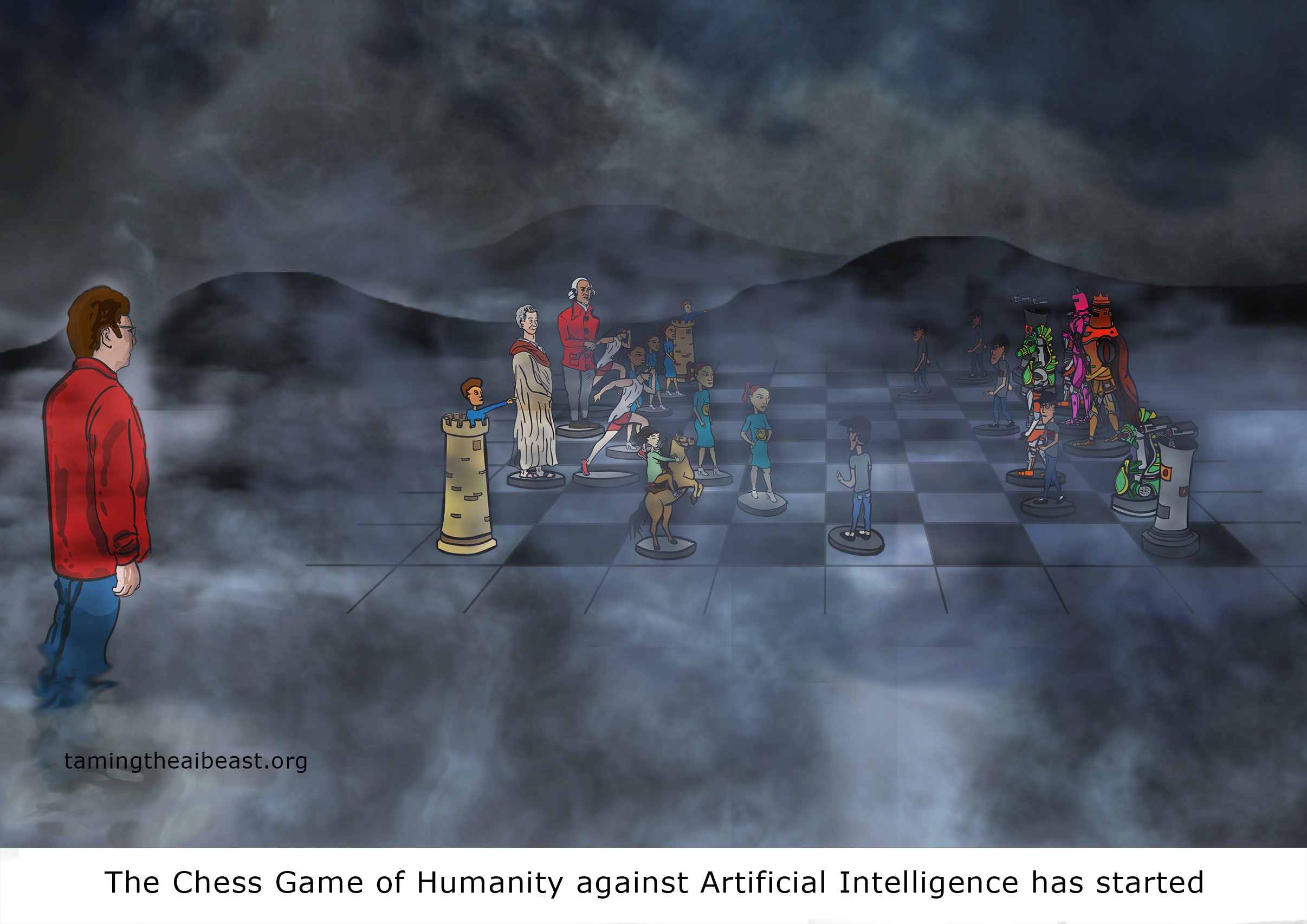
I’ve played enough chess to recognize when someone makes a tactical move without thinking three moves ahead. The US saw an immediate threat — powerful AI models potentially accessible to adversaries — and reacted. Reasonable instinct. But in chess, reacting to threats without considering positional consequences is how you lose from a winning position.
The ban was supposed to protect American technological superiority. Instead, it accelerated the exact outcome it was designed to prevent: the rapid development of rival AI systems outside American control. Every week Mythos 5 remains unavailable in Asia is another week Sakana, Qihoo 360, and the next wave of startups have to strengthen their alternatives and lock in customers.
And trust — once broken — doesn’t snap back like a rubber band. Asian enterprises and governments now have first-hand experience with what happens when their AI supply chain depends on a company that can be ordered to cut them off by a government three thousand miles away. They’re not going to forget that lesson. Even if the ban lifts tomorrow, the damage to American AI credibility in the region is already done.
What This Means for Southeast Asia
Living in the Philippines, I watch this unfold from a particular vantage point. Southeast Asian countries aren’t going to build their own Mythos-level models anytime soon — the compute costs alone are prohibitive, and the talent pool, while growing, isn’t there yet. But we are absolutely in the market for affordable, reliable AI infrastructure that doesn’t come with geopolitical strings attached.
That’s exactly what Sakana is selling. Their models are designed to work with smaller datasets, optimized for specific languages and cultural contexts, and — critically — not subject to US export controls. For a government agency digitizing citizen services in Jakarta or a startup building fraud detection in Cebu, that value proposition is hard to beat.
The deeper shift is philosophical. The US ban didn’t just push Asian customers toward Asian alternatives. It pushed them toward a fundamentally different model of AI development — one built on orchestration, collective intelligence, and distributed control rather than dependence on single monolithic providers. Sakana co-founder Ren Ito captured it perfectly in a recent op-ed: “AI should not become a technology that is hoarded; it should be one that is developed together.”
That’s not just idealism anymore. It’s competing with Mythos 5.
The Chess Game Nobody Planned
Let me break this down the way I’d analyze a chess position.
The US entered this with material advantage — the strongest models, the deepest R&D budgets, the most advanced chip fabrication. The obvious play was to restrict access and protect the lead. That’s what the export ban was.
But material advantage means nothing if you lose position. And positionally, the US just handed Asia the center of the board. Sakana’s orchestration model is a positional play, not a material one. It doesn’t beat Mythos 5 on individual benchmarks. But it creates a structure where individual model bans don’t matter, where no single provider holds the keys, and where the system grows stronger as more models join the network.
That’s the move Washington didn’t see coming. Not a faster chip. Not a bigger model. A smarter architecture that makes the entire concept of model-level export controls obsolete.
The US played for material. Asia played for position. In chess, position usually wins.
The Bigger Picture: AI Sovereignty Is Here to Stay
This story isn’t really about Anthropic or Sakana or any individual company. It’s part of a much larger pattern of AI releases becoming political decisions — a shift that’s reshaping the entire industry. It’s about the end of an era — the brief window where a handful of US labs could dictate who gets access to frontier AI and who doesn’t.
OpenAI is feeling the same headwinds. When the White House told OpenAI to slow down, it was the same playbook — different company, same result to a select group of partners. European regulators are circling. Markets across Asia, Africa, and South America are watching all of this and drawing the same conclusion: if you want reliable access to the best AI, don’t build your strategy around American companies.
The export ban was about security. But real security isn’t just about keeping capabilities out of the wrong hands — it’s about not pushing allies and trading partners into building alternatives that permanently erode your position. On that front, the ban has been a spectacular own goal.
Where Things Go From Here
Anthropic will probably get Mythos 5 back into Asian markets eventually. The Commerce Department will negotiate some framework, some list of safeguards, some set of approved partners. Business will resume, mostly.
But something fundamental has shifted. The genie of AI sovereignty is out of the bottle. Asian startups have demonstrated they can build competitive alternatives in weeks, not years. The market has learned — at a visceral level — that dependence on a single-country AI supply chain is a strategic vulnerability. And Sakana’s philosophical approach to AI development is starting to sound less like idealism and more like the most pragmatic business strategy in the room.
Sakana’s Ren Ito framed it as a question of how AI should be built — cooperatively, with shared intelligence, rather than hoarded behind export controls. A few months ago, that might have sounded naive. Today, with Mythos 5 still locked behind a government-mandated gate and Fugu already shipping to Japanese government agencies, it sounds like the people who read the board correctly.
The US made a tactical move. Asia made a strategic one. I know which side I’d rather be playing.