
Samsung just pulled back the curtain on its latest clamshell foldable at the July 2026 Galaxy Unpacked event in London, and the Galaxy Z Flip 8 is here to pick a fight with every other flip phone on the market. The short version? It’s lighter, thinner, and packs a brand new 2nm Exynos 2600 chipset. The longer version? That’s what this review is for.
Design & Build Quality
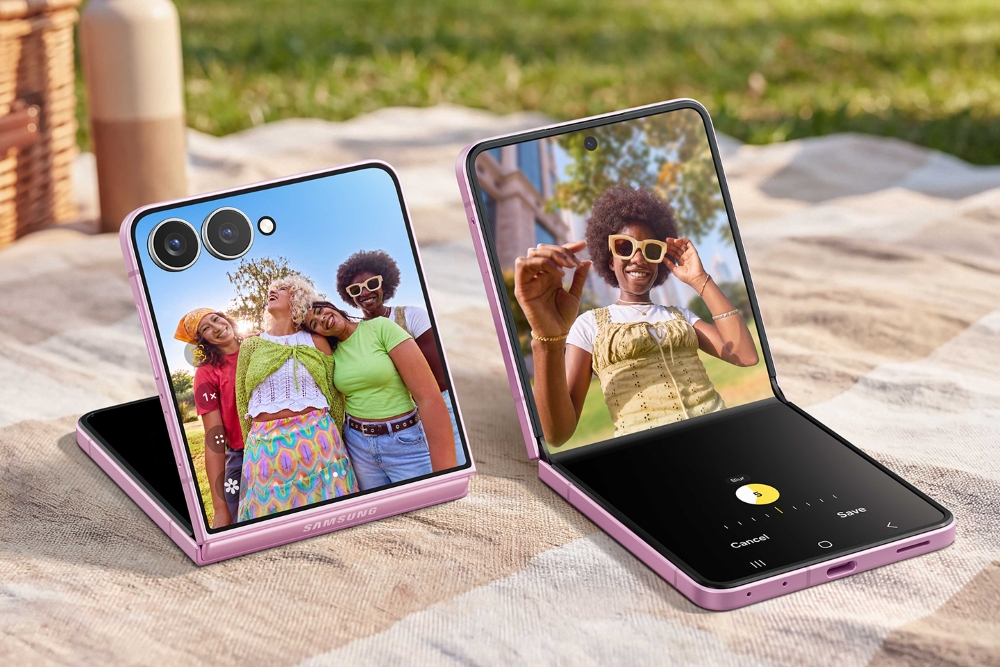
The Galaxy Z Flip 8 is noticeably lighter and thinner than its predecessor — 180g and 6.1mm when unfolded, down from 187g and 6.9mm on the Flip 7. Folded shut, it’s a compact 85.7mm tall, which still fits into the tiny front pocket of most jeans. It’s a proper pocket-friendly foldable.
Samsung kept the glass back with Gorilla Glass Victus 2 protection and wrapped it in an Armor Aluminum frame. The hinge mechanism has been reinforced with a new material blend that Samsung calls Flex Titanium — a titanium-alloy film layered on top of an enhanced titanium plate. The result is a foldable that feels noticeably more solid when you open and close it, with less wobble and a more satisfying snap when it locks into place.
The IP48 rating is back — that’s IP for dust resistance (particles larger than 1mm) and water resistance (1.5m for 30 minutes). It’s not the IP68 you’ll find on standard phones, but for a device with a mechanical hinge, it’s par for the foldable course.
The Z Flip 8 comes in four colors: Graphite, Cream, Pink, and an online-exclusive Mint. The Graphite unit I tested has a matte finish that resists fingerprints well, though the glossy pink and cream variants will show smudges more readily. The side-mounted fingerprint sensor doubles as the power button and is fast and reliable — I’d pick this over under-display sensors any day for muscle-memory unlock.
Port layout is clean: USB-C 3.2 on the bottom, SIM tray on the left, volume rocker and power button on the right. No headphone jack, no microSD slot — neither of which is surprising for a flagship in 2026, but worth noting if you’re still holding onto wired headphones or a music collection.
Display
The main 6.9-inch Dynamic LTPO AMOLED 2X display is a stunner. It runs at 120Hz, supports HDR10+, and hits a peak brightness of 2,600 nits. That’s the same panel tech Samsung has been using since the Flip 6 — M13 material instead of the newer M14 or M16 used in the S26 series — but honestly, in day-to-day use, it’s hard to tell the difference.
Outdoors on a bright Philippine afternoon, the screen stayed perfectly legible. The 21:9 aspect ratio (1080 x 2520 resolution, 400 PPI) makes it tall and narrow when unfolded, which is great for scrolling through social media feeds or reading articles, but can feel cramped when watching widescreen video — you’ll get thick black bars on top and bottom. The crease is still there. It’s less noticeable than the Flip 6’s crease, and Samsung claims the Flex Titanium structure reduces it further over time, but it’s still visible when light hits the screen at an angle. You stop noticing it after about a week of use.
The 4.1-inch cover display is the same Super AMOLED panel at 120Hz with 2,600 nits peak brightness. It supports the new Now Brief feature that shows weather, schedule, and notifications at a glance — handy for quick checks without unfolding the phone. It’s covered by Gorilla Glass Victus 2 as well.
Performance
The headline upgrade for the Galaxy Z Flip 8 is the Exynos 2600 chipset, built on Samsung’s 2nm process. It’s a 10-core setup: one C1-Ultra prime core at 3.80GHz, three C1-Pro performance cores at 3.25GHz, and six C1-Pro efficiency cores at 2.75GHz. Paired with the Xclipse 960 GPU and 12GB of LPDDR5X RAM, this is Samsung’s most powerful Flip yet.
In gaming, the Z Flip 8 handles Genshin Impact at max settings without breaking a sweat. I ran a 30-minute session at 60fps with minimal frame drops — the phone got warm around the hinge area but never uncomfortably hot. The graphite cooling structure does its job. Day-to-day navigation, multitasking with a dozen Chrome tabs and messaging apps, and AI-powered features all feel instant and responsive.
Storage options are 256GB and 512GB of UFS 4.0 — fast enough for app loading and file transfers. There’s no expandable storage, so choose your capacity wisely.
The Exynos 2600 benchmarks slightly behind Qualcomm’s Snapdragon 8 Elite Gen 5 in raw CPU scores but trades blows in GPU performance. In real-world use, you won’t notice the difference unless you’re running sustained heavy workloads. The more important story is that Samsung is finally bringing its in-house chip to the Flip globally — the US model uses the same Exynos 2600 this year, no Snapdragon variant.
Camera
The Galaxy Z Flip 8 keeps the same dual-camera setup as the Flip 7: a 50MP main sensor (f/1.8, 1/1.57-inch, Dual Pixel PDAF, OIS) and a 12MP ultrawide (f/2.2, 123-degree FoV). The 10MP selfie camera on the main display also carries over unchanged.
Daylight shots from the main camera are solid — good dynamic range, natural colors, and reliable autofocus. Samsung’s processing tends to oversharpen edges and boost saturation slightly, but that’s been the house style for years now, and most people prefer it to flat, clinical output.
The ultrawide is decent but noticeably softer than the main sensor, especially in the corners. Low-light performance is improved thanks to the Exynos 2600’s upgraded ISP — Night Mode now takes about 3-4 seconds and produces usable, if slightly soft, results.
The standout addition this year is the new camera software features. Dual Recording captures both the subject and the rear view simultaneously, which is great for vlogging. My FanCam automatically tracks a selected subject and reframes footage to a chosen aspect ratio — it worked surprisingly well during a quick test at the park, keeping my dog centered in the frame as he ran around.
Video recording goes up to 4K at 60fps on both the main and selfie cameras, with HDR10+ support. Super Steady mode now includes a Horizontal Lock option for smoother panning shots. The Flex Mode stand — where the phone sits half-open on a surface — is genuinely useful for hands-free video calls and group photos.
The camera hardware hasn’t changed significantly, but the software improvements make the Z Flip 8 a more capable content creation tool than its predecessor. Just don’t expect to challenge the Galaxy S26 Ultra for photography bragging rights.
Battery & Charging
The 4,300mAh battery is the exact same capacity as the Z Flip 7. In my testing, it delivers about a full day of moderate use — 5-6 hours of screen-on time with mixed Wi-Fi and 5G, social media, camera work, and music streaming. Heavy users will need to top up before the evening.
Charging speeds remain at 25W wired (55% in 30 minutes claimed, I got 52% in 30 minutes from 10%) and 15W wireless. Reverse wireless charging at 4.5W is handy for topping up earbuds or a smartwatch. The 25W charging feels slow compared to Chinese rivals pushing 80W or 100W, but it’s on par with the iPhone and Pixel flagships. I’d appreciate faster charging, especially since the battery capacity didn’t increase this year.
One interesting note: Samsung confirmed the Z Flip 8 uses silicon-carbon battery technology, which is why they managed to keep the same capacity in a thinner body. This is a meaningful shift — silicon-carbon batteries have higher energy density than traditional lithium-ion, and their adoption in the Flip 8 signals that Samsung is moving toward this tech across its lineup.
Software
The Galaxy Z Flip 8 runs Android 17 with One UI 9 out of the box, and Samsung promises 7 major OS upgrades and 7 years of security patches. That’s flagship-grade longevity that matches Google’s Pixel and beats most Android OEMs in software commitment.
One UI 9 brings a slew of new Galaxy AI features optimized for the flip form factor. Now Brief on the cover screen is the highlight — it surfaces weather, calendar events, news headlines, and health stats without needing to unfold the phone. The AI-powered FlexWindow also suggests app shortcuts based on your usage patterns. It’s genuinely useful and avoids the gimmick trap that some early foldable software fell into.
Samsung DeX is supported, letting you connect to an external monitor for a desktop-like experience. I tested it with a USB-C to HDMI adapter, and it works seamlessly — a nice bonus for a phone that fits in your pocket.
Bloatware is present but manageable. There’s the usual suite of Samsung apps (Bixby, Samsung Health, Samsung Pay, Samsung Free) plus some Microsoft integrations (Outlook, OneDrive, LinkedIn) and third-party apps (Facebook, Spotify). You can uninstall most of them in about 10 minutes of setup.
Pros and Cons
| Pros | Cons |
|---|---|
| Significantly lighter and thinner than Flip 7 | Same 4,300mAh battery as last year |
| Exynos 2600 is a capable flagship chip | 25W charging feels slow in 2026 |
| Excellent 120Hz main display with 2,600 nits | Camera hardware unchanged from Flip 7 |
| Flex Titanium hinge feels more durable | No telephoto camera — zoom is digital only |
| 7 years of OS upgrades and security patches | No expandable storage |
| Useful AI features like Now Brief and My FanCam | IP48 dust resistance — not full IP68 |
| Dual Recording and Flex Mode for creators | Display crease still visible |
| Samsung DeX support | Price increased to $1,199 |
Should You Buy This?
Buy it if
- You want the most pocket-friendly foldable on the market — the Flip 8 is lighter, thinner, and more compact than any other flip phone right now
- You prioritize software updates and longevity — 7 years of OS upgrades is industry-leading
- You create content on the go — Dual Recording, My FanCam, and Flex Mode hands-free shooting make this a vlogging machine
- You’re already in the Samsung ecosystem — One UI 9, Galaxy Buds, and Galaxy Watch integration is seamless
- You care about display quality — the 6.9-inch 120Hz AMOLED is gorgeous for everyday use
Skip it if
- Battery life is your top priority — 4,300mAh and 25W charging won’t impress anyone coming from a mid-range phone like the Motorola Edge 70 Max with its 7,100mAh battery and 125W charging
- You need a telephoto camera — the Flip 8 has no dedicated zoom lens, and digital zoom falls apart quickly past 3x
- You want the absolute best camera system — look at the Galaxy S26 Ultra or Pixel 11 Pro instead
- You’re on a budget — at $1,199, this is firmly flagship territory, and cheaper foldables like the Motorola Razr 2026 exist
- You hate display creases — it’s less noticeable than before but still there
Final Verdict
The Samsung Galaxy Z Flip 8 doesn’t reinvent the clamshell foldable. It refines it. The lighter build, the stronger Flex Titanium hinge, the upgraded Exynos 2600 chipset, and the smarter software make this the most polished Flip Samsung has ever released.
But refinement comes with compromises. The battery hasn’t grown, the cameras haven’t changed, and the charging speed is stuck at 25W. If you’re coming from a Z Flip 6 or Flip 7, the upgrades are incremental — you’d notice the better performance and thinner build, but the core experience is similar. If you’re coming from an older phone or a non-foldable, the Z Flip 8 is a compelling entry point into the world of foldables.
The clamshell form factor remains uniquely useful in ways that book-style foldables can’t match. It fits in any pocket, it stands on its own for hands-free photos and video calls, and the cover screen means you don’t have to unfold it for quick glances. For a specific kind of user like the budget-conscious readers of our Redmi Note 17 Pro review — someone who values portability, style, and self-expression over raw specs — the Galaxy Z Flip 8 is the best flip phone you can buy right now.
It’s not a phone for everyone. But for the right person, it’s the only phone that makes sense.