
Here’s a number worth sitting with for a moment: 38%. That’s how much of the grid infrastructure bill created by the AI data center boom was actually paid by the data centers themselves. The rest — $5.13 billion of an $8.25 billion tab in 2025 alone — ended up on the electric bills of ordinary households.
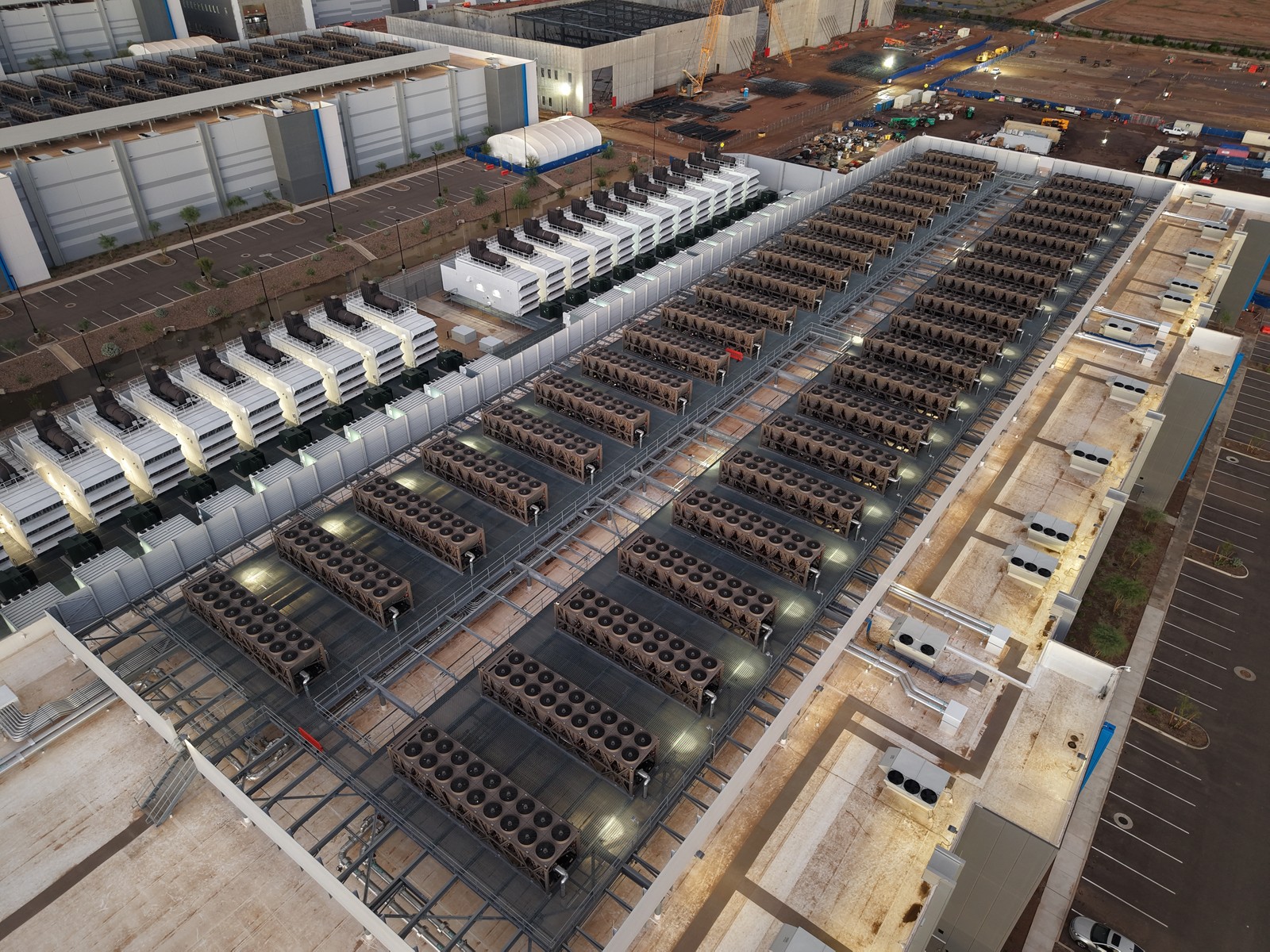

That’s the headline finding of a new Cornell study published Nov. 9 in Nature Energy, and it reframes the AI power debate. We’ve spent two years arguing about how much electricity data centers will guzzle. The more uncomfortable question is who pays for the wires, substations, and transmission lines that make all of it possible.
The numbers behind the shift
Fengqi You, the Roxanne E. and Michael J. Zak Professor in Energy Systems Engineering at Cornell, and postdoctoral researcher Cheng Feng analyzed four major U.S. power grids from 2020 to 2025: the southern San Francisco Bay Area, north Texas around Dallas-Fort Worth, the Midwest, and the mid-Atlantic region including northern Virginia — home to the densest concentration of data centers on the planet. The team drew on data from roughly 4,000 existing and proposed data centers, plus power-price records, utility rate filings, transmission plans, and federal household and job data.
What they found is a boom with a split bill:
- Transmission investment tied to the buildout grew from $2 billion in 2020 to $34 billion in 2025, with data centers driving much of that rise.
- Data centers covered only 38% of the infrastructure costs linked to their growth — $3.12 billion of the $8.25 billion spent in 2025.
- The remaining $5.13 billion, or 62%, fell largely on residents.
- In the most-affected hubs, data center growth pushed wholesale electricity prices up nearly 10% or more by 2025 — 15% in Virginia, 20% in California’s southern Bay Area.
- The lowest-income households saw added energy costs reaching up to 28% of their income.
And here’s the twist that makes this more than a utilities story: the people absorbing those costs aren’t necessarily the ones using the technology. A national survey cited by the authors found rural residents are less likely to use AI tools like ChatGPT than urban residents, yet rural families shouldering a high energy burden — spending more than 6% of income on energy — rose 76% more than among urban households.
A chicken-and-egg problem built into the rules
The reason the math lands this way isn’t malice. It’s a timing mismatch baked into how grids get paid for. Utilities typically allocate the cost of new transmission based on past patterns of electricity consumption. A data center that hasn’t been built yet consumes nothing, so the cost of the lines it will need gets spread across the customers already using power today.
“It’s kind of a chicken-and-egg problem,” You said. “Because if you’re going to build a data center, you need to expand this power infrastructure. Otherwise, there’s no electricity for them to run. But before they build, they’re not using energy. So with this model of relying on past consumption, households end up taking on much of the infrastructure costs.”
You frames the whole inquiry simply: “With the booming of data centers, who pays for that expansion and who benefits?” It isn’t just a matter of generating enough electricity, he adds, but “whether the rules for paying for the grid are keeping pace with who is driving new demand.”
The geographic reach caught my attention too. Residents of New Jersey, Pennsylvania, and Ohio help pay for grid upgrades tied to data center growth in Virginia. “You do not have to live next to a data center to help pay for its power infrastructure,” You said. “The grid connects communities across states, and cost-sharing rules connect them financially.”
It’s not a simple story
To be fair, the study isn’t an indictment of data centers. Each gigawatt of capacity can create 15,000 jobs across the economy, with an average of 2,700 directly tied to the facility, though those positions are averaged across the broader economy and aren’t guaranteed to be local or permanent. State incentives have delivered returns, if inconsistently: California reaped $180 in worker income for every dollar spent, while Virginia increased income $2 for every dollar invested. Even so, the benefits concentrate — as I noted when AI’s $3 trillion bet still hadn’t paid off for most companies, the returns from this buildout flow to a narrow slice of the economy. The presence of a qualified workforce, the researchers found, was a stronger predictor of those returns than the size of the incentive itself.
“In a lot of discussions right now, people take one side or the other, completely yes on data centers or completely no,” You said. “But there are benefits and costs, and the key issue in the end is how to balance the trade-offs.”
While the grid waits, the money is moving
This isn’t an abstraction for anyone watching AI’s economics. While researchers tally who pays for the grid, the industry is spending historic sums to secure power — and the bets are getting bigger than the systems they depend on.
SoftBank reportedly placed deposits on more than 13 gigawatts of gas turbines, almost 50% more than it needed, wagering it could corner part of the market as turbine queues stretched into the early 2030s. The bet soured: the company announced a $7.1 billion quarterly loss this week, with over half stemming from losses on power-generating equipment and more than $3 billion written off. It’s the same scramble I traced when Anthropic bought $3.4 billion in gas turbines — AI labs quietly turning into energy companies.
The “neocloud” playbook is showing cracks too. Nebius laid out $40 billion in planned spending for 2027, funded mostly through customer prepayments and loans backed by contracts. Its largest deal — a Microsoft contract worth up to $19.4 billion at a Vineland, New Jersey facility — is running months behind schedule after the site’s third-party operator was fined $1.1 million for running unpermitted gas generators. Delays like that are exactly the scenario the Cornell paper warns about: capacity that doesn’t arrive on time leaves someone holding an infrastructure bill it never agreed to.
The financing questions run deeper than any single project. The AI buildout has been carried along by debt, prepayments, and long-term commitments that assume demand keeps climbing — the same structural bet I examined in CoreWeave’s cash crunch and in the $3.2 trillion in AI debt nobody’s talking about.
What the fix looks like
You and Feng recommend concrete changes rather than a halt to construction. In all four regions studied, they found that if data centers cut back power use during 22 of the region’s peak-demand hours each year, the strain on the grid would ease enough to minimize the need for new expansion — and tech companies that own facilities in multiple states or countries could shift operations to another region during peaks. Twenty-two hours a year is a narrow window, but peak-demand hours are exactly where the grid strains hardest and where the case for building new lines gets made.
States could also charge data centers directly in line with the new demand they add, or create programs like a recent Minnesota law that directs funds to low-income households to offset higher energy expenses. Tax incentives could be tied to actual job creation and wage growth instead of the amount of capital invested.
There’s already movement, but no consensus. Debates over who picks up the bill are playing out from local communities to state governments to Congress. Six states have recently set special terms for very large energy consumers, and in March seven major technology companies signed the White House Ratepayer Protection Pledge, a public commitment to pay for required grid updates. Whether that promise holds as the buildout accelerates is the open question. “It’s feasible, and the challenge is more about implementation,” You said of the coordination required. “There’s a clear benefit for better coordination.”
The view from the meter
I’ll admit my bias here. As someone who manages IT budgets in a Philippine government institution, I’ve watched this movie before — a flagship system gets launched with ceremony, and six months later the power bill, the cooling cost, and the staffing cost quietly migrate into everyone else’s operating budget. Nobody announces that part at the launch event. The hardware is the visible part. The meter is where it actually lives.
None of this means AI’s power demand isn’t real or worthwhile. It means the people building the future shouldn’t quietly hand the invoice to the households least able to read it.
The Cornell team’s findings come as data centers are projected to consume between 8% and 17% of U.S. electricity by 2030, with 70% to 80% of that attributed to AI. At that scale, cost-sharing stops being a niche utility dispute and becomes a fairness question with a decade-long fuse. Whoever builds the future — and whoever pays for the wires behind it — deserves to know the answer before the bill arrives.