
Deepal Philippines just dropped the numbers on its first battery-electric SUV, and they are aimed straight at the middle of the market. The S07 BEV carries a suggested retail price of P2,488,000, but the first 50 clients get it at P2,350,000 — a P138,000 introductory discount. That is a lot of peso, but it is also a lot of electric SUV.
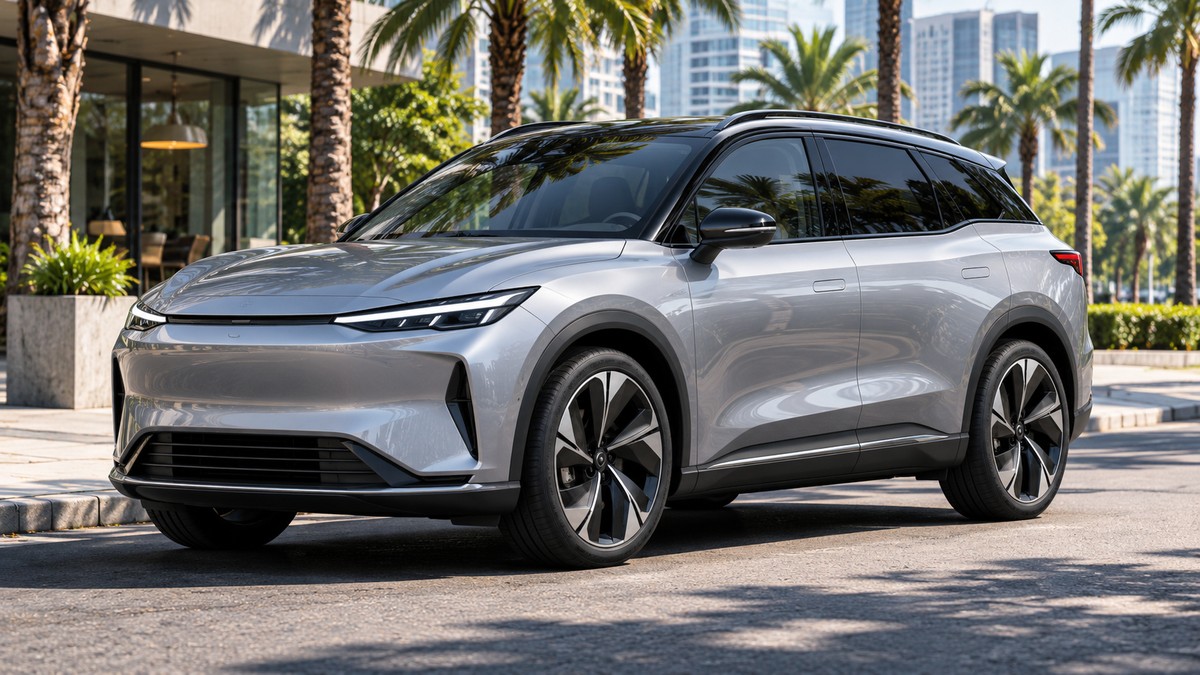
The model was previewed at the 14th Philippine Electric Vehicle Summit (PEVS) 2026 in Pasay City, and Deepal Philippines — distributed by the Autohub Group — says the official local launch happens this December. For a brand that most Filipino motorists have never heard of, that is an aggressive first impression.
Deepal is Changan’s Electric Face
If the Deepal name does not ring a bell, that is understandable. Deepal is the new-energy-vehicle brand of Changan Automobile, one of China’s big four state-owned car makers. Changan held roughly 51 percent of Deepal after a funding round completed in late 2025, and the brand targets the mainstream electric market with battery-electric and range-extended products.
The Philippine market has already seen this movie. Li Auto just named a new local distributor for its L6, L7, L9, and Mega lineup, and Jetour is pushing its first battery-electric SUV into showrooms. Deepal is the next Chinese EV nameplate to plant a flag, and it arrives with a product that is unapologetically mid-size and unapologetically electric.
What the S07 Actually Offers
The S07 BEV is built around a 2,900 mm wheelbase — long for its class, and the kind of number that translates directly into rear legroom. Deepal says the cabin gets ventilated front seats, a panoramic roof with an electric sunshade, and double-layer sound-insulating glass. The front row is dominated by a 15.6-inch Sunflower touchscreen running on the Qualcomm Snapdragon 8155 platform, with a 53-inch augmented-reality head-up display projected onto the windshield.
The rest of the tech list reads like a 2026 EV checklist: four-zone voice interaction, a 14-speaker audio system, cooled wireless charging, and Vehicle-to-Load (V2L) capability so the car can power external devices. The S07 is rear-wheel drive, producing 160 kW (about 217 horsepower) and 320 Nm of torque, with four driving modes and a Comfort Stop feature that smooths out stop-and-go traffic.
Range is the headline number: Deepal quotes up to 585 kilometers under the NEDC cycle, with rated energy consumption of 16.3 kWh per 100 kilometers. NEDC is the optimistic Chinese testing standard, so treat that 585 km as a best-case figure — but even a 20 percent haircut still leaves you with more than 450 km of real-world range, which is enough to change how you think about weekly charging.
Safety and Design Credentials
Deepal is leaning on independent validation. The S07 carries a five-star rating from both Euro NCAP and ANCAP, the European and Australasian new-car assessment programs. The ADAS suite includes autonomous emergency braking, forward collision warning, lane departure warning, lane keep assist, and intelligent speed assistance. Parking is handled by an intelligent self-parking system, a 360-degree panoramic camera, and parking sensors.
On the design side, the S07 has picked up the Torino Automotive Design Award and the Red Dot Award for Product Design. Those are genuine international accolades, not marketing fluff — and they matter in a segment where Chinese EVs have historically been criticized for looking generic.
Philippine Pricing and Value
Let us talk money. The P2,488,000 SRP converts to roughly $39,000 USD at the current exchange rate of about 63.8 pesos to the dollar. The introductory P2,350,000 price works out to about $36,800. For a mid-size electric SUV with a 585 km claimed range, a 53-inch AR HUD, and ventilated seats, that is a competitive pitch.
Context matters here. The Nissan Primera EV launched at P1.999 million — cheaper, but a smaller sedan with a 500 km range and a 58 kWh battery. The Haval H10 PHEV flagship sits higher in the market with a 590 hp hybrid powertrain and an estimated P2.8 to 3.4 million price tag. The S07 lands between them: more expensive than the Nissan, cheaper than the Haval, and fully electric rather than a plug-in hybrid.
The VinFast VF 8 is the closest rival in spirit — a mid-size electric SUV built for the Philippine market — but at P1.548 million with a battery subscription, it undercuts the Deepal by nearly P800,000. The trade-off is that the VinFast has a smaller 60.13 kWh battery and a 480 km NEDC range. The Deepal is the bigger, longer-range, more premium-feeling option.
Philippine Driving Realities
City driving is where the S07 makes the most sense. Metro Manila traffic is a stop-and-go grind, and the Comfort Stop feature plus the one-pedal driving typical of modern EVs turns that misery into something manageable. The 2,900 mm wheelbase gives it a long footprint, though — parking in tight Manila lots and navigating EDSA’s U-turns will demand patience and the 360-degree camera.
Long-distance travel is the S07’s strength. A real-world 450 km range means Manila to Baguio on a single charge, with enough left over to spare. The 585 km NEDC claim is optimistic, but even at 70 percent of that figure the S07 out-ranges most of its competitors. For families who do the occasional out-of-town drive, that range removes the anxiety that keeps many Filipinos from going electric.
Flooding is the wildcard. Deepal has not published an official wading depth for the S07 in the Philippine market, and I would not assume anything until it does. The battery pack sits under the floor — as it does in every modern EV — and the ground clearance is not yet confirmed for our market. For a country where a single monsoon can turn an intersection into a river, that is a number worth waiting for before you sign a check.
Heat is less of a concern. The S07 uses a liquid-cooled battery, and the LFP chemistry that Deepal employs is thermally stable by nature. Philippine summer temperatures will not degrade the pack the way they might with older battery formulations. The ventilated front seats and panoramic roof with an electric sunshade are welcome touches in a market where a car can turn into an oven in twenty minutes of standing still.
The December Launch Question
The biggest question mark is not the car — it is the brand. Deepal is unknown in the Philippines, and unknown brands carry a resale-risk premium that buyers will price in. Autohub Group’s distribution network and after-sales support will matter as much as the spec sheet. If Deepal can back the S07 with a credible warranty, accessible service centers, and a battery warranty that matches the industry standard, the value proposition holds.
The alternative is to wait. December is weeks away, and the launch will bring the final details: battery warranty terms, service network plans, and the actual on-road behavior of the ADAS suite. For buyers who are ready to move now, the P138,000 introductory discount is a genuine incentive — but it expires with the first 50 clients, and that kind of scarcity pitch is exactly the sort of thing that deserves a test drive before a deposit.
Where the S07 Fits
The Philippine EV market is no longer a novelty act. It is a genuine shopping aisle with real choices at real prices. The S07 BEV is not the cheapest electric SUV you can buy here, and it is not the most established name. What it is, is a well-specified mid-size electric SUV from a serious Chinese manufacturer, priced to compete with the Japanese and Korean options that have dominated the segment for years.
If the test drive lives up to the spec sheet, the S07 could be the car that makes the mid-size EV segment feel normal in this country. That is a quieter kind of milestone than a headline launch — but it might be the one that actually moves the market.