
The company that rents compute just bought a power plant
Anthropic has always been the careful one. While rivals rushed to build data centers, the Claude maker preferred to rent. It disclosed in its May S-1 filing that it is paying Elon Musk’s xAI $1.25 billion a month through May 2029 just to use computing power. Owning things was never the plan.

Then the queue for power got longer than the queue for GPUs.
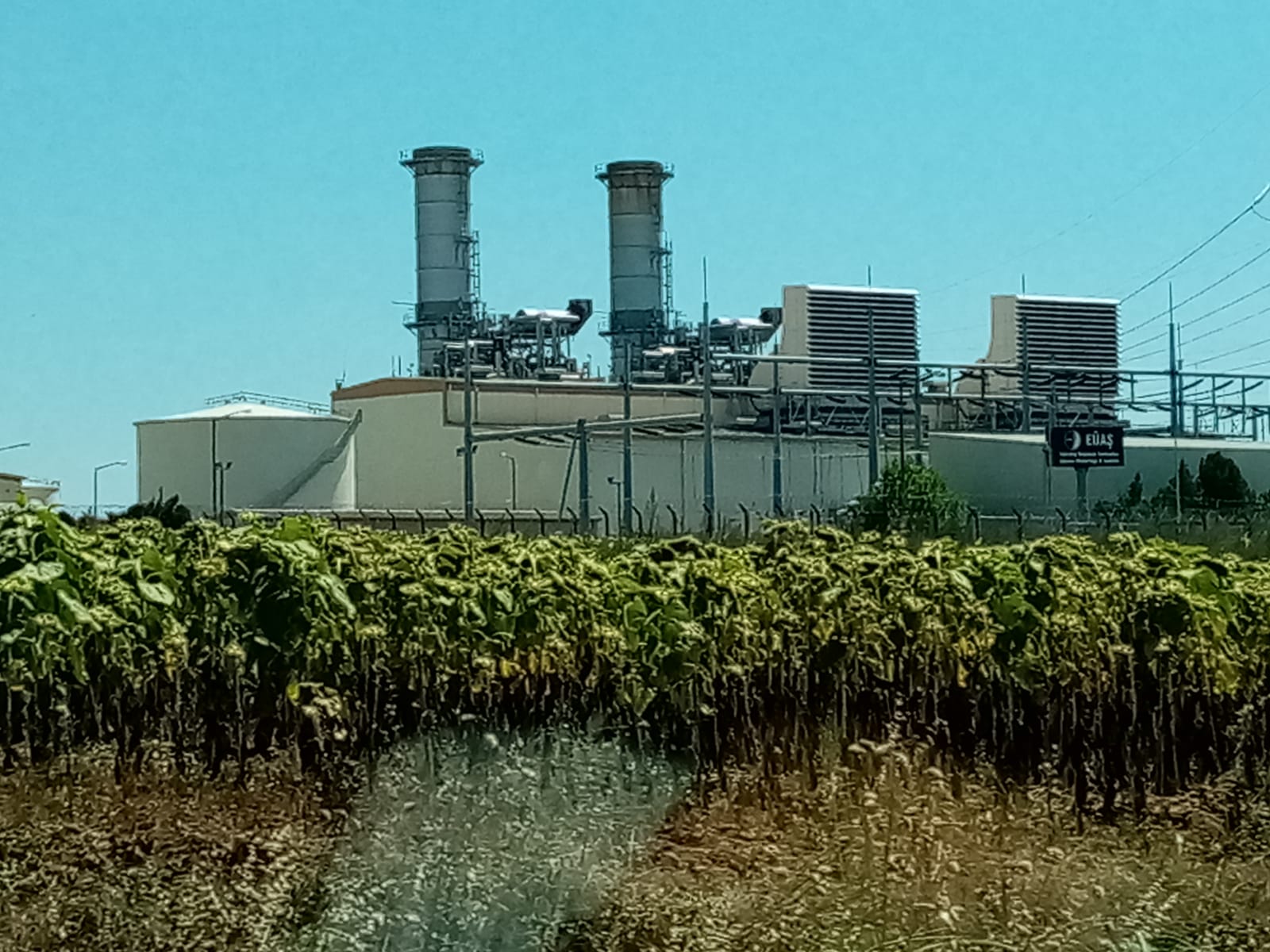
In late September, Anthropic agreed to pay about $3.4 billion for 1.7 gigawatts of natural gas generators, taking over orders that Texas-based equipment supplier OnePWR Solutions had placed with Caterpillar roughly two years earlier, according to the Financial Times. The deal also covers the engineering and construction work needed to install them. Anthropic did not buy OnePWR, and no OnePWR employees moved over. It bought the turbines, and the capacity to hook them up.
It is the largest known single purchase of power-generation equipment by an AI lab, according to Bloomberg, and it signals something bigger: the constraint on AI is no longer chips. It is megawatts.
Why the turbine line is a decade long
To understand why a software company would write a $3.4 billion check for gas turbines, look at the backlog.
Average delivery times for large gas turbines in the United States have stretched to about six years, with some orders extending into 2030 or 2031. Grid interconnection queues, the line to connect a new power plant to the transmission system, can be just as long. Global turbine orders reportedly exceed 100 gigawatts against only 60 to 70 gigawatts of manufacturing capacity. The waiting list is the business model right now.
So Anthropic did what a company with a balance sheet does: it jumped the line. OnePWR had ordered the Caterpillar units a couple of years ago but could not line up the financing to complete the purchase. Anthropic had initially planned to buy power from OnePWR. Instead, it went straight to Caterpillar and took over the existing slots, generators that can be available in the near term and over the next two years rather than at the back of a decade-long queue.
This is the same logic driving the whole industry. Google, Amazon, Microsoft, and Meta have all announced plans to build massive natural gas power plants on-site rather than draw from the public grid. I wrote about Google’s 400MW geothermal deal earlier this year. The grid is being rewired, and the people doing the rewiring are the companies that cannot afford to wait.
The numbers are starting to look like a utilities story, not a tech story. If the buildout proceeds as planned, U.S. data centers alone could consume more natural gas than Germany and Japan combined by 2035, according to CNBC. That is not a metaphor. It is a demand forecast.
The power crunch is now an infrastructure story
If you have been reading this blog for a while, none of this should surprise you. I wrote in July about how Ireland’s data centers now use 23% of the country’s electricity. The AI boom has a way of turning local energy debates into global ones.
What is different now is who is paying for it. In the first couple of years of the AI buildout, the money went to chips and rent. Nvidia sold the picks and shovels, and the cloud companies signed leases. But compute is only useful if you can power it, and the power is not there. So the capital is moving downstream, from GPUs to gas, from data centers to pipelines, from software margins to the physics of electricity.
Anthropic’s own filing is unusually honest about the risk. It flags fuel price volatility, pipeline constraints, and supply disruption as the main dangers of on-site gas generation, the exact strategy this deal doubles down on. One analyst expects natural gas prices could more than triple by the end of the decade in some markets. If that happens, a $3.4 billion turbine purchase starts to look like a very expensive hedge.
There is a financial angle too. Anthropic has disclosed roughly $895 billion in commitments through 2045, with about $69.8 billion coming due within 12 months. Revenue hit $33.2 billion in the first nine months of 2026, but compute and infrastructure costs of $18.8 billion, more than half the top line, left the company with an operating loss of about $1.26 billion. A company preparing for an IPO is supposed to show a path to profit. Instead it is buying power plants.
That is the tension I keep coming back to. The AI buildout is now a debt game, and the financing is starting to look like an infrastructure boom built on borrowed money and grand promises. The $3.2 trillion debt sitting on Big Tech’s balance sheets is the same story one level up. Anthropic’s turbines are a small piece of it. But they are a telling one.
What this means for developers and for the Philippines
If you are a developer, the practical takeaway is simple: where your compute runs now matters as much as how much it costs. The cheapest model in the world does not help if the region it runs in is shedding load or rationing power. Energy is becoming a variable in the architecture decision, right next to latency and price.
And if you are in the Philippines, where I manage an ICT division, this story lands differently. We live with some of the highest electricity rates in Southeast Asia, a grid that browns out during summer peaks, and a power sector still figuring out how to add renewable capacity fast enough. The idea that AI companies are buying their own power plants is not abstract here. It is a reminder that the future of computing will be built where the power is, and that countries with cheap, reliable electricity will have an advantage no amount of software can replicate.
The good news is that the same buildout straining the grid is also creating opportunities. Solar and storage are getting cheaper, and the companies that figure out how to pair them with firm power will define the next decade. AI data centers are losing the trust war in the communities that host them, and that is a problem no turbine can solve. But the energy transition is a chance for countries and communities that get ahead of it.
The bottom line
Anthropic did not set out to become a power company. It set out to build safe AI. But when the grid cannot deliver, even the safest lab in the industry has to buy its own turbines.
The AI era’s most important constraint is not data, or talent, or even capital anymore. It is the wire between the power plant and the server rack. And right now, that wire is the most expensive thing in technology.