
For the past couple of years, the story of AI has been about chips. GPUs, memory bandwidth, who gets the next shipment of H100s, and now whether the whole buildout is quietly turning into a debt game. But there is a bottleneck underneath all that silicon that the cluster vendors do not talk about as much: electricity.
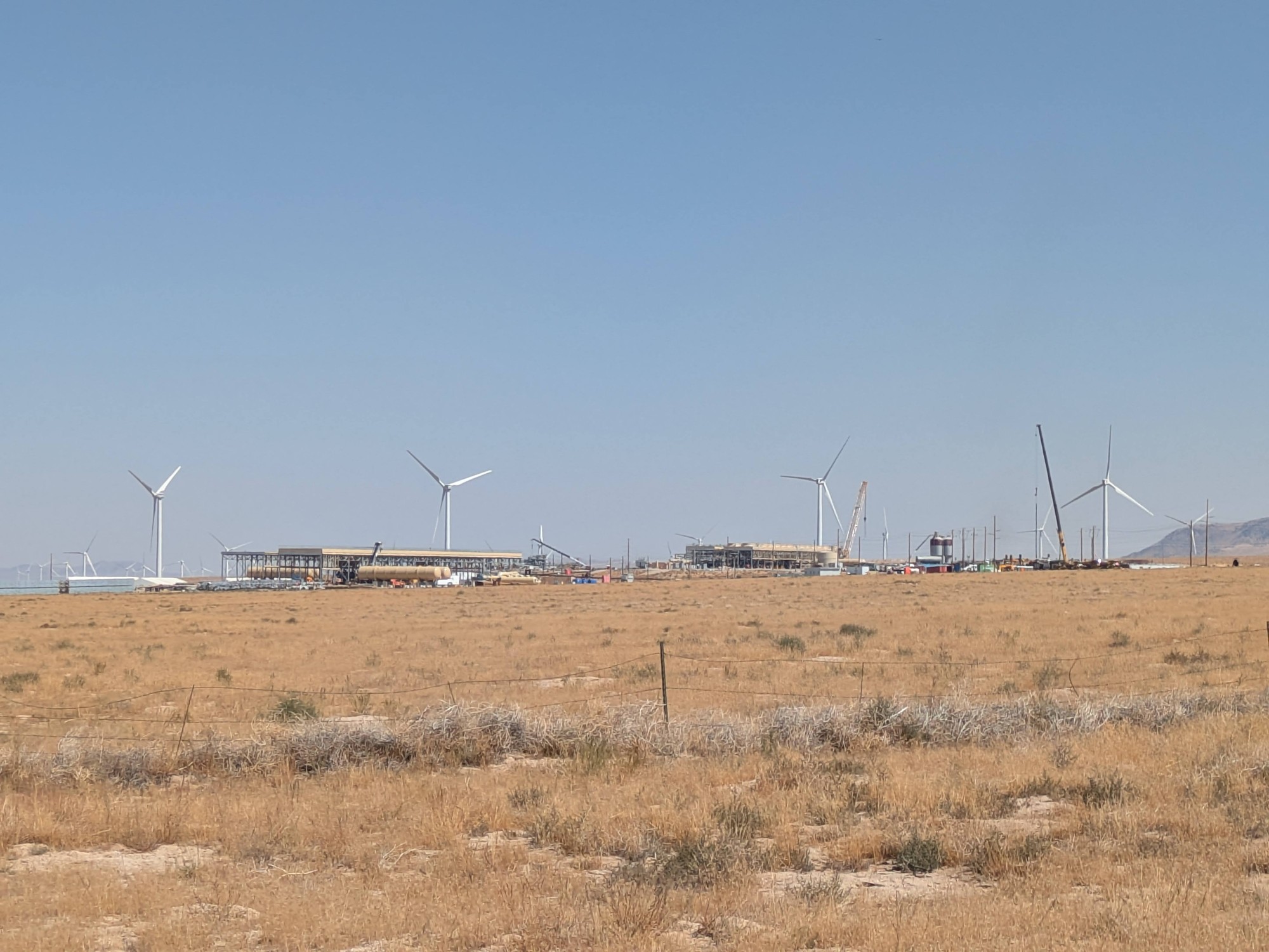

Google just made that bottleneck impossible to ignore. On September 2, the company signed what Fervo Energy calls the largest enhanced geothermal power purchase agreement ever — a 396-megawatt deal from Fervo’s Cape Station plant in Utah, built specifically to feed AI data centers. It has an option to buy roughly 600 megawatts more by June 2030, which would push the total toward a gigawatt.
The Power Behind the Models
Every token you ask a model to generate costs real electrons. The International Energy Agency expects global data center electricity use to climb from about 415 terawatt-hours in 2024 to around 945 terawatt-hours by 2030, with AI driving most of that jump. That is not a rounding error. It is a second, quieter infrastructure boom happening right under the chip arms race.
And unlike the power-hungry nature of these models, this one cannot be optimized away with a clever quant or a better scheduler. A data center needs power at 2 a.m., on a windless night, in the middle of a heat wave. That is what the industry calls firm power — and it is suddenly the scarcest resource in tech.
What Google Actually Signed
Let me lay out the facts, because the numbers matter:
- 396 MW of capacity from Fervo’s Cape Station in Beaver County, Utah, delivered through four 99-MW blocks.
- Power starts flowing in the third quarter of 2028, on a 15-year agreement.
- An option to add ~600 MW more by June 2030, for a combined ~950 MW — nearly a gigawatt, enough to run a very large data center.
- A first phase of ~100 MW is already under development, with a second ~400-MW phase coming online in 2028.
- Google has not finalized the data center site. The power is being secured first, subject to engineering and regulatory approvals.
That last point is the interesting one. Google is buying the electricity before it has even committed to the building. That tells you how worried the hyperscalers are about locking up supply.
Why Geothermal, Why Now
Solar and wind are cheap, but they are intermittent. Batteries help, but they are still expensive at grid scale. Nuclear is firm and clean but slow to build and mired in permitting. That leaves geothermal as one of the few baseload, carbon-free options — and for decades it was limited to places with natural hot springs and favorable geology.
Enhanced geothermal systems change that. Instead of relying on lucky underground conditions, developers drill deep into hot rock and engineer the reservoir themselves, using drilling techniques borrowed from the oil and gas industry. That dramatically widens where you can build a plant. Fervo is standardizing this into 50-MW “GeoBlocks” so projects can be repeated instead of hand-built every time.
The Grid Is the Real Story
The deal also shines a light on how strained the connection queue at the heart of the grid remains. Even with a huge buyer locked in and a site chosen, bringing a gigawatt of new generation online means transmission, interconnection, and years of approvals. Fervo is already flagging transmission-related curtailment issues for 2027, and analysts keep pointing to interconnection bottlenecks as a real risk.
In other words, the hard part is not drilling the well. It is getting the electrons to where the servers actually are.
The Business Bet Behind the Deal
There is a capital side to this too, and it fits a pattern I have been watching all year. Fervo went public on Nasdaq in May 2026, and its stock jumped more than 28% the day the Google deal was announced. But it is still down roughly half from its post-IPO highs, caught in a heavy investment phase with first-of-a-kind execution risk. A buyer with Google’s balance sheet is exactly the kind of anchor offtake that lets a young power company finance the next plant.
That is how the trillion-dollar question of whether AI pays for itself now connects to energy markets. The capex is no longer just servers and networking gear. It is fuel too.
Fervo’s long-term goal is to cut installation costs from about $5,500 per kilowatt down to $3,000 — the point where enhanced geothermal starts competing with other large-scale clean sources. It already claims a commercial pipeline of more than 50 gigawatts. If the cost curve holds, this technology stops being a niche and becomes an actual workhorse.
What This Means for Everyone Building AI
I will be honest about the takeaway for the average reader, because none of us are buying gigawatts. What matters is the signal. When the largest tech companies start signing record-breaking power contracts years before they even break ground on a data center, the message is clear: reliable electricity is now a front-line strategic resource, right alongside GPUs and open-source models.
It is also a reminder that the Philippines is not new to this conversation. We have been running geothermal plants in Tiwi, Makiling-Banahaw, and Leyte for decades. Enhanced geothermal is essentially the export of the same principle — pull heat from the earth reliably around the clock — to places that never had the geology for a conventional plant. Watching American companies race to industrialize that technology is, frankly, a little vindicating for our own power sector’s legacy.
The Bottom Line
AI’s electricity problem is not going away, and it is not going to be solved by one deal. But Google locking up nearly a gigawatt of firm, carbon-free power tells you where tech companies think the future is heading: not faster chips alone, but a grid that can actually feed them around the clock.
I would not be surprised if the next “AI arms race” story stops being about model benchmarks entirely and becomes about who controls the baseload. After this week, Google has made its first big move.