
The Hilux Goes Electric — and It Costs ₱2.99 Million
For decades, the Toyota Hilux has been the pickup truck that Filipino families, truckers, and farm owners rely on to get goods from point A to point B. It is the vehicle you borrow when you need to move furniture across Metro Manila, the one that survives potholes most others can’t. So when Toyota Philippines unveiled the first-ever battery-electric Hilux in June 2026, it didn’t feel like just another new model launch. It felt like a quiet shift in how an entire industry runs.
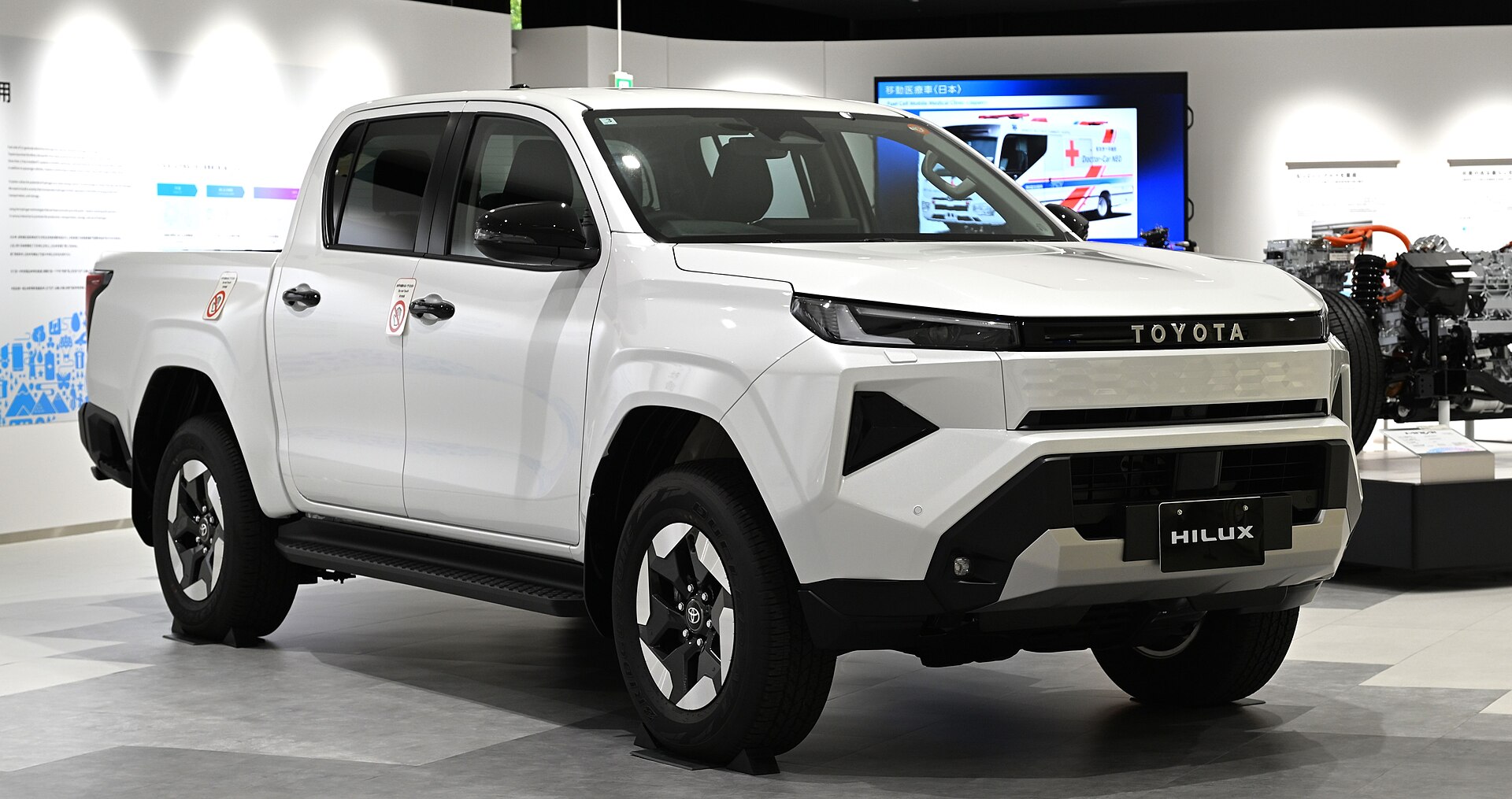
The all-new 2027 Hilux arrived in Philippine showrooms in July with both a diesel option and the Hilux 4×4 BEV at PHP 2,990,000. It is the first electric variant of the name that has shaped Philippine roads for thirty years.
What’s Under the Hood
The BEV is a purpose-built electric pickup, not a retro-fitted combustion model. Toyota gave it a dedicated ladder-frame chassis designed for electric propulsion, an enclosed aerodynamic grille, and a dual-motor all-wheel-drive setup.
Here are the verified specifications:
| Specification | Detail |
|---|---|
| Price (SRP) | PHP 2,990,000 |
| Battery | 59.2 kWh lithium-ion (56 kWh usable) |
| Drivetrain | Dual-motor, all-wheel drive |
| Power | 196 PS (193 hp) combined; 200 Nm front + 269 Nm rear |
| Range | 315 km NEDC; ~257 km WLTP |
| DC fast charging | 150 kW CCS2, 10–80% in ~30 minutes |
| AC home charging | 10 kW Type 2, ~6.5 hours (10–100%) |
| Warranty | 5 years / 100,000 km (per Toyota PH) |
Pricing in context: USD approx. US$48,700 (computed at 61.39 PHP/USD); approx. Rs 47.0 lakh (USD converted at 96.57 INR/USD). These conversions are calculated from the PHP SRP and current live exchange rates, which move day to day.
Two notes on the numbers: the 315 km figure is the NEDC cycle figure Toyota published, while independent testing (EV Database) rates WLTP range at about 257 km. The DC charging figure of 150 kW is the peak, reached over only part of the charge curve — a realistic 10–80% session on this 400V-platform car lands closer to 30 minutes.
City Driving: Instant Torque, a 257-Km Ceiling
Like every electric vehicle you have driven, the Hilux BEV feels like it wakes up instantly. The dual motors deliver torque from zero revs, which makes merging onto EDSA ramps and navigating the tight, stop-and-go rhythm of Metro Manila easier than a diesel equivalent. BYD Seagull offers a similar dual-motor option for tighter city budgets. The dual-motor AWD also adds confidence on wet streets and uneven loads.
But the range figure deserves respect. At roughly 257 km on the WLTP cycle, a full charge will not take you from Makati to Alabang and back in heavy traffic with the AC running and the kids complaining about the seat massager. City drivers will want to keep home charging as a given, which is precisely why Toyota included a wall charger and home installation with the purchase.
Long-Distance Travel: Plan Around Chargers
The Intercity route from Manila to Baguio runs roughly 250 km. On a full battery you can make it in one go — but every kilometre on the highway sucked up by hard acceleration and heavy cargo puts more stress on the pack. The data from other markets shows 150 kW DC charging does the trick for a 30-minute pit stop, so a Manila–Baguio trip adds roughly half an hour to the drive instead of two hours.
The real constraint is the network. Manila Bay, North EDSA, and Commonwealth have DC fast chargers, but the provincial network still has large gaps. If you plan to drive the Hilux BEV to Baguio, La Union, or Central Luzon outside Metro Manila, check for a charger along the corridor before you leave EV Charging in the Philippines.
Floods and Heat: The EV Advantage, With Caveats
One quiet benefit of the electric powertrain for Philippine conditions is no hydrolock risk. A diesel engine draws air and fuel into its cylinders; if floodwater enters, the pistons can hydrolock and destroy the engine. An electric motor does not have that vulnerability. The Hilux BEV’s battery pack is sealed and rated for water ingress, and Toyota has published no wading-depth figure for the PH unit. I would still treat 197 mm of approach angle as my practical limit and avoid deliberate flood crossings — the rule of thumb has not changed: if the water is above the wheel arch, turn around.
On heat, the 59.2 kWh NMC pack is liquid-cooled, which helps in the 36–38°C Metro Manila heat. The air conditioner runs off the high-voltage pack, so you will feel a modest range penalty in extreme heat — the same penalty you feel in any EV, though LFP chemistry would be marginally more forgiving. Toyota’s 5-year battery warranty covers the pack for the life of the car.
What Other Drivers Are Saying
Top Gear Philippines wrote a first-impressions piece in October 2026, concluding that “the fully electric range is listed at 315km NEDC, even less with the WLTP standard” and noting that prices start at P2.99 million. The publication’s practical advice for PH owners: “local charging infrastructure isn’t quite there yet for a BEV to get the same freedom as internal combustion engine-equipped models.”
Nissan Primera EV and Navara Pro PHEV joined the Philippine EV race in November. The CarGuide PH review of the all-new Hilux lines up the same message for the electric variant: reservations opened at the Philippine International Motor Show, the BEV is sold alongside diesel variants, and a comprehensive network of authorized BEV dealers with EV charging stations is being rolled out across key provinces — from Toyota Alabang and Commonwealth to Toyota North EDSA and Toyota Mandaue South Cebu.
Why This Matters for the Philippines
The Hilux BEV is not trying to win a drag race. It is trying to win a quiet argument: that electrification is not only for city sedans and hatchbacks. For fleet operators, for pickup users who return home every night and can charge at a dedicated station, the Hilux BEV offers a compelling operating-cost story. Electricity per kilometer is a fraction of diesel, maintenance drops to near zero, and the 196 PS of dual-motor AWD still hands you a strong ute.
The upgrade cost is real: at P2.99 million, the BEV is about a million pesos more than the top diesel variant. That premium buys you instant torque, single-gear simplicity, and a premium all-weather driving experience. Other electrified pickups like the Deepal S07 and Nissan Navara Pro PHEV show the space is growing. Whether it pays for itself depends on how many kilometres you drive and how reliably you can charge at home.
For now, the Hilux BEV is a compelling boutique option — the electric pickup for Filipinos who need the badge, the capability, and the peace of mind, and who can charge at home. Toyota’s network is still growing. If you’re in the market, the question is less “can it do the job?” and more “can you charge it when you need to?”