

Jeff Bezos just dropped $12 billion on a bet that AI can redesign the physical world. His new startup, Prometheus, closed its Series B at a staggering $41 billion valuation — making it one of the most richly funded AI companies on the planet.
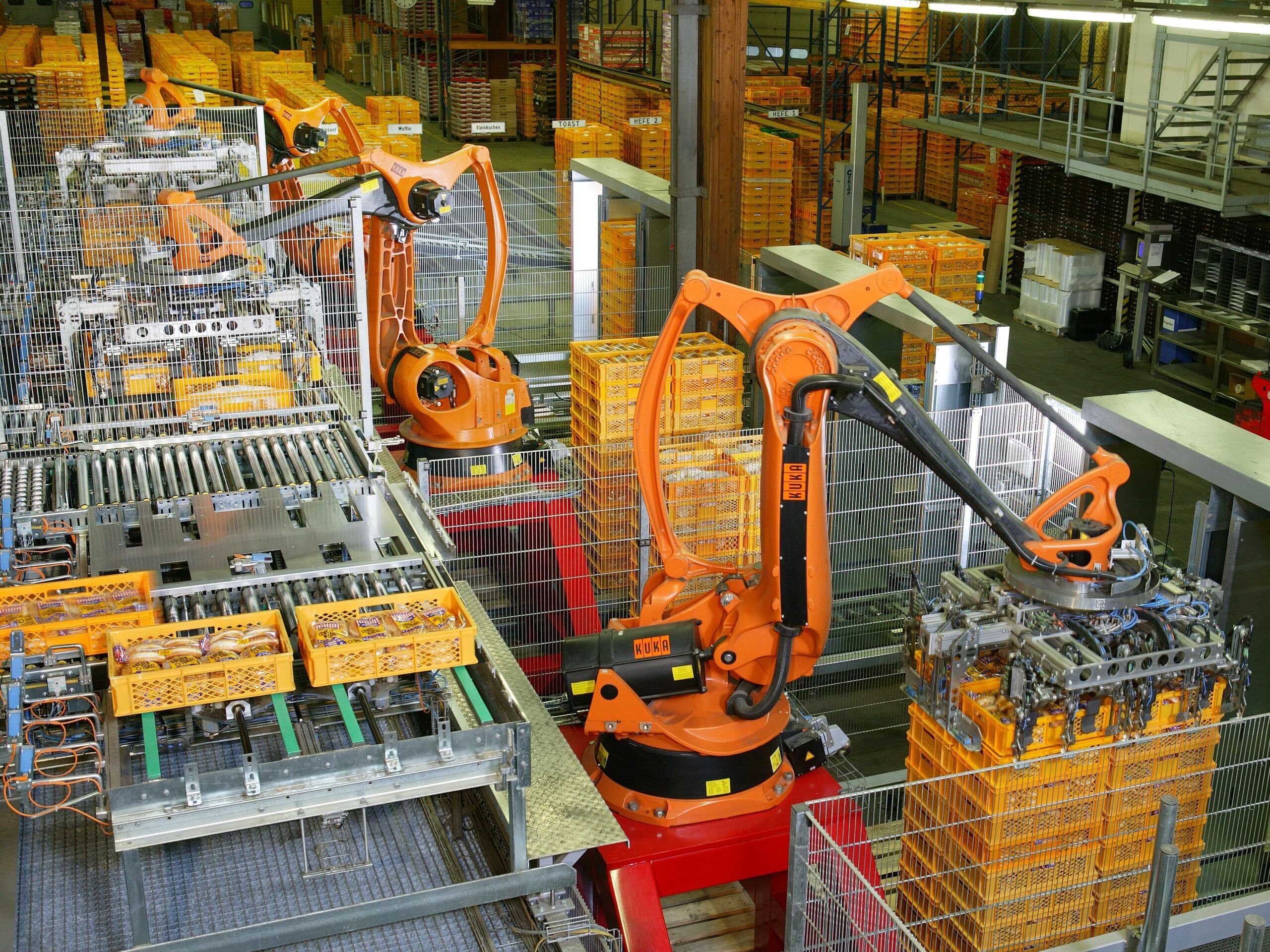
The pitch? Build an “artificial general engineer” — software that can automate the design and manufacturing of complex physical systems, from jet engines to drug compounds. Not another chatbot. Not another code assistant. Something that actually touches metal.
What Prometheus Is Actually Building
Prometheus launched late last year with a $6.2 billion initial raise. Co-founded by Bezos and Vik Bajaj (former co-founder of Verily, Google’s life sciences unit), the company has been operating in stealth mode with about 150 employees across San Francisco, London, and Zurich.
The specifics remain under wraps, but the vision is clear: replace large swaths of traditional engineering work with AI that understands physics, materials science, and manufacturing constraints. This isn’t about generating code or writing marketing copy — it’s about designing things that have to work in the real world, where gravity, heat, and material fatigue don’t care about your prompts.
The $41 Billion Question: Why Physical AI?
Here’s what caught my attention: Bezos is betting that physical AI creates moats that pure software cannot. In a market where everyone and their grandmother is building AI wrappers and chatbots, there’s something refreshingly concrete about a company trying to design better jet engines.
The investor lineup backs this up. JPMorgan Chase, Goldman Sachs, and BlackRock joined Bezos in this round. These aren’t Silicon Valley VCs chasing the next B2B SaaS unicorn — these are institutions that understand industrial scale and long development cycles.
As TechCrunch reported, the company was testing its valuation with investors before the roadshow even started, and the offering attracted four times the available shares.
“Labor Scarcity” — Bezos’s Contrarian Take on AI Jobs
Most AI leaders warn about job losses. Bezos sees it differently. He calls his thesis “labor scarcity” — the idea that AI productivity gains will create more demand for human workers, not less.
“Significant productivity in the economy is going to raise the standard of living,” Bezos told CNBC. “People who today have two-earner households, they’ll become one-earner households. Maybe some people who are working overtime will stop working overtime.”
It’s a bold claim, especially coming from the guy whose company Amazon employs over 1.5 million people worldwide and has laid off tens of thousands in the past year as it accelerates its own automation push. The contradiction isn’t lost on me — but it’s also not entirely wrong. History shows that technology tends to create new categories of work even as it destroys old ones.
The Physical AI Land Rush
Prometheus isn’t alone. The physical AI sector has seen a surge of investor interest in recent months. The argument is compelling: software companies can be disrupted by a weekend hackathon, but building something that actually works in the physical world requires domain expertise, manufacturing partnerships, and years of iteration. That’s a moat.
Think about it this way: anyone can clone a SaaS product in a week. But try replicating the engineering knowledge needed to design a turbine blade that survives 10,000 hours at 1,500 degrees Celsius. That’s the kind of challenge Prometheus is tackling.
What This Means for Developers
If you’re a software developer watching this space, here’s my take: the “physical AI” wave is creating a new category of problems that need solution architects. Not just ML engineers who can fine-tune models, but people who understand the intersection of code, physics, and manufacturing.
I’ve been watching similar trends in the Google $85 billion AI raise coverage — the money is flowing into infrastructure and applications that actually solve real-world problems, not just generate text. Prometheus takes this a step further by literally building things.
For Filipino developers and engineers, this could mean new opportunities in specialized AI tooling, simulation software, and digital twin technologies. The physical world still needs people who can bridge the gap between AI models and real manufacturing processes.
The Huawei DeepSeek story showed us that AI hardware is becoming a geopolitical battleground. Prometheus adds another dimension — it’s not just about who builds the chips, but who can use AI to design better physical systems.
The Risks Nobody’s Talking About
Let’s be honest about the challenges. $41 billion is an insane valuation for a company with 150 employees and no publicly demonstrated product. The history of AI startups is littered with ambitious visions that collided with the messy reality of physical engineering.
Designing a jet engine with AI is one thing. Getting that design through regulatory approval, manufacturing validation, and real-world testing is another beast entirely. Bezos knows this — Amazon’s own hardware ventures have had their share of spectacular failures alongside the successes.
There’s also the compute problem. Bezos indicated that a large portion of the capital will go toward compute needs. Training models that understand physics and materials science at the level required for serious engineering work requires massive computational resources. Even with Bezos’s deep pockets, that’s a significant burn rate.
And then there’s the pricing question. As we saw with the GitHub Copilot Tokenpocalypse, AI economics are shifting fast. Physical AI will face even steeper compute costs — you can’t run a materials science model on a consumer GPU.
Bottom Line
Prometheus represents something I’ve been waiting to see: AI companies tackling problems that matter beyond the digital realm. The $41 billion valuation is either the smartest bet in tech or the most expensive moonshot since WeWork.
My gut says it’s somewhere in between. The vision is sound — physical AI really does create defensible moats. The team has serious credentials. And the capital is there to play the long game.
But the execution risk is enormous. Designing physical systems with AI requires solving problems that are fundamentally harder than generating text or code. The physics don’t care about your training data.
I’ll be watching this one closely. If Prometheus can actually deliver on its “artificial general engineer” promise, it won’t just validate Bezos’s bet — it’ll reshape how we think about the intersection of AI and the physical world.
And that’s a story worth following.