
Another electric crossover just landed in the Philippines, and this one is priced to make you do a double take. The Dongfeng Vigo EV went on sale back in May at a P1.458 million intro price, with a range figure that beats most of what’s in its class. I finally sat down to dig through everything about it — the specs, the reviews, and whether it actually makes sense on EDSA and beyond.
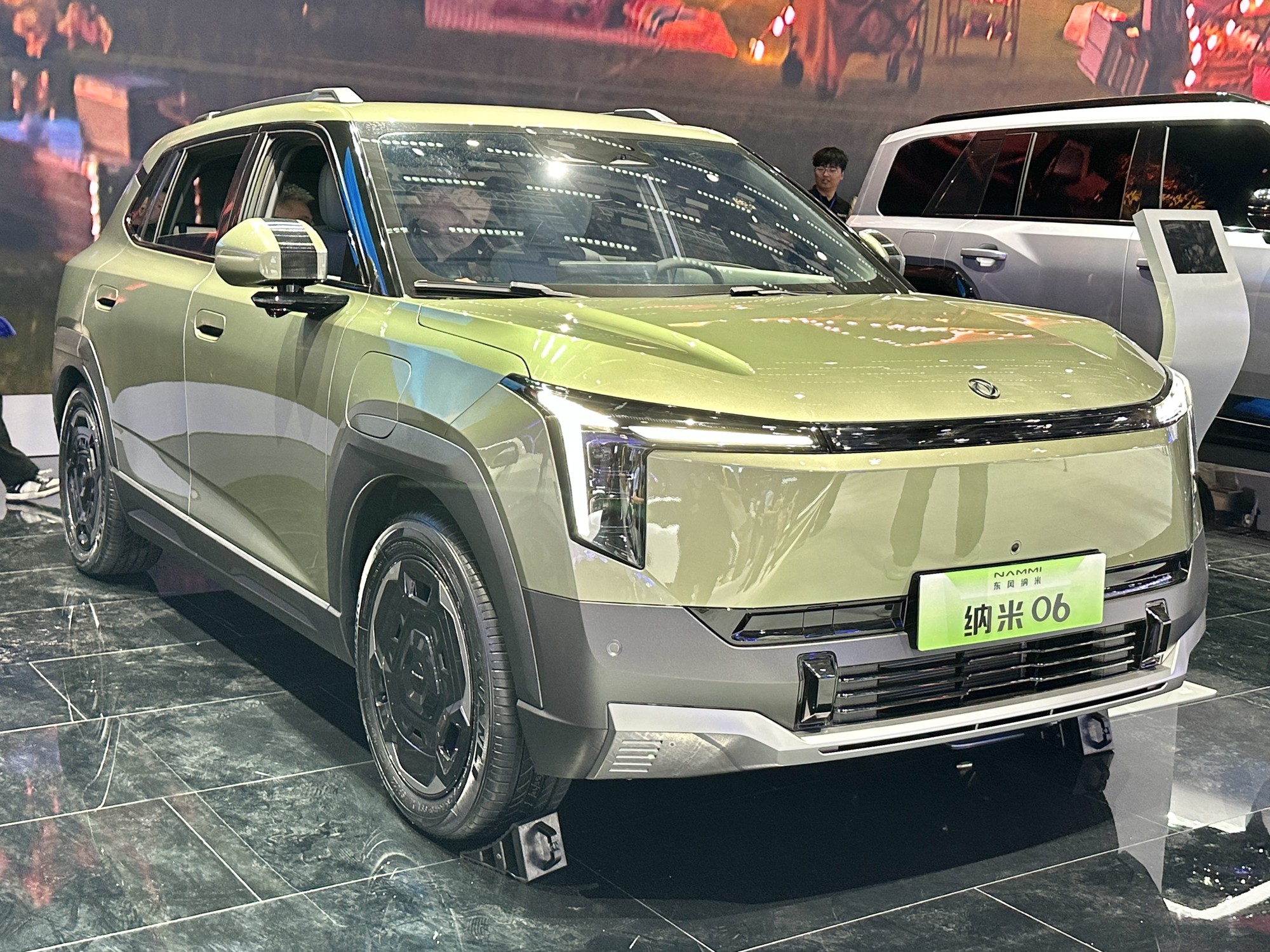

Here’s the short version: the Vigo is a compact electric SUV with a 51.87 kWh LFP battery, a claimed 471 km of range on the CLTC cycle, and a generous list of standard equipment. It’s also DOE-recognized, which for a Chinese EV in this market means charging incentives and a smoother path to ownership.
Dongfeng Vigo EV at a Glance
Before we go deep, let’s lay out the full specification sheet. The Vigo is the export name for what China knows as the Dongfeng Nammi 06, a compact crossover built on Dongfeng’s Quantum Architecture S3 platform — the same foundation as the smaller Nammi 01.
| Body | 5-door compact crossover, 5 seats |
| Dimensions | 4,306 x 1,868 x 1,654 mm |
| Wheelbase | 2,715 mm |
| Ground clearance | 190 mm |
| Motor | Single permanent-magnet synchronous, front-wheel drive |
| Power | 163 PS (120 kW) / 230 Nm |
| Battery | 51.87 kWh LFP (Sunwoda) |
| Range | 471 km (CLTC) / ~350 km (WLTP) |
| Charging | AC 6.6 kW (0-100% in ~7 hours); DC up to 167 kW (30-80% in ~18 minutes) |
| Cargo | 500 L (1,040 L with seats folded) |
| Wheels | 18-inch alloys, 235/60R18 |
| Top speed | 150 km/h |
| Warranty | 5 years / 150,000 km vehicle; 8 years / 170,000 km battery |
One detail that stands out is the split tailgate — the upper glass and lower section open separately, which is genuinely useful when you’re loading groceries or camping gear. The trunk holds 500 liters with the seats up, and folding the 60:40 rear bench opens up 1,040 liters.
Inside you get a 12.8-inch touchscreen with wireless Apple CarPlay, an 8.88-inch digital instrument cluster, a 50W wireless charging pad, power-adjustable front seats, and leather upholstery as standard. The column-mounted shifter frees up console space, and there’s a full ADAS suite — automatic emergency braking, adaptive cruise with stop-and-go, lane keep and centering, traffic sign recognition, and intelligent high-beam control.
Dongfeng Vigo EV Price in PHP, USD, and INR
The Vigo launched in a single variant at P1,458,000. At the BSP reference rate of roughly 61.25 PHP/USD and 95.4 INR/USD (August 2026), that works out to:
| PHP | P1,458,000 |
| USD | ~$23,800 |
| INR | ~Rs 22.7 lakh |
That price tag sits in an interesting spot. It undercuts the Chevrolet Captiva EV at P1,999,000 by more than half a million pesos, and it’s only about P120,000 above the BYD Atto 2 EV at P1,338,000 — for a bigger battery and a much longer claimed range. That’s the value proposition in one line.
| Model | Price | Battery | Range |
| Dongfeng Vigo EV | P1,458,000 | 51.87 kWh | 471 km CLTC |
| BYD Atto 2 EV | P1,338,000 | 45.12 kWh | 380 km NEDC |
| GWM Ora 5 EV | ~P1.35-1.55M (est) | 58.3 kWh | 580 km NEDC |
| MG S5 EV | ~P1.3M | — | 415 km |
| Chevrolet Captiva EV | P1,999,000 | 60 kWh | 415 km NEDC |
For context, this is the same “DOE-listed before official launch” pattern we saw with the Kia EV3 and the Jaecoo J8 PHEV — except the Vigo actually made it to market. If you’re shopping in this bracket, my BYD Atto 2 launch coverage and GWM Ora 5 analysis are worth reading alongside this one.
What the Reviews Say
Local and regional outlets have had mostly positive things to say about the Vigo since its May 2026 launch.
Top Gear Philippines called it “another relatively affordable electric vehicle” and noted it looks a bit like the Kia EV5 from certain angles — not a bad compliment for a car that undercuts its rivals by six figures. They highlighted the 18-minute 30-to-80 percent DC charging time as a practical selling point.
Zigwheels Philippines ran a dedicated strengths-and-weaknesses piece, praising the good power and range, strong usability (that split tailgate again), and the sheer amount of safety kit and creature comforts. Their main gripe: the air-conditioning controls live entirely inside the touchscreen, with no physical buttons — a fair point for anyone who’s tried adjusting AC while crawling through Manila traffic.
AutoIndustriya covered the launch in detail, emphasizing the 190 mm ground clearance and the boxy-but-futuristic design with its L-shaped lighting signature. Paul Tan’s Automotive News previewed the Malaysia-spec Vigo and framed it squarely as a BYD Atto 2 rival — the exact segment it’s gunning for here.
Is the Dongfeng Vigo Right for Filipino Roads?
City Driving
This is where the Vigo shines. A 471 km CLTC figure means even the conservative real-world number — think 300-plus km — covers over a week of daily EDSA commutes without a charge. The 163 PS motor gives you instant torque for quick gaps in traffic, and the 4.3-meter body is easy to slot into Makati and BGC parking. The 360-degree camera and front-and-rear sensors make tight U-turns and mall parking less stressful.
Long-Distance Travel
Manila to Baguio is roughly 250 km one way, which the Vigo handles on a single charge with room to spare. Manila to Batangas, Manila to Subic — all doable without charging stops. For longer trips like Manila to Bicol, you’ll want to plan a CCS2 fast-charge stop, and the 18-minute 30-to-80 percent window keeps those stops short. The V2L function is a bonus for road-trip people — you can power a cooler or charge devices at a campsite.
Flooded Situations
This is the one I keep a close eye on for any EV in the Philippines. The Vigo’s 190 mm ground clearance is decent for the segment — better than a low-slung sedan — and as an EV it has no air intake to hydrolock. But LFP battery packs sit low, and the battery’s IP rating hasn’t been officially published for the PH market, so the rule stays the same: treat flooded streets as a no-go regardless of the vehicle. If water is over the bottom of the doors, don’t push through.
High Temperatures
LFP chemistry is the right call for our climate. It’s more thermally stable than NMC under high heat, and the battery management system handles the 36-38°C summers without the degradation headaches older EV chemistries had. The automatic climate control with rear vents and a PM2.5 filter helps the cabin stay livable, and the 50W wireless charger being actively cooled means your phone won’t cook while it charges.
The Bigger Picture
Dongfeng’s local distributor has been growing its network steadily, and the brand already has a presence with the Nano Box and Nammi in the affordable segment. The Vigo slots just above those as the family-sized option. For context on where this sits in the broader EV value conversation, check out my Bestune Pony analysis and my take on the XPeng L03 and X9, both of which are shaking up the same price brackets.
Bottom Line
The Dongfeng Vigo EV isn’t the flashiest electric crossover you can buy in the Philippines, and it doesn’t need to be. At P1.458 million you get a genuinely practical family EV with class-leading range on paper, fast charging, ADAS, and a warranty package that covers the battery for eight years.
The trade-offs are real — the all-touchscreen climate controls take getting used to, and the ~350 km WLTP figure is a more honest expectation than the CLTC number for mixed driving. But for a first EV or a family’s daily driver, the Vigo makes a strong argument. If Dongfeng keeps this up, the local electric SUV segment just got a lot more interesting.