
Three years ago, I wouldn’t have recommended a foldable phone to anyone. The creases were ugly, the batteries died by 4 PM, and you could feel the hinge loosening after a few months of use. I know because I lived through that era — and I stuck with it anyway. Today, I’m typing this on a Samsung Galaxy Z Fold 7 that I’ve been using for almost a year, and it still feels like the future every time I unfold it.
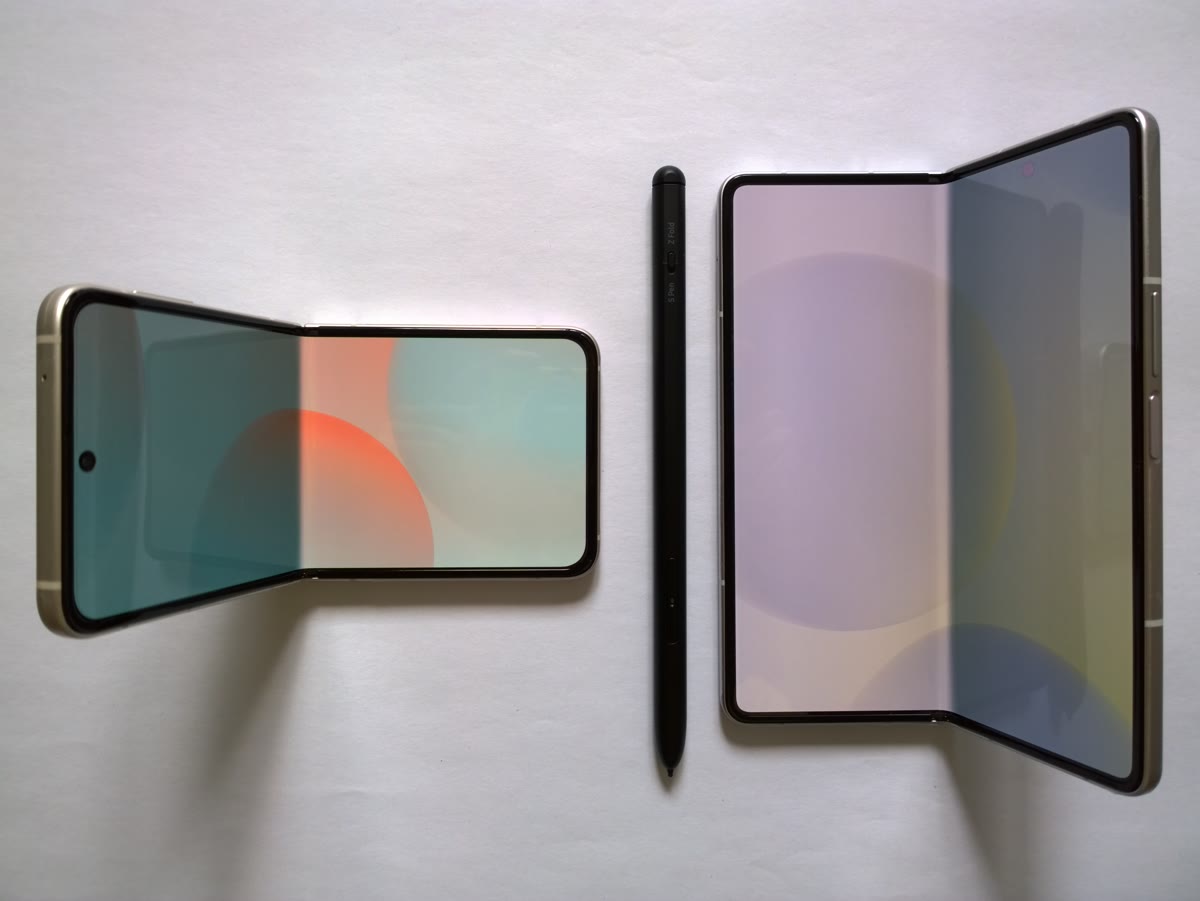

But here’s the thing: the conversation around foldables has shifted. It’s no longer “are foldables viable?” — the New York Times recently declared foldable phones are now worth buying. Multiple publications — Tom’s Guide, PhoneArena, CNET — are putting foldables on their “best phones” lists alongside traditional slabs. Even Apple is reportedly working on a foldable iPhone for 2027.
So the real question for 2026 isn’t whether foldables are good. It’s whether they’re good enough for you.
What Changed: The Crease Is Still There, But You Stop Caring
Let me get the obvious out of the way. Yes, foldable phones still have a crease where the screen bends. If you run your finger across it on any Samsung Galaxy Z Fold or Motorola Razr, you’ll feel it. The technology has gotten dramatically better — Samsung’s Flex Hinge on the Z Fold 7 nearly flattens out — but physics is physics. A screen that folds will always have a fold line.
Here’s what I’ve learned after a year: you stop noticing it within 48 hours. Your brain adapts. When you’re watching a video, reading an article, or working on a document, your eyes focus on the content, not the crease. It’s like the notch on your laptop screen — technically there, practically invisible once you’re used to it.
The Flip Phone Renaissance
The most interesting foldable story of 2026 isn’t the big-screen foldables — it’s the flip phones. Motorola’s Razr lineup has been leading this charge, and the Razr Ultra 2026 represents the best of what a clamshell foldable can be: a full-featured smartphone that fits in your front pocket.
Motorola Razr Ultra: Premium Flip, Premium Price
At $1,500, the Razr Ultra isn’t cheap. But it delivers a 6.9-inch internal display, a capable cover screen that handles most quick tasks without opening the phone, and build quality that feels genuinely premium — the Alcantara finish on some models is a nice touch. CNET calls it “a great flip phone” but questions whether the price is justified when the standard Razr does most of the same things for less.
That’s the tension in the flip phone market right now. The technology is solid. The experience is good. But the pricing hasn’t quite caught up with the value proposition for most people.
Samsung’s Answer: Galaxy Z Flip 8
Samsung isn’t sitting still. The Galaxy Z Flip 8 is reportedly bringing back Snapdragon chips alongside Exynos, and production is ramping up. Samsung learned from the Z Flip 6 that people want flagship performance in a flip form factor — not a watered-down processor to hit a price point. If they nail the pricing and keep the camera quality competitive, the Z Flip 8 could be the foldable that finally goes mainstream.
The Big-Screen Foldables: Better Than Ever
For those who want a tablet that fits in their pocket, the big-screen foldable category keeps improving. My Z Fold 7 experience has been genuinely positive — the multitasking is real, not a gimmick. Running two apps side by side, drag-and-drop between windows, using the outer screen for quick replies and the inner screen for deep work. It’s the closest I’ve gotten to carrying a laptop without carrying a laptop.
Samsung’s Galaxy Z Fold 8 Wide is getting a full-scale production run, which signals confidence from Samsung that the demand is there. The “Wide” branding suggests they’ve finally addressed one of the biggest complaints: the outer screen being too narrow to use comfortably. If they’ve widened it even slightly, that alone could be the upgrade that convinces holdouts.
Google Pixel Fold 2 and the Competition
Google’s entry into the foldable space with the Pixel Fold brought something different — the best camera on a foldable, backed by Google’s computational photography. The second generation should refine the formula further. Meanwhile, OnePlus, Honor, and Xiaomi continue to push foldable innovation in markets where Samsung’s dominance isn’t as absolute.
The broader Android ecosystem is also getting smarter about supporting these devices. If you’ve been building with AI-assisted development tools, you’ve probably noticed that AI code assistants are getting better at generating responsive layouts that adapt to unusual screen ratios — which is exactly what foldables need.
What Still Sucks About Foldables in 2026
I love my foldable, but I’m not going to pretend it’s perfect. Here’s what still needs work:
Battery life. Two screens draw more power than one. My Z Fold 7 gets me through a full day, but just barely. Heavy users will need to charge by late afternoon. When phones like the vivo S60 pack 7,200mAh batteries into a standard form factor, it makes you wonder why foldables can’t match that capacity.
Weight and thickness. Even the thinnest foldables are thicker and heavier than a standard phone. You notice it in your pocket. You notice it when you’re holding it one-handed for extended periods. It’s better than it was, but it’s still there.
Repair costs. If you crack that inner display, you’re looking at $400-600 for a repair. Screen protectors help, but the anxiety of carrying a $1,500+ device with a flexible display never fully goes away.
App optimization. Most apps work fine on foldables, but “fine” isn’t the same as “optimized.” Some apps still letterbox awkwardly, and split-screen mode sometimes feels like a workaround rather than a feature. Android has gotten better at handling different screen ratios, but developers still treat foldables as an afterthought.
The Apple Factor
Here’s the elephant in the room: Apple’s foldable iPhone Ultra, rumored for a 2027 release. When Apple enters a category, it tends to legitimize it in the mainstream consciousness in a way that Samsung and Motorola simply can’t. AirPods didn’t invent wireless earbuds, but they made everyone want them. The Apple Watch didn’t invent smartwatches, but it made them normal.
If Apple delivers a foldable iPhone that’s even halfway decent, it’ll do more for foldable adoption than five years of Android manufacturers trying to convince people. That’s just how the market works. The tech industry’s biggest players know that mainstream adoption often follows the Apple playbook — even when the underlying technology was mature years earlier.
So Should You Buy a Foldable in 2026?
Here’s my honest take after living with one for a year:
Buy a foldable if:
- You read a lot on your phone (articles, e-books, documents)
- You multitask — two apps side by side is genuinely useful
- You want something that feels different from the same slab phone everyone carries
- You’re okay with a heavier, thicker device
- You can handle the price premium without wincing
Don’t buy a foldable if:
- Battery life is your top priority
- You’re rough on your phones — drops are expensive
- You primarily use your phone for calls, texting, and social media scrolling
- You want the thinnest, lightest phone possible
The honest answer is that foldables in 2026 are no longer experiments. They’re mature enough that you won’t regret buying one — but they’re not so superior that you’re missing out by sticking with a traditional phone. The NYT is right that they’re “worth buying.” But “worth buying” and “must buy” are different things.
What I’d Actually Recommend
If you’re curious about foldables and want to try one without going all-in, start with a flip phone like the Motorola Razr 2026 or the upcoming Samsung Galaxy Z Flip 8. They’re more affordable, the form factor is immediately fun, and you get most of the foldable experience in a pocketable package.
If you want the full productivity play — the big screen, the multitasking, the “I can work from this” feeling — then the Samsung Galaxy Z Fold 8 (when it drops) or the current Z Fold 7 are your best bets. Just make sure you get a good case and insurance.
Foldables aren’t the future anymore. They’re the present — imperfect, improving, and genuinely useful. That’s more than I could say about them three years ago.