
Mazda Philippines just served notice that plug-in hybrids are coming to our market. Speaking at the launch of the all-new 2027 CX-5, Mazda Philippines president and CEO Steven Tan confirmed that PHEV models will join the lineup within the next year.
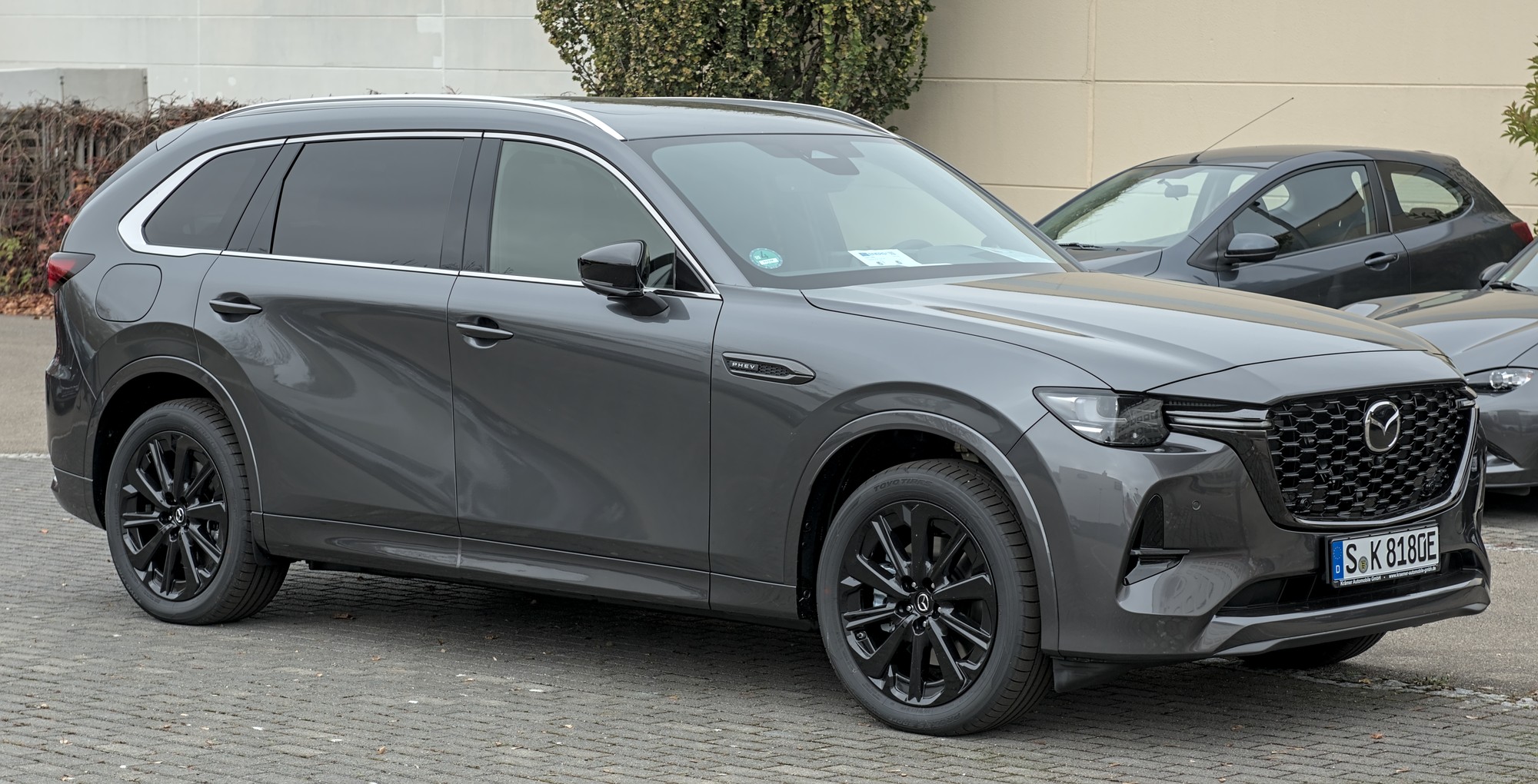

It’s a quiet but significant signal. Mazda has been rolling out its M Hybrid models locally for a while, but the full-blown plug-in has stayed off our shores. That’s about to change.
Why the timing makes sense
Tan framed the decision around Mazda’s “multi-solution strategy” — deploying the right technology at the right time for each market. Electrified vehicle adoption is moving quickly in the Philippines, and a plug-in hybrid bridges the gap for buyers who aren’t ready to go fully electric but want a meaningful all-electric daily commute.
Here’s the thing: Mazda isn’t just dipping a toe in. The announcement lines up with the broader push for electrified mobility we’ve been chronicling on this site, from the Mitsubishi Outlander GT PHEV flagship to the JAECOO J5 EV. PHEVs are suddenly the hottest segment in the country.
Which model is likely? Three candidates, one powertrain
Mazda is tight-lipped about which plug-in models it intends to bring, but the field narrows quickly. Only three nameplates use this powertrain overseas: the CX-60 PHEV, the CX-80 PHEV, and the CX-90 PHEV. All three share the same 2.5-liter e-Skyactiv plug-in setup.
The shared 2.5L PHEV powertrain
Whatever body it lands in, the hardware is consistent. A 2.5-liter direct-injected Skyactiv-G engine produces 192 hp and 261 Nm, and it’s mated to a 175 hp electric motor. Combined output lands at 327 hp and 500 Nm of torque.
Power flows through Mazda’s multi-clutch eight-speed automatic. The company likes this gearbox because it blends the combustion engine and electric motor precisely at all speeds while keeping the rhythmic shifts drivers associate with a manual.
The 17.8 kWh lithium-ion battery is where the plug-in magic happens. It delivers a WLTP-rated all-electric range of around 62 kilometers. That pairs with a 7.2 kW AC onboard charger that can top the pack up in about 90 minutes.
Crucial CX-80 PHEV specs at a glance
| Spec | Mazda CX-80 PHEV |
|---|---|
| Engine | 2.5L Skyactiv-G, 192 hp / 261 Nm |
| Electric motor | 175 hp |
| Combined output | 327 hp / 500 Nm |
| Battery | 17.8 kWh lithium-ion |
| EV range | ~62 km (WLTP) |
| AC charging | 7.2 kW, ~90 min to full |
| Transmission | Multi-clutch 8-speed automatic |
| Drive | AWD |
| Dimensions | 4,995 x 1,890 x 1,710 mm |
| Boot | 566 L seats up / 1,971 L folded |
| Curb weight | 2,045 – 2,216 kg |
| Towing | 2,500 kg braked |
| Seats | 6 – 7 |
My money is on the CX-80 being first. CarGuide makes a smart argument for it: the CX-80 is positioned as the driver-centric yet family-oriented three-row SUV, which gives it clear distinction from the CX-90 in both marketing and product terms. Mazda Philippines typically brings in the high-spec version, which would land the CX-80 PHEV in the same region as the current CX-90 — around P3.8 to P3.9 million.
Price in PHP, USD, and INR
There’s no Philippine SRP yet — Mazda hasn’t confirmed which model or trim is coming. So treat these as projections, not official numbers.
| Figure | PHP | USD (est) | INR (est) |
|---|---|---|---|
| CX-80 PHEV high-spec (projected) | ~P3,850,000 | ~$62,400 | ~Rs 59.7 lakh |
| CX-90 PHEV (projected) | ~P4,200,000 | ~$68,000 | ~Rs 65.2 lakh |
| CX-80 PHEV UK (Homura) | ~P3,169,000 | ~$51,300 | ~Rs 49.2 lakh |
| CX-80 PHEV UK (Homura Plus) | ~P3,449,000 | ~$55,900 | ~Rs 53.5 lakh |
Conversions use ~61.7 PHP/USD and ~95.8 INR/USD (Aug 22, 2026). The UK prices are the actual CX-80 PHEV list prices in Britain — £39,495 for the Homura and £42,990 for the Homura Plus — a useful sanity check for the kind of premium Mazda will ask here.
What others are saying
International reviews of the CX-80 PHEV are broadly positive with consistent caveats. Carwow notes you’ll see much better running costs if you keep the battery charged, with roughly 30 to 35 miles of real-world electric range — about 48 to 56 kilometers — which makes the CX-80 quiet and refined around town. It quotes 2.6 mi/kWh efficiency and lists the same 17.8 kWh pack, marking the EV range as one of the areas where it trails competitors.
Autocar is more measured, describing the CX-80 PHEV as lacking the mechanical refinement you’d expect of a true flagship, especially as a plug-in. EV Central, reviewing it as a possible CX-8 and CX-9 replacement, treats it as a serious three-row option for families.
On the local side, CarGuide.PH‘s analysis is the one that frames the whole story, including the educated guess that the CX-80 is the most likely first arrival and that Mazda could eventually phase out the slow-selling base 8-seater CX-90 to push the range upmarket. I think that read is spot-on.
How the CX-80 PHEV handles Filipino driving
City driving
This is where a PHEV genuinely shines. Your daily EDSA slog or Makati-BGC crawl becomes an electric-drive affair — the 62 km WLTP range covers most round-trip commutes without burning a drop of fuel. In stop-and-go traffic, the electric motor does the heavy lifting, which keeps things quiet and saves fuel. Instant torque from the e-motor also makes darting through gaps in traffic feel effortless.
Long-distance travel
Unlike a pure EV, the CX-80 PHEV has no range anxiety on provincial trips. The 2.5L engine takes over on long hauls, so a Manila-to-Baguio run isn’t a charging-station puzzle. You only plug in when it’s convenient. For a three-row family SUV meant for extended drives, that gasoline fallback is a real selling point — same logic that makes hybrids like the GAC GS4 Max HEV popular despite limited charging infrastructure.
Flood-prone situations
This is the cautious part. I couldn’t find an official ground clearance figure for the CX-80 PHEV, so I won’t invent one — and that’s exactly the spec you want to ask about before buying one for flood-heavy areas. What the battery does give you is no hydrolock risk: an EV’s motor has no air intake to flood, which is an advantage PHEVs and EVs share over pure combustion cars. But ground clearance still matters, and Mazda’s SUV line isn’t built like a wading monster. In flood-prone Metro Manila streets, treat it like any crossover — don’t push your luck.
High temperature conditions
The 17.8 kWh pack uses a liquid-cooled thermal management system, which is important in our 36 to 38°C heat. The 2.5L Skyactiv-G engine is proven and reliable in tropical climates. The bigger consideration is the AC load: running the air conditioner hard in summer will cut into that 62 km EV range, so expect less pure-electric range on the hottest days. That’s normal for any EV or PHEV — it’s physics, not a flaw.
The bigger picture for Filipino EV buyers
Mazda’s PHEV confirmation is one more sign the plug-in hybrid segment is becoming the mainstream bridge to electrification here. It’s the model that suits most Filipinos right now: electric for the daily grind, gasoline for the long weekends, no charging anxiety.
I’ll be watching the DOE recognized EV list and Mazda PH announcements closely — that’s usually the tell that a launch is imminent. Until then, whether you’re eyeing this CX-80 PHEV or the Lexus RZ electric or a Tesla, the direction is clear: electrified is the way in the Philippines.