
Mitsubishi ended its plug-in hiatus this week. The 2026 Mitsubishi Outlander GT PHEV has officially launched in the Philippines at P2.848 million — and until September 30, 2026, MMPC is holding a special introductory price of P2.749 million. It’s the brand’s new SUV flagship, and for anyone shopping the premium electrified SUV space this year, it changes the picture.
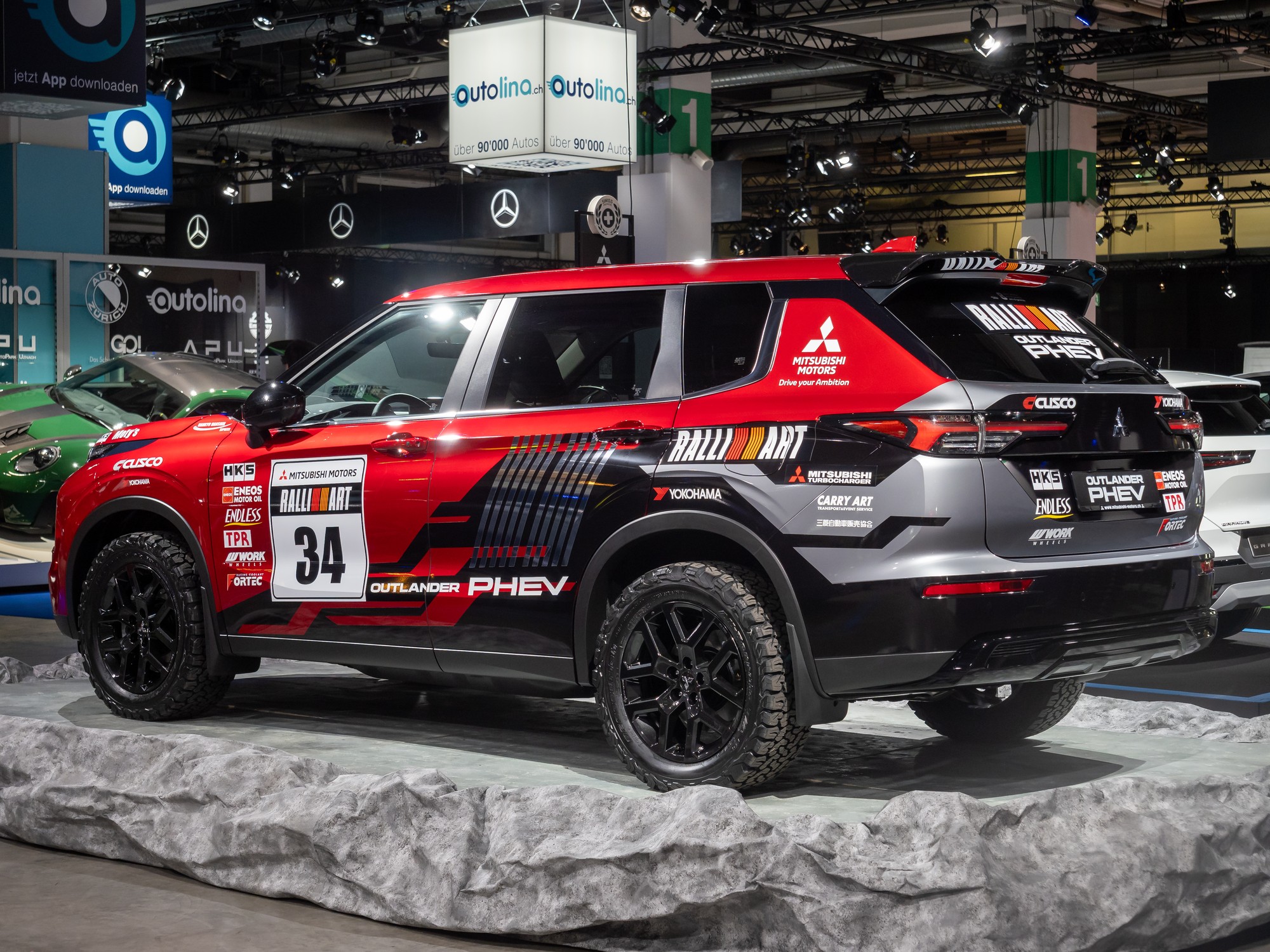
.jpg)
This is the fourth-generation Outlander PHEV, previewed at PIMS earlier this year and teased all summer. The wait is over — it’s at dealerships nationwide now. So let’s dig into the spec sheet, what the local press is saying, and whether this Japanese plug-in hybrid actually makes sense on Filipino roads.
Mitsubishi Outlander GT PHEV: Specs and Highlights
The Outlander GT PHEV keeps Mitsubishi’s familiar recipe — a gasoline engine paired with two electric motors and a bigger battery — but everything’s been sharpened for the fourth generation. The pack grows to 22.7 kWh, up from 20 kWh in the last model, and Mitsubishi says it can cover up to 100 km on pure EV power alone. That’s a meaningful number for daily commutes.
| Engine | 2.4L 16V DOHC MIVEC (4B12) |
| Engine output | 133 PS / 195 Nm |
| Front motor | 116 PS / 255 Nm |
| Rear motor | 136 PS / 195 Nm |
| Combined output | 306 PS / 450 Nm |
| Battery | 22.7 kWh lithium-ion |
| EV range | Up to 100 km (pure EV) |
| Combined range | Up to 1,000 km (53L fuel tank) |
| Drivetrain | Twin-motor AWD (S-AWC) |
| Dimensions | 4,720 x 1,862 x 1,751 mm |
| Wheelbase | 2,704 mm |
| Ground clearance | 199 mm |
| Curb weight | 2,115 kg (GVW 2,685 kg) |
| Seats | 5 |
| Tires | 255/45 R20 two-tone alloys |
| Charging | AC Type 2, ~6.5 hrs (230V, 15A) |
That 306 PS combined figure is worth pausing on. The AutoIndustriya launch coverage confirms the 133 PS engine plus a 116 PS front motor and a 136 PS rear motor stacking to 306 PS and 450 Nm. The dual-motor setup is what gives it Super All-Wheel Control — not just for mud and gravel, but genuinely useful for the way we actually drive here.
What Others Are Saying
The local launch coverage has been consistent on the details. CarGuide.PH broke down the full Philippine spec sheet — 22.7 kWh pack, 6.5-hour AC charge time, seven drive modes (Normal, Eco, Power, Tarmac, Gravel, Snow, Mud), and the MMSS safety suite. It also flagged the drive-mode flexibility: Normal, Save, Charge, and EV Priority, so you can lock the battery level for later or force-charge it on the highway.
AutoIndustriya called it Mitsubishi’s re-entry into the PHEV segment after a long absence. The cabin gets a 12.3-inch touchscreen with wireless Apple CarPlay and Android Auto, a 12.3-inch digital cluster, a heads-up display, a smart rearview mirror, tri-zone climate control, heated and ventilated power seats with memory, and an 8-speaker Yamaha audio system. Interior appointments are properly flagship-grade.
I flagged the spec sheet’s charging reality in my earlier Outlander PHEV preview — a 22.7 kWh pack charges on AC in about 6.5 hours, which is a different rhythm than a full BEV. For a plug-in hybrid that you can also just drive like a normal hybrid when you’re in a hurry, that’s less of a concern than it sounds.
How Much Is It in PHP, USD, and INR?
Here’s the 2026 Outlander GT PHEV in three currencies, using roughly 61.70 PHP/USD and 95.87 INR/USD (August 2026 rates):
| Price | PHP | USD | INR |
| SRP | P2,848,000 | ~$46,200 | ~Rs 44.3 lakh |
| Intro (until Sept 30) | P2,749,000 | ~$44,600 | ~Rs 42.7 lakh |
That intro price is the one to watch. At P2.749M it undercuts the GAC GN8 PHEV Executive (P3.338M) by a good half-million pesos, which is a serious statement in the premium PHEV crossover space. Mitsubishi is clearly going after the value-minded buyer who wants a mainstream badge with genuine all-wheel-drive capability.
City Driving: The Real EDSA Test
Here’s where the Outlander PHEV shows its hand. With up to 100 km of EV range, your daily EDSA-to-BGC slog is covered in full electric mode — no gas burned, silent, instant torque off the line. The instant electric response is a genuine relief in stop-and-go traffic, and you won’t be hunting for a charger every night because the gas engine is right there as backup.
Parking in Makati or BGC is fine for a 4.72-meter crossover. It’s not a small car, but the 360-degree camera and front and rear sensors make tight city slots manageable. For the daily commute, this is arguably the sweet spot: all the EV commuting benefits, none of the range anxiety.
Long-Distance Travel: Manila to Baguio and Beyond
The combined range is rated up to 1,000 km with the 53-liter tank and the battery. A Manila-to-Baguio run (~250 km) barely registers — you’d do the whole climb, the Marcos Highway back down, and still have range to spare for a week of city driving. The S-AWC system and those seven drive modes add real confidence for provincial roads, mountain passes, and rainy-season conditions.
For longer cross-province trips, the PHEV strategy shines over a full BEV: no charging-stop planning on the NLEX or SCTEX, just fill the tank. That’s a topic I dug into with the Ford Territory Hybrid — when you’re moving between provinces without relying on the charging grid, a hybrid or plug-in hybrid just works.
Flood-Prone Situations: The Clearance Advantage
This is where the Outlander stands out. At 199 mm of ground clearance, it’s among the tallest in its class — meaningfully better than the GAC GN8 PHEV and most electrified crossovers. For anyone who’s faced a Pasig or Marikina-style flash flood, that extra clearance is not a spec-sheet vanity; it’s the difference between making it through a flooded underpass and turning around.
The battery sits protected in the floor, and Mitsubishi has decades of packing electrified hardware into S-AWC vehicles. That said, 199 mm is not a license to wade through submerged streets — no EV or PHEV is. Treat standing water with respect. But compared to a low-slung full EV, this crossover gives you a real margin on our famously unpredictable rainy-season roads.
High Temperature and Battery Questions
Philippine summer heat is the other big question for any electrified vehicle, and here the Outlander has a few advantages. The 22.7 kWh lithium-ion pack is smaller than a typical BEV battery, which means less thermal mass to manage under the 36-38°C sun harness. The car runs active thermal management, and because the engine can kick in and help, you’re not draining the battery to cool a cabin in gridlocked heat.
The tri-zone climate control keeps the whole cabin comfortable without crushing the electric range. And the dual-motor hybrid architecture means you’re never stranded by a hot battery — the gasoline engine is always there as a safety net. For a Filipino buyer in a battery-hesitant market, that’s a genuinely reassuring position.
The bigger battery-pack trend here — and what it means for EVs in a hot, power-hungry market — is something I’ve covered in my battery tech deep dive. The Outlander’s approach is the conservative, proven one, and for most buyers that’s exactly right.
What About the Competition?
At P2.848M (or P2.749M intro), the Outlander GT PHEV slots into a crowded premium segment:
- GAC GN8 PHEV (P3.338M) — bigger 7-seat MPV, more expensive
- Jaecoo J8 PHEV (est. P2.4-2.7M) — Chinese rival, less established brand
- Ford Territory Hybrid Platinum (P1.655M) — far cheaper, but a self-charging hybrid, not a plug-in
- Kia EV3 (DOE-listed, coming) — full BEV at a different price point
The value argument is clear: Mitsubishi is offering a mainstream-badge, twin-motor AWD PHEV with 100 km of EV range and 199 mm of clearance, priced a half-million below its closest Japanese-market premium PHEV alternative. If you’ve been waiting for a plug-in hybrid from a brand you know will still be around in a decade, this is the one.
Bottom Line
The 2026 Outlander GT PHEV is Mitsubishi’s strongest electrified statement in years. The 100 km EV range handles the daily grind, the 1,000 km combined range kills range anxiety on long trips, and the 199 mm clearance plus S-AWC make it genuinely fit for Filipino conditions — floods included.
The P2.848M price (P2.749M intro) puts it in the premium category, so it’s not for everyone. But if you’re cross-shopping a plug-in hybrid SUV and you want Japanese build quality, real AWD, and the peace of mind of a gasoline backup, Mitsubishi just made a very compelling case. It pairs nicely alongside the more affordable electrified picks like the JAECOO J5 EV we covered this morning — different budget, same electrified direction.