
The Numbers Are Eye-Popping
Micron Technology just became the most valuable company nobody outside Silicon Valley has heard of. The Boise, Idaho memory chip maker briefly surpassed both Meta and Tesla in market valuation on June 25. Its stock has soared over 236% in a single month. Revenue quadrupled to $41.45 billion in the last quarter. Profits exploded from $1.88 billion to $28.2 billion year-over-year.
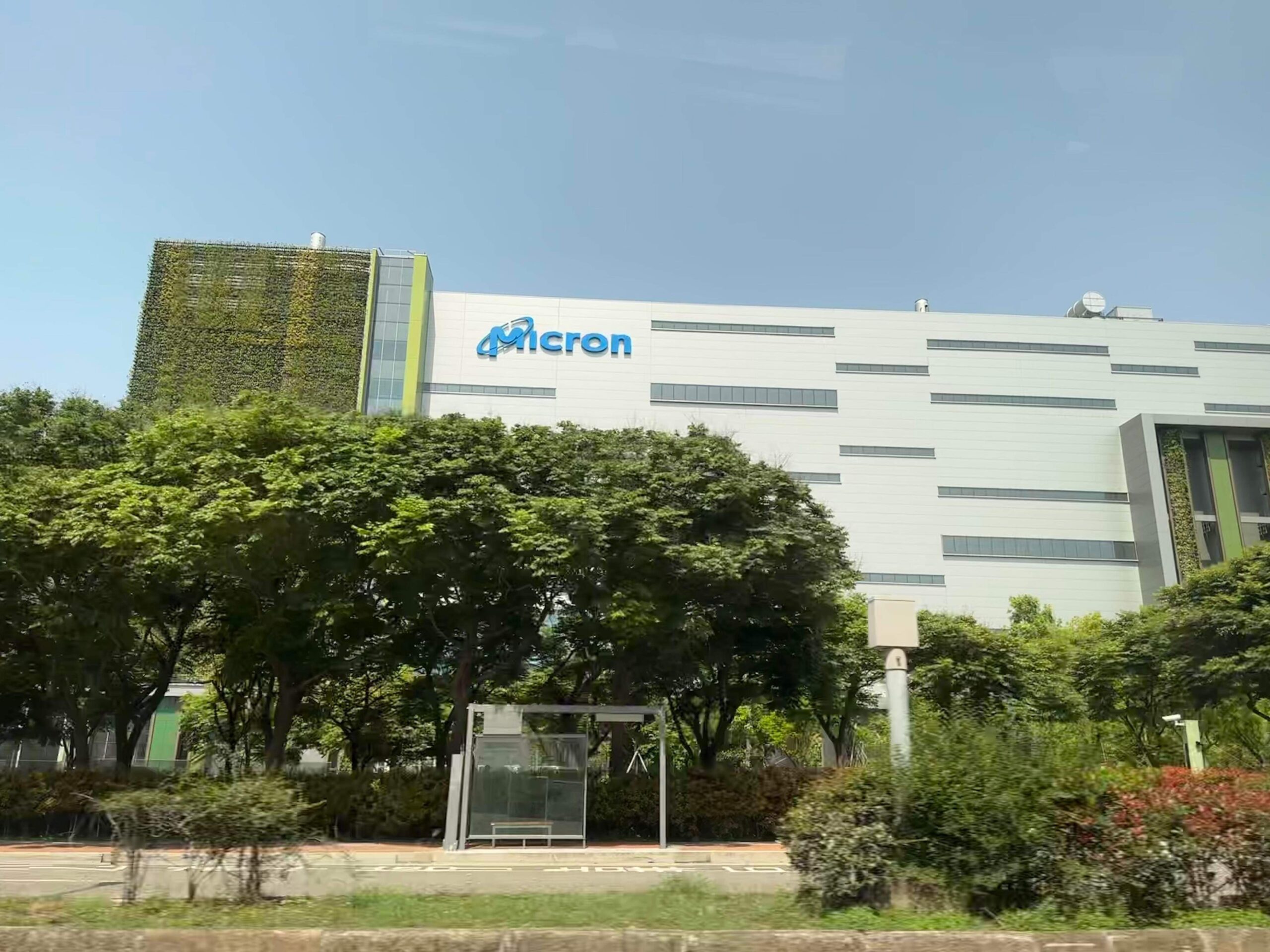

Wall Street analysts are dusting off their most breathless comparisons. “The next Nvidia,” they’re calling it. The thesis is seductive: AI needs memory, Micron makes the best memory, and the entire world is building AI data centers as fast as concrete can be poured.
I’ve been watching the semiconductor space long enough to know that when analysts start using superlatives, it’s time to ask harder questions. So let’s do that.
What Micron Actually Does
If Nvidia is the brain of the AI revolution, Micron is the short-term memory. Its core products — DRAM, NAND flash, and High-Bandwidth Memory (HBM) — are what let AI models hold massive datasets in working memory while training or running inference.
A single Nvidia Blackwell GPU server consumes roughly a thousand times more memory than your laptop. Multiply that by the tens of thousands of servers hyperscalers are deploying, and you start to see why the memory industry is printing money right now.
Micron’s HBM chips in particular are the crown jewel. HBM4, the latest generation, stacks multiple DRAM dies vertically like a silicon skyscraper, connected by microscopic wires running through the layers. It’s fiendishly difficult to manufacture — requiring more than three times the wafer capacity per bit compared to conventional DRAM — and right now, Micron is one of only three companies on the planet that can do it at scale.
The company has already sold out its entire HBM supply through calendar 2028. Every chip it can make for the next two and a half years already has a customer’s name on it.
The Bull Case: Why Wall Street Is Losing Its Mind
I get the excitement. The numbers are genuinely staggering:
Revenue visibility that’s almost unheard of. Micron has signed 16 Strategic Customer Agreements (SCAs) with major buyers including Nvidia, Anthropic, Microsoft, Amazon, and Google. These aren’t vague memorandums of understanding — they’re multi-year commitments with pricing and volume locked in. For an industry historically defined by brutal feast-or-famine cycles, this is revolutionary.
A total addressable market that keeps expanding. Micron now expects the HBM market to hit $100 billion by 2027 — two years earlier than its previous forecast. The cumulative HBM revenue from 2025-2030 could hit $555 billion under current projections. That’s nearly 47% higher than what analysts modeled just six months ago.
Supply constraints that won’t ease anytime soon. Building a new memory fabrication plant takes 3-4 years and costs $15-20 billion. Even if competitors broke ground tomorrow, meaningful new capacity wouldn’t arrive until 2029 at the earliest. Meanwhile, AI data center construction is accelerating, not slowing down.
Jensen Huang at Nvidia’s GTC Taipei last month described the memory situation in characteristically vivid terms: AI systems are “starving for bandwidth” and memory is the bottleneck constraining what the next generation of models can do.
Manufacturing complexity as a moat. HBM4 requires advanced CMOS logic on the base die, through-silicon vias with tolerances measured in nanometers, and packaging technology that rivals the difficulty of the chips themselves. The barrier to entry isn’t just capital — it’s accumulated engineering expertise that takes a decade or more to build.
The Bear Case: What the Bulls Are Missing
Here’s where I pump the brakes — and where anyone with memory of the memory industry should get nervous.
This industry has burned investors before. Repeatedly. Semiconductor memory is the most cyclical business in technology. Between 2018 and early 2023, Micron’s stock traded between $35 and $95. Revenue collapsed. Profits vanished. Layoffs followed. The pattern is etched into silicon: demand spikes, prices soar, everyone builds more fabs, supply floods the market, prices crater, rinse and repeat.
Every cycle, someone declares “this time is different.” In 2018, it was data center growth. In 2014, it was mobile. In 2006, it was PCs. Each time, the boom gave way to a bust that wiped out years of gains.
The Strategic Customer Agreements might not be as strategic as advertised. Locking in customers at today’s prices sounds great when prices are at all-time highs. But what happens in 2029, when Samsung and SK Hynix have ramped their own HBM4 capacity and suddenly there’s actual competition? Customers locked into premium pricing will demand renegotiation — and they’ll have leverage.
The valuation is pricing in perfection. At $1.27 trillion, Micron is being valued like a platform company with recurring software-like revenue. But memory is still a commodity — a highly engineered one, yes, but a commodity nonetheless. When the supply crunch eases, pricing power erodes. Hardware margins don’t compound the way software margins do.
Geopolitics is a wild card. Micron’s Idaho fabs give it a “Made in America” advantage for U.S. government contracts and CHIPS Act funding. But the company also has significant manufacturing in Taiwan and Singapore. Any disruption in the Taiwan Strait — a risk that’s not zero — would be catastrophic.
Demand isn’t infinite. The AI buildout is real, but at some point data center construction reaches equilibrium. When it does, memory demand doesn’t just flatten — it can actually decline as efficiency improvements mean each new generation of AI chips uses memory more effectively.
This Time Might Actually Be Different — At Least Partially
I try not to be reflexively contrarian. There are structural changes in the memory industry that genuinely differentiate this cycle from previous ones.
First, the concentration of demand is unprecedented. In past cycles, memory demand was distributed across PCs, phones, and a modest server market. Today, a handful of hyperscalers account for the majority of high-end memory purchases, and they’re all on multi-year buildout timelines that don’t reverse quickly.
Second, the technical complexity of HBM creates a real barrier that didn’t exist for conventional DRAM. You can’t just “build more DRAM fabs” to solve the HBM shortage — you need entirely different manufacturing processes, packaging facilities, and quality control systems. The learning curve is steep and expensive.
I covered the broader RAMageddon memory crunch last week, and the dynamics haven’t changed: we’re in a genuine supply-constrained environment that will take years to resolve. Consumer electronics prices are already climbing — Apple products, Xbox consoles, even mid-range laptops are getting more expensive because memory makers are prioritizing high-margin data center customers.
Third, the shift from transactional purchasing to long-term strategic agreements is genuinely new. When Nvidia signs a multi-year HBM commitment with Micron, it’s not because they’re feeling generous — it’s because they’ve done the math and realized that guaranteed supply at a known price is better than risking allocation in a seller’s market.
What I Actually Think
Here’s my honest assessment: Micron is a fundamentally stronger company today than it was three years ago. The SCAs are real, the HBM technology lead is real, and the AI-driven demand supercycle is real. At $100 billion market cap — where Micron sat in early 2025 — the stock was absurdly undervalued given these tailwinds.
But at $1.27 trillion? That’s pricing in a decade of uninterrupted growth with no cyclical downturn, no competitive response from Samsung or SK Hynix, and no technological disruption that makes HBM less essential. History says at least one of those assumptions will break.
The semiconductor industry has a saying: “There are two types of chip companies — those that have had a down cycle, and those that will.” Micron is not exempt from this law. The SCAs and the AI boom may flatten the cycle, stretch it out, make the peaks higher and the troughs shallower — but they won’t eliminate the cycle entirely.
What worries me more than the valuation is what it says about market psychology. We’re in a moment where the real costs of AI infrastructure are still being subsidized by venture capital and corporate R&D budgets, and nobody knows what the economics look like when the bills come due. When the same analysts who missed Nvidia’s rise are scrambling to anoint “the next Nvidia,” we’re in late-cycle thinking territory. The companies building their own chips — OpenAI with Jalapeño, the hyperscalers with custom silicon — are a reminder that the AI hardware landscape is dynamic, not static.
Nvidia earned its valuation by being the sole gatekeeper to AI compute for years, building a software ecosystem (CUDA) that created genuine lock-in, and maintaining a technological lead that competitors couldn’t close. Micron’s position, while strong, doesn’t have those same characteristics. Memory is more commoditized than GPU computing platforms. The moat is narrower.
The Bottom Line
Micron is an exceptional company riding an extraordinary demand wave. The memory it produces is genuinely critical infrastructure for the AI era, and the supply constraints are real and persistent. If you’d asked me at $100 a share whether Micron was a buy, I’d have said absolutely.
At $1,132 a share and a $1.27 trillion valuation, I’m less enthusiastic. Not because Micron is a bad business — it’s not. But because the price already reflects years of flawless execution, and flawless execution in the memory industry is about as common as a unicorn.
The smart money right now isn’t betting on whether Micron can sustain these numbers. It’s betting on how long the AI memory supercycle lasts before gravity reasserts itself. My guess: longer than the skeptics think, but shorter than the current stock price implies.
Either way, if you’re building or buying AI systems, the message is clear: memory is getting more expensive, and it’s staying that way for a while. Plan your budgets accordingly.