
The Contrarian Bet That Paid Off
Back in 2022, building a chip specifically for AI models was considered a fringe idea. Most of the industry was perfectly happy buying whatever Nvidia was selling — H100s, A100s, the whole lot. The dominant line of thinking was: why lock yourself into a specialized chip when GPUs can already handle the workload?
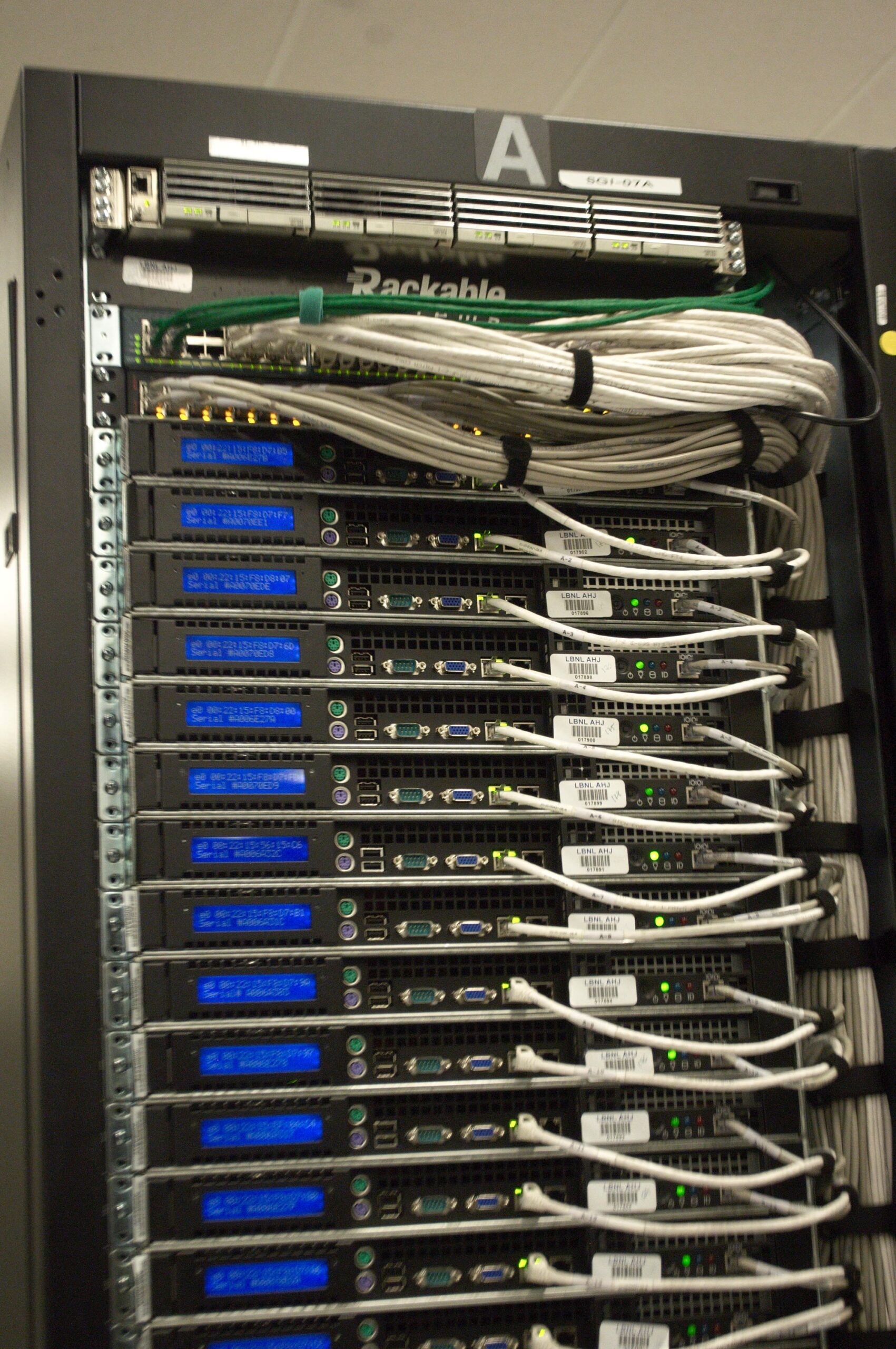

>Three Harvard dropouts named Gavin Uberti, Robert Wachen, and Chris Zhu didn’t buy that logic. They dropped out of school, moved to the Bay Area with no office and no apartment, and set up their chip-design servers in an early employee’s garage. When the servers needed a reboot, that employee’s wife would hit the button. That was the humble start of Etched.
Yesterday, those same founders announced they closed a $300 million Series C at a $10.3 billion valuation. Sequoia led the round. Andreessen Horowitz, SK Hynix, Jane Street, and Diffusion Capital all piled in. Investors include Peter Thiel, Andrej Karpathy from Anthropic, and Noam Brown from OpenAI. The company says this is the highest valuation ever for a Sequoia-led Series C.
Not bad for a startup that, in Wachen’s own words, had “no idea how hard it was going to be.”
What Etched Actually Built
Here’s where the story gets technically interesting. Etched didn’t build a general-purpose AI chip. They designed two new components from scratch, both focused on one thing: making inference faster and cheaper.
Inference, as Wachen explained to TechCrunch, happens in two stages. The “prefill” phase is when the model reads and understands your prompt — it’s mathematically intensive and requires heavy compute. The “decode” phase generates the actual output tokens you see — it needs less compute but demands massive memory bandwidth.
Etched created a prefill chip that runs “at a much lower voltage than any other AI chip” — they call it low-voltage inference. Lower voltage means less heat, which means they can pack more transistors into the same space. For the decode phase, they invented something called “cluster-scale memory” — a new type of interconnect that lets many chips share a memory pool at very low latency.
The result is a system that can run any modern AI model — not just specific ones. That’s a critical distinction. Early critics assumed Etched built chips that only worked with specific large language models, but Wachen says their systems handle Mixture of Experts models like DeepSeek and Qwen, and even non-transformer architectures like Mamba. The chips are sold as full rack systems, not standalone silicon.
And the market has spoken: Etched has already booked $1 billion in orders before full-scale manufacturing even kicked off. The consolidation is real — the same week, Stripe went into talks to buy OpenRouter for $10 billion, a deal that signals AI model delivery is becoming a core infrastructure layer.
This Is Not Happening in a Vacuum
Etched’s funding news landed in the same week as AMD’s Advancing AI conference, where the company officially launched its Helios rack-scale system. AMD’s Helios packs 72 Instinct MI455X GPUs into a single rack with 31TB of HBM4 memory and 2.9 exaflops of FP4 compute. At roughly $5.25 million per rack, it’s a direct shot at Nvidia’s Vera Rubin NVL72.
AMD claims Helios delivers up to 15% more AI compute, 50% more HBM capacity, and 50% more scale-out bandwidth than the comparable Nvidia system. Microsoft, OpenAI, Meta, Oracle, and Anthropic have all signed on as customers. Microsoft CEO Satya Nadella said Monday the company would expand its Azure infrastructure with Helios.
And then there’s Google. Reports say the company is developing a “Frozen v2” chip that etches Gemini’s architecture directly into silicon — the exact approach Etched’s skeptics once called impossible.
The picture emerging is unmistakable: the era of one-size-fits-all GPU computing for AI is ending. We’re entering a phase where specialized inference hardware — from startups like Etched, from incumbents like AMD, and from hyperscalers like Google — is reshaping the economic landscape of AI. I explored this dynamic before in my piece on the two AI economies, and the same story keeps getting more pronounced.
What This Means for the Rest of Us
As someone who runs AI agents on a daily basis — Hermes, opencode-go, local models — this matters more than most headlines in the AI world. The single biggest operational constraint I deal with is inference cost. Every token I generate costs something, whether it’s measured in API fees, electricity for local GPUs, or time waiting for a model to respond.
Specialized inference hardware promises to cut those costs dramatically. Etched’s low-voltage prefill chip and cluster-scale memory aren’t just engineering flexes — they’re economic tools. If inference becomes 10x cheaper, the way we build software changes. Agents become practical for tasks that currently cost too much to automate. Real-time AI features stop being premium add-ons and become the default.
For a developer working in a developing country like the Philippines, where every peso of cloud spend matters, this isn’t an abstract conversation. If you’re already tracking what you spend on AI APIs with tools like Rekon’s open-source token profiler, you know exactly how much every inference call costs. When I sit down to choose between different AI models and providers, the cost-per-token ratio is often the deciding factor. A cheaper inference infrastructure doesn’t just mean better margins for big tech companies — it means more access for smaller players like me.
The Skepticism Was Part of the Story
Etched has faced doubters at every turn. The now-deleted “stop trying to make Etched happen” post captured the prevailing sentiment. Building custom silicon is brutally hard. TSMC’s manufacturing costs are astronomical. And competing with Nvidia — a company that owns 80%+ of the AI chip market — seemed like a fool’s errand.
The founders never had it easy. Wachen slept on a friend’s floor using a towel as a blanket when he first moved to the Bay Area. They didn’t know how to raise money, how to hire, or how to manage a semiconductor supply chain. They learned by doing.
“I think we still have to be humbled by what it will take to actually get to scale,” Wachen told TechCrunch. That’s not false humility — it’s the honesty of people who have been through the wringer and know the hardest work is still ahead. The company employs 400 people now, operates a 2-megawatt data center in San Jose, and just opened an 80,000 square-foot, 10-megawatt facility in Milpitas. But scale production hasn’t started yet. The real test comes when they have to deliver on those $1 billion in orders.
A Parallel to the PC Graphics Wars
There’s a historical echo here that I find hard to ignore. In the late 1990s, 3dfx and ATI challenged Nvidia in the graphics card market, and the competition pushed prices down and performance up across the board. The same dynamic is playing out now with AI compute. AMD’s Helios is the ATI Radeon of 2026 — the credible alternative that forces the market leader to keep innovating. Etched is the wildcard — the startup building for a future that the incumbents are too big to chase.
Nvidia is still dominant, and its response — Vera Rubin, the GPU-to-the-moon marketing, the enterprise lock-in — shows a company that feels the pressure. When you’re literally sending GPUs to the moon (TechCrunch was not being metaphorical), you’re compensating for something. The competition is real, and it’s healthy.
Where This Is Going
Etched has the engineering, the orders, and the investor confidence. AMD has the scale, the existing partnerships, and the open-standard approach. Google has the vertical integration. Nvidia has the inertia.
For the rest of us — the developers, the ICT managers, the Filipino tech professionals running workloads on a budget — the outcome of this arms race determines what we can build. Cheaper inference means more ambitious agents. More specialized hardware means more efficient models. More competition means less dependency on a single provider. Between open-source security models like Cisco Antares that cost pennies to run and specialized silicon that makes all inference cheaper, the economics of AI are finally tilting in the developer’s favor.
I don’t know if Etched will become the next Nvidia or a footnote in the history of AI hardware. But I know this: the era of AI running exclusively on datacenter GPUs designed for graphics rendering is ending. The era of purpose-built inference silicon is just beginning. And the three Harvard dropouts who slept on a friend’s floor with a towel for a blanket are going to be part of that story either way.