
Design & Build Quality
The Honor Magic9 is the kind of phone that makes you reconsider what a flagship needs to be. At 151 x 72.3 x 8.5 mm and 209 grams, it is meaningfully smaller and lighter than almost every other premium Android phone launched in 2026 — including its own sibling, the Honor Magic9 Pro Max, which tips the scales at 233 grams and stretches to 6.8 inches. The standard Magic9 proves you do not need a massive slab to pack in serious hardware.
The build is glass front, aluminum frame, glass back, finished in one of four colours at launch: Black, White, Green, or Yellow. The rear camera island uses the same distinctive ARRI-inspired square plate with rounded corners that Honor adopted across the Magic9 family — two circular lenses sit inside it, reading as a deliberate photographic statement rather than a hardware necessity.
Durability is covered by IP68/IP69K — dust-tight, water-resistant, and tough enough to handle high-pressure water jets and immersion up to 1.5 meters for 30 minutes. No MIL-STD-810H certification was announced on the spec sheet, but the aluminum frame and glass back are consistent with what Honor has used on recent flagships. At 8.5 mm thick, the Magic9 is genuinely slim for a phone carrying this much battery and camera hardware — it slips into a pocket without the bulk that makes larger flagships feel like bricks.
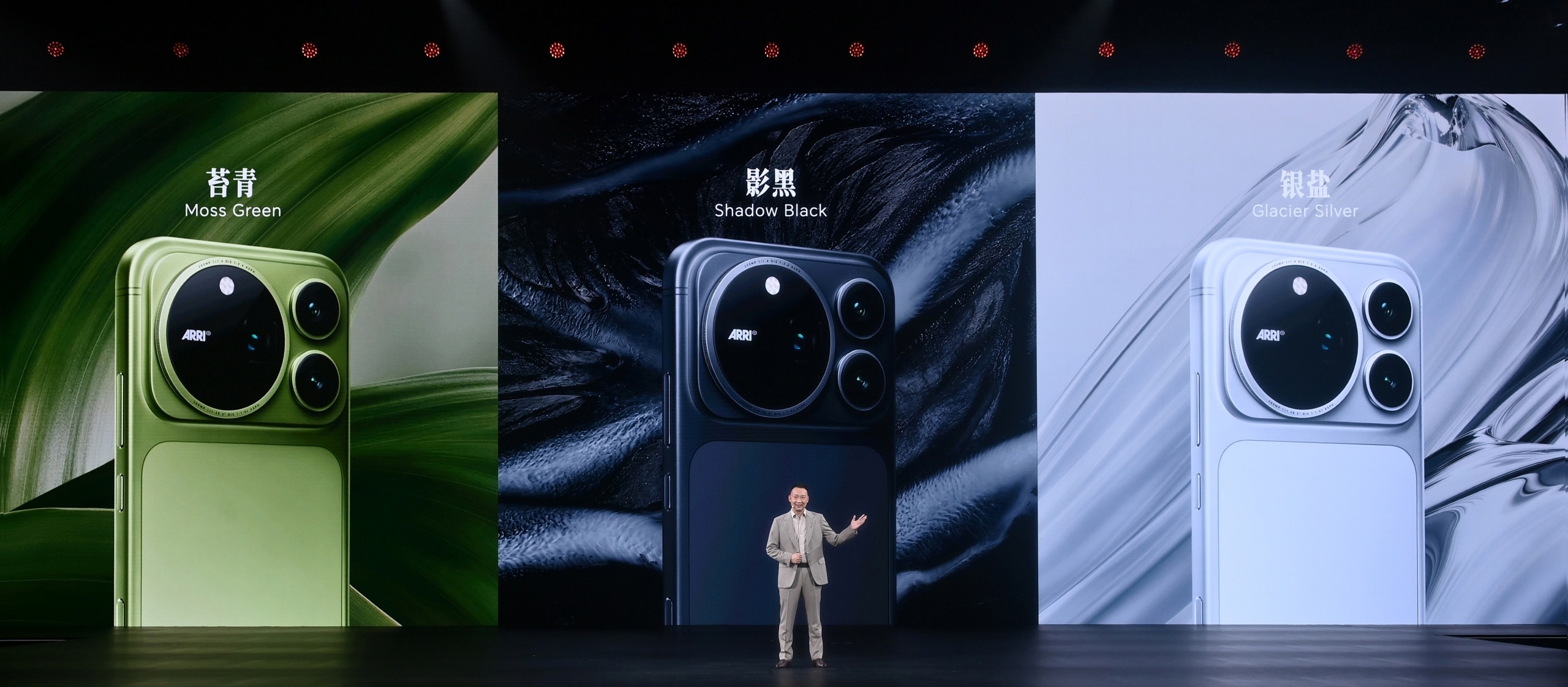
I have not held one in person — it does not exist outside China yet — but from the official renders the proportions look exceptionally well-balanced for a phone carrying this class of hardware. The square camera plate is a bold design choice, and at 209 grams it should feel light in the hand compared to anything over 220 grams.
Display
The 6.37-inch OLED panel runs at 1236 x 2664 pixels (~461 PPI) with a 120 Hz refresh rate. Honor specifies 2000 nits HBM (high-brightness mode) and a 10,000-nit peak — but read the footnote on GSMArena’s spec page carefully. That 10,000-nit figure is measured at an isolated spot during video playback only, not full-screen sustained brightness. The HBM number is what matters for outdoor visibility, and 2000 nits is competitive without being class-leading.
Dolby Vision and HDR Vivid support are both present. PWM dimming runs at 3840 Hz, which should be comfortable for users sensitive to flicker at low brightness. The panel is NOT LTPO — a point GSMArena readers have already picked up on. The Magic9 Pro Max uses an LTPO OLED panel, but the standard Magic9 uses a conventional OLED with a fixed 120 Hz. That is a real efficiency tradeoff: without variable refresh rate, the display draws more power at idle. For a phone with an 8,000 mAh battery it matters less than it would on a smaller cell, but it is a distinction worth knowing.
Performance
Under the hood sits the Qualcomm Snapdragon 8 Elite Gen 5 (SM8850-AC) on TSMC’s 3 nm process — the same chip family that powers the iPhone 18 Pro and the Poco F9 Pro, though clocked differently per device. The Magic9 pairs two 4.6 GHz Oryon V3 Phoenix L prime cores with six 3.62 GHz Oryon V3 Phoenix M performance cores, backed by the Adreno 840 GPU. This is the chip that launched in early 2026; by September, Qualcomm had already announced the Gen 6 silicon that the Magic9 Pro Max uses. The Gen 5 chip in the standard Magic9 is still very capable — it is not a generation behind in any meaningful day-to-day sense — but the Pro Max’s newer silicon is the more future-proof pick for sustained workloads.
Memory is a single 16 GB LPDDR5X configuration paired with 512 GB of UFS 4.1 storage at the announced price point. GSMArena’s spec page lists additional configs — 256 GB / 12 GB, 512 GB / 12 GB, and 1 TB / 16 GB — but the Gizmochina price reveal focused on the 16 GB + 512 GB variant at CNY 5,999. There is no microSD expansion. The single high-end configuration simplifies the buying decision but also means there is no lower-tier option — the CNY 5,999 starting price is the floor.
The phone runs Android 17 with MagicOS 11 on top. Honor unveiled MagicOS 11 alongside the Magic9 series, describing it as featuring autonomous AI agents that can handle complex contextual commands. What Honor has NOT confirmed for the standard Magic9 is the update commitment. The Magic9 Pro Max carries a 7-year OS upgrade promise — but that was announced specifically for the Pro Max model. Whether the same commitment extends to the standard Magic9 is, as of launch, unconfirmed. That is a meaningful distinction that buyers should watch for.
Camera
This is where the Magic9 earns its flagship badge. The rear triple camera consists of a 200 MP main sensor (f/1.9, 1/1.4-inch, PDAF, OIS), a 200 MP periscope telephoto (f/2.6, 1/1.56-inch, PDAF, OIS, 3.5x optical zoom), and a 50 MP ultrawide (f/2.0, 122-degree field of view, PDAF). Both 200 MP sensors are co-developed with ARRI, and Honor has branded the imaging system with ARRI mode support — including LogC3 Curve and LUT recording for 10-bit video.
The main sensor’s 1/1.4-inch format is large by smartphone standards. Combined with OIS and a wide f/1.9 aperture, it should handle low-light shooting competently. The periscope telephoto is the headline: a 200 MP sensor with 3.5x optical zoom is unusual at this price point, where most phones settle for 12 MP or 50 MP telephoto sensors. The larger sensor should deliver better cropped detail at zoom distances, though real-world results depend heavily on processing — and independent sample comparisons will take time to surface.
Video recording covers 4K at 30/60/120 fps and 1080p at 30/60/120/240 fps, all with gyro-EIS and OIS, plus 10-bit capture and ARRI LogC3 Curve. Log recording on a phone is a genuinely professional-grade feature — flat profiles for colour grading are something usually reserved for dedicated cinema cameras or the most expensive phone cams. The Magic9 also includes a cinematic-grade gun microphone, which Honor specifically calls out in its press materials.
The 55 MP multi-aspect front camera (f/2.0, 1/2.74-inch) uses a square-format sensor — an unusual choice that Honor first teased for the Magic9 series. Square sensors can produce distinctive portrait crops without wasting resolution on cropping, and 55 MP should deliver sharp selfies in good light. Video call support runs at 4K30 and 1080p60.
What is missing: there is no dedicated macro mode on the spec sheet, and the ultrawide is only 50 MP — not aging, but not matching the resolution of the main and telephoto sensors. For a phone with two 200 MP cameras, the system is focused on high-resolution general photography and zoom rather than niche close-up modes.
Battery & Charging
The 8,000 mAh silicon-carbon battery is the number that makes the Magic9 interesting. Packing 8,000 mAh into a 151 mm tall, 8.5 mm thick chassis is a meaningful engineering achievement — it is the same capacity as the iPhone 18 Pro and close to the vivo X500 Pro, but inside a substantially smaller body. In a phone this size, an 8,000 mAh cell should deliver all-day battery life on a single charge for typical mixed use. Heavy gaming or sustained 4K recording will draw faster, and the non-LTPO display works against endurance on the idle side.
Charging is 80W wired with PPS support, 50W wireless, and 27W reverse wired charging. Reverse wireless charging is also supported. The 80W wired speed is solid but not class-leading — the Magic9 Pro Max charges at 100W. Fifty-watt wireless is respectable — wireless charging is often treated as a low-priority feature on Android phones, but Honor gives it a meaningful speed here.
Independent endurance test results are not available yet — the phone launched September 28 and review units take time to arrive. Based on the capacity, display size, and chipset, all-day endurance is a reasonable expectation. The lack of LTPO is the one spec that works against that expectation.
Software
MagicOS 11 on Android 17 is Honor’s current software platform, unveiled alongside the Magic9 series. Honor describes MagicOS 11 as featuring autonomous AI agents capable of handling complex contextual commands — the kind of agentic AI features that are becoming a focus across the Android flagship segment in 2026. The ARRI imaging integration, multi-aspect front camera support, and the AI agent capabilities are the headline MagicOS 11 features on the Magic9.
The bigger software question is the update commitment. As noted above, the Magic9 Pro Max carries a 7-year OS upgrade promise, but that commitment was announced for the Pro Max model specifically. Whether the same 7-year window extends to the standard Magic9 has not been confirmed at launch. If you are buying this phone expecting long-term software support, verify the commitment for the specific model before relying on it. This is a genuine distinction — Honor is using the Pro Max as the halo device for its long-support statement, and the standard model may follow a different policy.
On the positive side: unlike Huawei devices, Honor phones ship with full Google Mobile Services. GCash, Maya, YouTube, Google Maps, and all standard Google apps work out of the box. That is a meaningful advantage for buyers outside China, and it distinguishes the Magic9 from the HarmonyOS-only Huawei nova 16s Pro that launched earlier this month. No GMS workarounds, no app compatibility headaches — the Magic9 is a normal Android phone from a software standpoint.
Pros and Cons
| Pros | Cons |
|---|---|
| Compact 6.37-inch flagship at just 209 g — rare in 2026 | Non-LTPO OLED display (fixed 120 Hz) — less efficient than the Pro Max sibling |
| Dual 200 MP ARRI-tuned cameras including a 200 MP periscope telephoto with 3.5x optical zoom | Update commitment unconfirmed for the standard model — 7-year promise announced for Pro Max only |
| 8,000 mAh silicon-carbon battery in a slim 8.5 mm body | Single 16 GB + 512 GB variant at CNY 5,999 — no lower-tier option, that price is the floor |
| ARRI LogC3 video recording with 10-bit 4K120 — professional-grade video tools on a phone | 80W wired charging is solid but slower than the Pro Max’s 100W and some gaming-phone rivals |
| Full Google Mobile Services — works out of the box outside China | No dedicated macro camera mode; ultrawide is only 50 MP |
| 55 MP square front camera with 4K30 video — distinctive selfie hardware | China launch only as of September 28 — global availability and pricing unannounced |
| IP68/IP69K dust and water resistance | Priced at CNY 5,999 (~USD 887) — above the vivo X500 Pro and Oppo Find X10 Pro Max base models |
| Dolby Vision + HDR Vivid, 3840 Hz PWM dimming, 2000 nits HBM | Independent battery endurance data not yet available at launch |
Should You Buy This?
Buy it if:
- You want a genuinely compact flagship — at 209 g and 6.37 inches, the Magic9 is one of the few 2026 flagships that feels comfortable one-handed
- Dual 200 MP cameras with a periscope telephoto matter to you — the 3.5x optical zoom with a 200 MP sensor is a strong zoom-capable setup in a compact body
- You shoot video and want Log profiles on a phone — ARRI LogC3 with 10-bit 4K120 is a genuinely useful cinema-grade feature
- You need full Google services out of the box — unlike Huawei, Honor phones work with GMS globally
- Battery life in a small body is a priority — 8,000 mAh in 209 g is a real engineering achievement
Skip it if:
- You need LTPO display efficiency — the fixed 120 Hz panel is a real power tradeoff versus the Pro Max
- You want confirmed 7-year update support — that commitment is announced for the Pro Max, not yet the standard Magic9
- You prefer a lower entry price — the single 16 GB + 512 GB configuration at CNY 5,999 is the only option
- You are waiting for global pricing and availability — as of September 28, only China launch is confirmed
- You want faster charging — 80W is good but not the fastest in this segment
- The iPhone 18 Pro’s A20 silicon and iOS ecosystem is your preference — the Magic9’s Snapdragon 8 Elite Gen 5 is excellent, but it is a generation behind the Pro Max’s Gen 6 Extreme
Final Verdict
The Honor Magic9 is the phone that should not work — and yet it does. Packing dual 200 MP ARRI cameras, an 8,000 mAh battery, and ARRI LogC3 video into a 209-gram, 6.37-inch body is an impressive achievement on paper. The camera hardware alone, with a 200 MP periscope telephoto at 3.5x optical zoom, puts it ahead of most phones in its size class.
But there are caveats that matter. The non-LTPO display is a real efficiency miss when the Pro Max sibling gets LTPO — it is the kind of spec cutoff that makes the standard model feel like a dressed-down version rather than a thoughtfully distinct one. The unconfirmed update commitment is the bigger worry: if Honor does not extend the 7-year promise to the standard Magic9, this phone ages differently than the Pro Max, and buyers expecting parity will be disappointed.
At CNY 5,999 (about USD 887 before subsidy, CNY 5,499 with the applicable government subsidy), the Magic9 sits above the vivo X500 Pro and Oppo Find X10 Pro Max base models but below the Pro Max. For someone who wants flagship camera hardware without the bulk of a 6.8-inch phone, it is one of the few options that takes the question seriously. For someone who needs guaranteed long-term software support or the absolute latest silicon, the Pro Max is the safer pick — assuming the larger size works for you.
The Magic9 is a strong argument that compact flagships still have a place in 2026. Whether it is the right compact flagship depends on how much the unconfirmed update commitment and non-LTPO display bother you. For the right buyer — someone who values camera capability and one-handed usability over spec-sheet completeness — it is worth a close look when global pricing lands.
Sources: GSMArena full specifications page (honor_magic9_5g-14970.php), GSMArena news coverage of the September 28 China launch, Gizmochina price reporting (Honor Magic9 price officially revealed, September 28). All hardware specifications verified against GSMArena’s spec page. Pricing verified against Gizmochina. Update commitment details sourced from Honor’s Magic9 Pro Max announcement — the standard Magic9’s commitment is flagged as unconfirmed.