
Huawei just did something no other phone maker has: it made a wide-screen smartphone without a folding hinge. The Huawei Pura X View, revealed at the HarmonyOS Smart Mobility event on August 20, 2026, is the world’s first non-folding handset with a broad 16:9.5 display. It packs a 7,000mAh battery into a body just 6.68mm thin, and it’s also the first phone to ship with stable HarmonyOS 7.0 out of the box. Pre-reservations are live in China ahead of an August 28 sale, with full specs and pricing still under wraps.
Is a wide, hinge-free slab the future of phone design, or a niche experiment only Huawei fans will warm to? I dug through every confirmed detail to answer that. Here’s my first-look review of the Huawei Pura X View.
Design & Build Quality
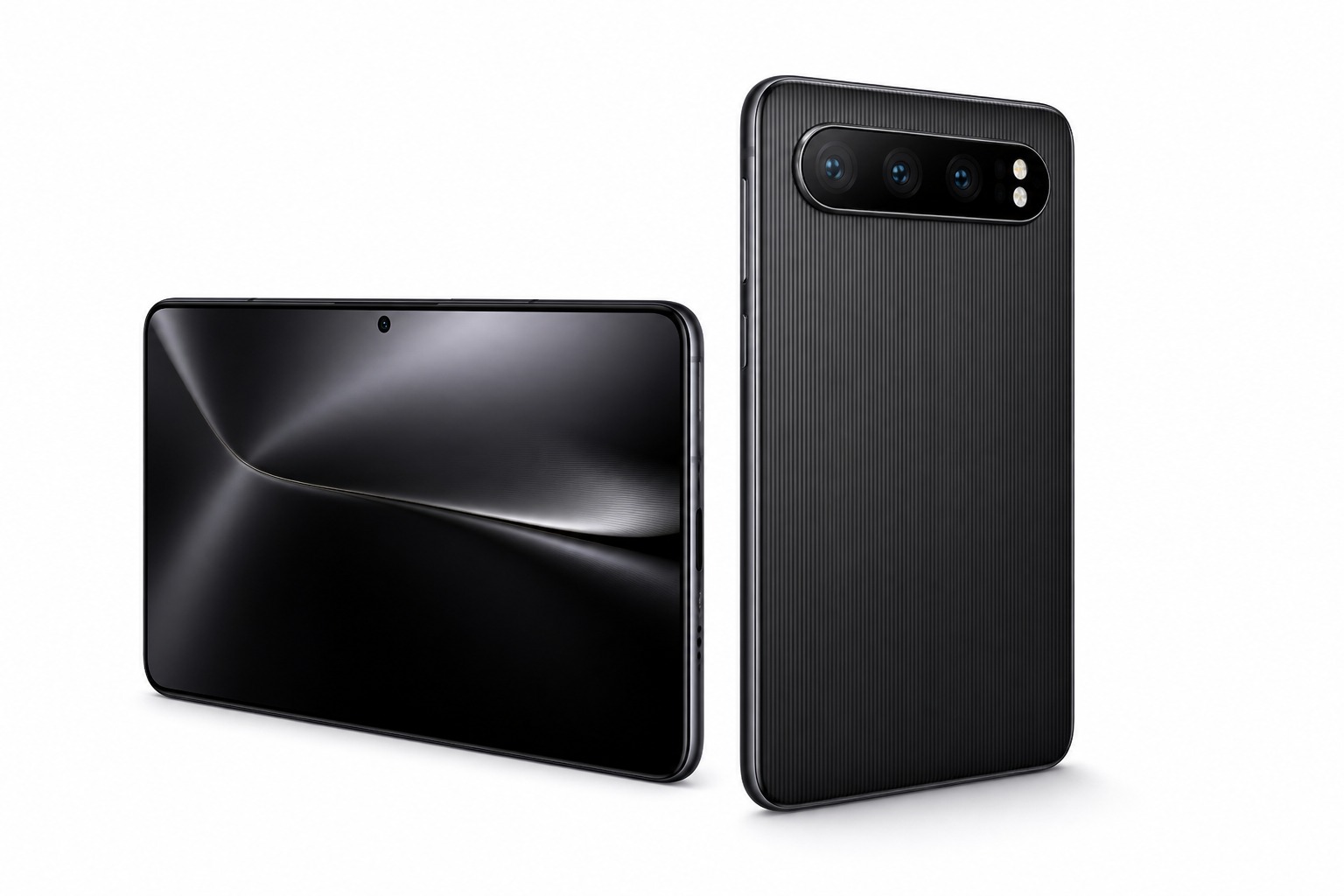
Everything about the Pura X View’s design is about one thing: making a phone feel like a pocket tablet without the moving parts. It measures roughly the footprint of a compact device — 6.39 inches across the diagonal — but because the screen is so wide, the panel actually spans 114.27 cm² of area. Huawei’s Chairman Richard Yu claims it shows 16% more content when watching video and 21% more when browsing in portrait compared to regular flagships.
The phone is remarkably slim at 6.68mm and weighs 201 grams. For context, that’s thinner than most of today’s flagships and, critically, it does it while housing a 7,000mAh battery — a combination that’s genuinely hard to find anywhere else this year. There’s a racetrack-style camera bar across the back with a pill-shaped module holding a triple camera setup, and the back carries a striped texture finish.
Four colourways are on offer: Shadow Red (Leaping Shadow Red on some listings), Linen Grey, Zero White (Zero Degree White), and Phantom Black (Phantom Night Black). Huawei rates it as dust and water resistant, uses dual Nano-SIM slots, and keeps a side-mounted fingerprint reader. There’s no 3.5mm headphone jack, but you do get stereo speakers and an infrared blaster for controlling home appliances.
Display
The headline act is a 6.39-inch LTPO2 OLED with a 1,320 x 2,232 resolution (about 406 ppi), a 120Hz refresh rate, a 1,000,000:1 contrast ratio, and 2,160Hz PWM dimming that should be comfortable for people sensitive to flicker. Huawei quotes a 6,500-nit peak brightness figure — but read the fine print, exactly the same way I did on the Huawei Nova 16 SE: that’s a local peak number, not a full-screen sustained brightness. Real-world sustained brightness will be far lower, so treat the headline as marketing.
The defining trait is the 16:9.5 aspect ratio and the 96.1% screen-to-body ratio with just 1.05mm bezels on every side. It is wide — noticeably wider than the 16:10 panels on other “wide” phones. The upside is obvious for video, reading, and games, which natively fit more content per screen. The open question is apps: most apps are designed for tall 20:9 or 19.5:9 screens, so the first HarmonyOS 7 build has to work hard to make sure nothing looks stretched.
Performance
This is the area I have to be most careful with, because Huawei has not officially confirmed the chipset. GSMArena’s preliminary spec sheet and a Weibo tipster point to a Kirin 9030S (a 5nm part with an octa-core arrangement and a Maleoon 935F GPU), paired with 12GB of RAM. But that’s leak-based, not confirmed, so treat it as a strong rumour rather than fact.
If the Kirin 9030S is accurate, expect mid-to-upper-mid performance — the same class I flagged on the HUAWEI Pura 90s Pro Max, which runs a Kirin 9030 and benchmarks around Snapdragon 7-series territory despite its flagship price. The Pura X View is positioned as an experience-first device, not a gaming benchmark monster, so moderate silicon is a defensible choice — but it’s worth lowering your expectations if raw gaming grunt is your priority.
Storage comes in three flavours: 256GB, 512GB, or 1TB, all with 12GB of RAM. There’s no memory card slot, so pick the capacity you need up front. Huawei usually bundles generous storage at these tiers, and the 1TB option is clearly aimed at people who see the wide screen as a media library.
Camera
Details here are also preliminary. GSMArena’s spec sheet lists a triple rear camera with three 50MP sensors — a 50MP wide with f/1.6 aperture and OIS, a 50MP periscope telephoto, and a 50MP ultrawide — plus a 10.7MP front camera. That triple-50MP setup would be a strong on-paper camera story, but Huawei hasn’t confirmed the exact sensors, apertures, or zoom ranges yet.
The Pura X View follows the design lineage of the wide Pura 90s Pro Max, which paired a 200MP telephoto with RYYB sensors for strong low-light shots. I’d expect the View’s imaging to lean on Huawei’s same computational photography, but until Huawei announces the camera details on August 28, treat every camera claim I just made as provisional.
Battery & Charging
The 7,000mAh battery is the Pura X View’s strongest practical selling point, especially given how thin it is. If Realme and vivo can put this kind of capacity in budget phones — I touched on that with the vivo Y31t — Huawei cramming it into a 6.68mm wide-screen flagship is an engineering flex.
A 66W wired charging figure appears on preliminary sheets, though Huawei hasn’t confirmed it. Battery life claims at this capacity tend to translate to two solid days for most people, but I’ll flag that as an expectation based on the capacity, not a tested result — real-world endurance depends heavily on how that power-hungry 6,500-nit panel is driven.
Software
The Pura X View is the first phone to ship with stable HarmonyOS 7.0 out of the box — that’s a genuine milestone, since most other Huawei devices are still on HarmonyOS 6.x or awaiting the public beta. The software is clearly central to making the wide form factor feel native, with multitasking and media adaptation tuned for the 16:9.5 panel.
The elephant in the room, and the single biggest caveat for anyone outside China, is the same one I’ve flagged on every recent Huawei: no Google services out of the box. HarmonyOS doesn’t ship with Play Services, which means GCash, Maya, and most local banking apps won’t run natively — the reason I recommended the Nova 16 SE only for buyers who can live without Google. Huawei’s AppGallery and virtual-machine workarounds exist, but banking apps in a virtual environment carry real risk. Update commitment for HarmonyOS 7 is also unconfirmed at this stage.
Pros and Cons
| Pros | Cons |
|---|---|
| World’s first non-folding wide-screen phone — genuinely innovative form factor | No Google services out of the box; banking apps won’t run natively |
| 7,000mAh battery in a slim 6.68mm, 201g body | Chipset and camera specs not officially confirmed yet |
| 16:9.5 OLED with 120Hz, 2,160Hz PWM, and 1.05mm bezels | 6,500-nit peak is a local marketing figure, not sustained brightness |
| First phone with stable HarmonyOS 7.0 out of the box | China-only launch; no PH pricing or availability announced |
| 19:9.5 native video and reading experience | No 3.5mm jack and no microSD expansion |
| Up to 1TB storage across all variants | Apps built for tall screens may look stretched until HarmonyOS adapts them |
| Dust/water resistance and stereo speakers | Update commitment unconfirmed for HarmonyOS 7 |
Should You Buy This?
Buy it if
- You want a phone that feels like a pocket tablet for video and reading, without the fragility of a folding display. If you’ve ever eyed a foldable like the Pixel 11 Pro Fold but hesitated on hinges, the View is the hinge-free middle ground.
- Battery endurance is your top priority and you live with Huawei’s software ecosystem (or don’t depend on Google apps).
- You’re a Huawei loyalist who wants the first phone with the next-generation HarmonyOS 7 and a 1TB storage option.
Skip it if
- You rely on GCash, Maya, or Google services daily — the lack of out-of-box Google support is a dealbreaker for most buyers outside China.
- You want top-tier gaming performance; the rumoured Kirin 9030S is a mid-class performer, not a benchmark flagship.
- You’re in the Philippines looking for a local purchase — there’s no PH launch or price announced, so you’d be importing at your own risk.
Final Verdict
The Huawei Pura X View is the most interesting phone announcement of late August precisely because it tries something new. The wide, hinge-free form factor is a legitimate answer to a real complaint — folds are great until the plastic crease or the hinge insurance worry shows up. At 7,000mAh in a 6.68mm body, it’s also a rare combination of thin and enduring.
But this is a concept made for the Chinese market first. The unfinished spec sheet, the missing pricing, and the total absence of Google services mean the View is, for now, a showcase of where Huawei thinks smartphones are heading rather than a phone most Filipinos should rush to import. If you’re just curious about the form factor, wait for the August 28 launch event; if you need a dependable everyday phone, my top phones for every budget guide is a safer place to start.
The Pura X View wins the “innovation” argument outright. Whether that novelty is worth the software trade-offs is a question only you can answer — and only after Huawei finally tells us the price.