
Kia’s electric vans are officially one step closer to the Philippines. The Kia PV5 just showed up in the Department of Energy’s list of recognized electric vehicles, carrying the Cargo variant’s specs — and for anyone who’s watched the local commercial van market, that’s a meaningful signal.
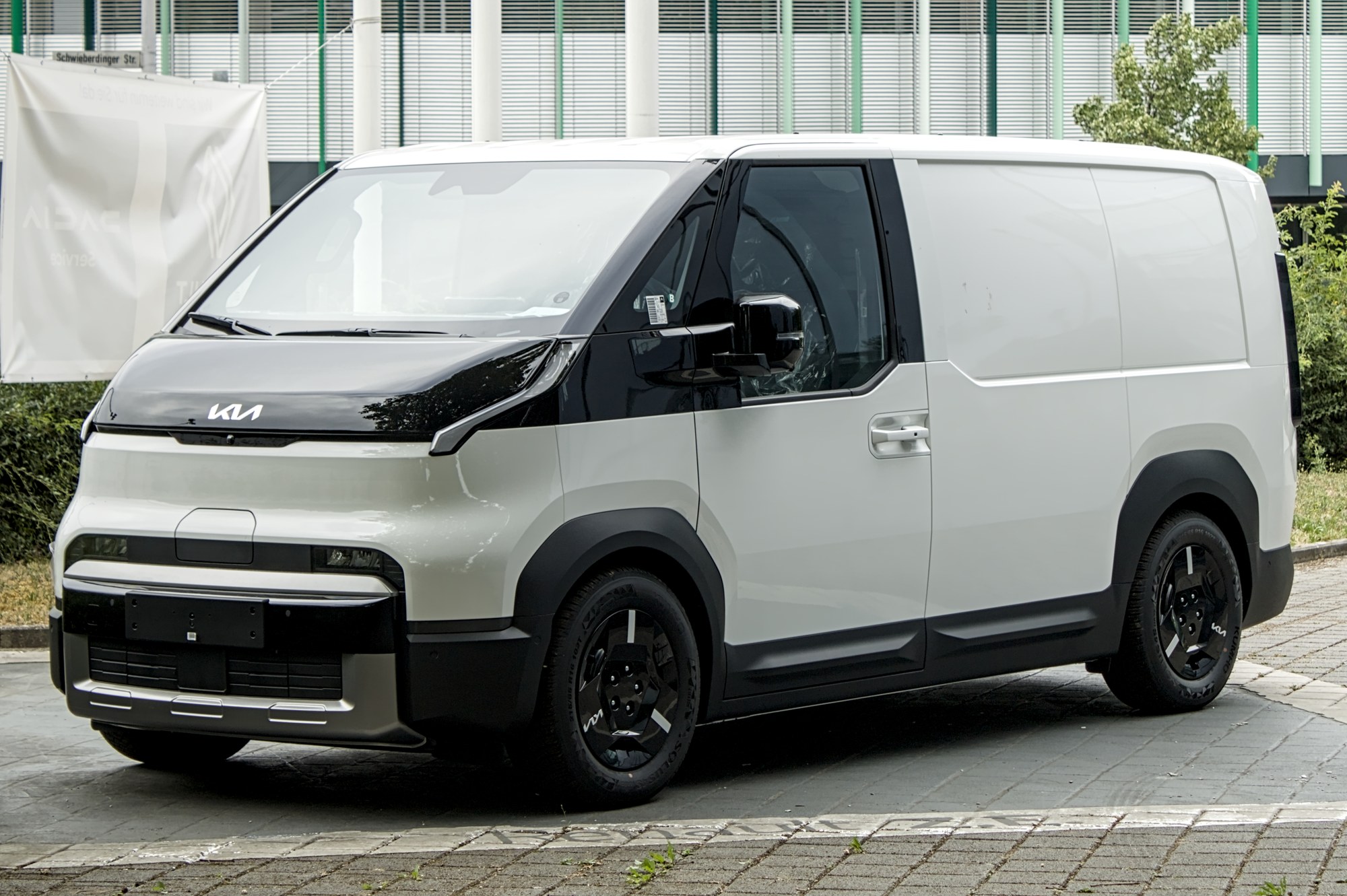

Kia dropped hints back at the 2026 Philippine International Motor Show, confirming the PV5 was on its way to electrify the commercial segment. Now the paperwork backs it up. When a model appears on the DOE’s list, it’s a strong sign a launch is being lined up — the same pattern we saw with the Kia EV3, which is also DOE-listed and heading our way.
A Wider Electric Hiace, Basically
Here’s the thing about the PV5 that grabbed me: it’s not another crossover. It’s a proper electric work van. In the DOE documentation, Kia listed the long-wheelbase Cargo variant, which measures 4,695mm long, 1,895mm wide, and 1,899mm tall. Picture a wider, boxier cargo-spec Toyota Hiace and you’re in the right neighborhood.
The cargo bay alone is generous: 2,255mm long, 1,565mm wide, and 1,520mm tall. That adds up to 4,420 liters of cargo space with a maximum payload of 790kg. There’s a flat floor and a relatively high roof, which means almost all of that volume is actually usable — a bigger deal in a work van than most people realize.
Kia PV5 Cargo — Key Specs (DOE-Listed PH Variant)
| Specification | Kia PV5 Cargo (LWB, DOE-listed) |
|---|---|
| Body style | Electric cargo van (long-wheelbase) |
| Dimensions | 4,695 × 1,895 × 1,899 mm |
| Cargo volume | 4,420 liters |
| Max payload | 790 kg |
| Motor output | 161 hp / 250 Nm |
| Battery | 51.5 kWh NCM |
| Range | 384 km (NEDC) |
| DC fast charging | 10–80% in ~30 min |
| Vehicle-to-load | Yes (V2L) |
| Safety | ANCAP 91% Platinum |
Under the hood, the PV5’s electric motor makes 161hp and 250Nm of torque, paired with a 51.5kWh battery good for 384km on the NEDC cycle. That’s the Standard Range battery pack — Kia also offers a 71.2kWh Long Range version in other markets that stretches range further toward 412-416km on WLTP.
Charging is handled nicely. Besides AC charging, DC fast charging takes the pack from 10% to 80% in about 30 minutes. And vehicle-to-load is present, so this cargo van can power tools, equipment, or even a workstation on site — genuinely useful for contractors, delivery fleets, and small businesses.
What Others Are Saying
International reviews have been cautiously positive. Electrifying.com noted the ride is “comfortable and composed” around town but flagged that the 665-790kg payload is “a bit low” next to rivals — the Ford E-Transit can haul up to 1,220kg. So the PV5 is more of a last-mile delivery and trade partner than a heavy hauler.
CarsGuide tested the payload on Australian roads and confirmed a real-world 740kg is achievable, rating it to tow up to 750kg. CarExpert found the 4,695mm length makes it “considerably easier to manoeuvre” than bigger vans, and quoted claimed energy consumption of around 19.1kWh/100km — decent efficiency for a box this size.
The safety story is a headline worth keeping. The PV5 Cargo scored a 91% Platinum rating from ANCAP, the highest safety rating commercial vehicles can earn. That matters, because vans historically trail passenger cars on crash safety — seeing a work van hit Platinum is genuinely good news for fleet operators.
How Much Will It Cost Here?
There’s no Philippine SRP yet, so treat this as an estimate, not a promise. In Australia, the PV5 Cargo Long Range (71.2kWh) is priced from AU$55,990 before on-road costs. The DOE-listed PH variant is the smaller 51.5kWh Standard Range, which should land below that.
| Currency | Estimated Price (51.5kWh Cargo) |
|---|---|
| PHP | ~₱2.4–2.7 million |
| USD | ~$38,800–43,700 |
| INR | ~₹37–42 lakh |
I should underline the caveat: this is a projection anchored on the Australian Long Range pricing and the Kia EV3’s estimated local positioning. Kia Philippines hasn’t announced anything official. But if it lands in the low-to-mid P2 million range, the PV5 Cargo would line up as a serious electric alternative to gas commercial vans in that bracket.
Is the PV5 Right for the Philippines?
City driving
This is where the PV5 shines for fleet owners. The instant torque and compact-ish 4.7m length make it easy to thread through EDSA traffic and squeeze into tight loading bays in Makati and Binondo. The 384km NEDC range is overkill for daily city routes — most delivery operations cover far less. Charging overnight on AC is enough for a full workday.
Long-distance travel
Provincial runs are workable but need planning. With the 30-minute DC top-up, a Manila-to-Baguio cargo run is doable with a single charging stop. The bigger question is charging infrastructure outside NCR, which remains thin. For a fleet doing intercity work, the Long Range battery would be easier to justify — one more reason to hope Kia brings both packs.
Flooded situations
Here’s the honest take: a van sits low, and the PV5’s ground clearance isn’t its selling point. Metro Manila’s flood-prone streets during typhoon season are a genuine risk for any low vehicle. Kia hasn’t published a specific IP rating or wading depth for the PV5, so I won’t invent one. Don’t plan on wading Jungletown-style — plan around the floods instead. That said, with no engine and no exhaust, there’s no hydrolock to worry about if you’re already caught out, which is a small EV advantage.
High temperature conditions
Philippine heat is a real test for battery thermal management. The PV5 uses NCM chemistry, which is more energy-dense than LFP but slightly more sensitive to heat. Kia’s liquid cooling should keep the pack in check, but buyers in tropical climates should watch real-world range in summer months — hot-weather AC load can eat into range figures. For cooling needs, the generous cargo bay makes this a solid base for fleets that add their own insulated compartments.
Should Commercial Buyers Care?
Short answer: yes, if the price lands right. The PV5 Cargo targets a slice of the market that’s been underserved by the PH EV boom — the work vehicle buyer. Most electric models landing here are passenger cars and crossovers, like the Suzuki e Vitara or the Hycan V09. A dedicated electric cargo van with V2L and a 30-minute fast charge is a different animal.
The elephant in the room is price. Electric vans still cost meaningfully more than their gas counterparts, and the 790kg payload cap means it won’t replace heavy-duty haulers. But for last-mile delivery, food and beverage logistics, and trade fleets running predictable urban routes, the running-cost math can tip in the PV5’s favor quickly — especially given how cheap per-km electricity is versus diesel here. Fleet owners will do the math on total cost of ownership, not just the sticker.
For a deeper look at how battery tech is reshaping everything around us, I dug into why batteries power more than just our cars in an earlier post. And if you’re curious how the broader EV wave is hitting the Philippines, the BYD surge and the plug-in hybrid boom is worth a read.
Bottom Line
The Kia PV5’s DOE listing is a quiet but telling step. Kia is signaling it wants the commercial segment electrified, not just the showroom. A Platinum-rated, fast-charging electric cargo van with real cargo volume, priced sensibly, could be exactly what Philippine fleet operators have been waiting for.
We’ll know more once Kia Philippines sets a price and a launch date. Until then, the PV5 is firmly on the watchlist — the DOE paperwork doesn’t lie about intent, and the commercial EV space here is finally getting interesting.