
Sony announced the Xperia 10 VIII today, and I’ll level with you right away: this is one of the least ambitious phone updates I’ve seen in a while, wrapped in one of the more confident price tags. Compared to last year’s Xperia 10 VII, the chip is the same, the battery is the same, the camera is the same, and the display resolution is the same. What changed is a noticeably brighter screen, better-tuned speakers, and a launch price that jumped about 150 euros to €600 / £550.
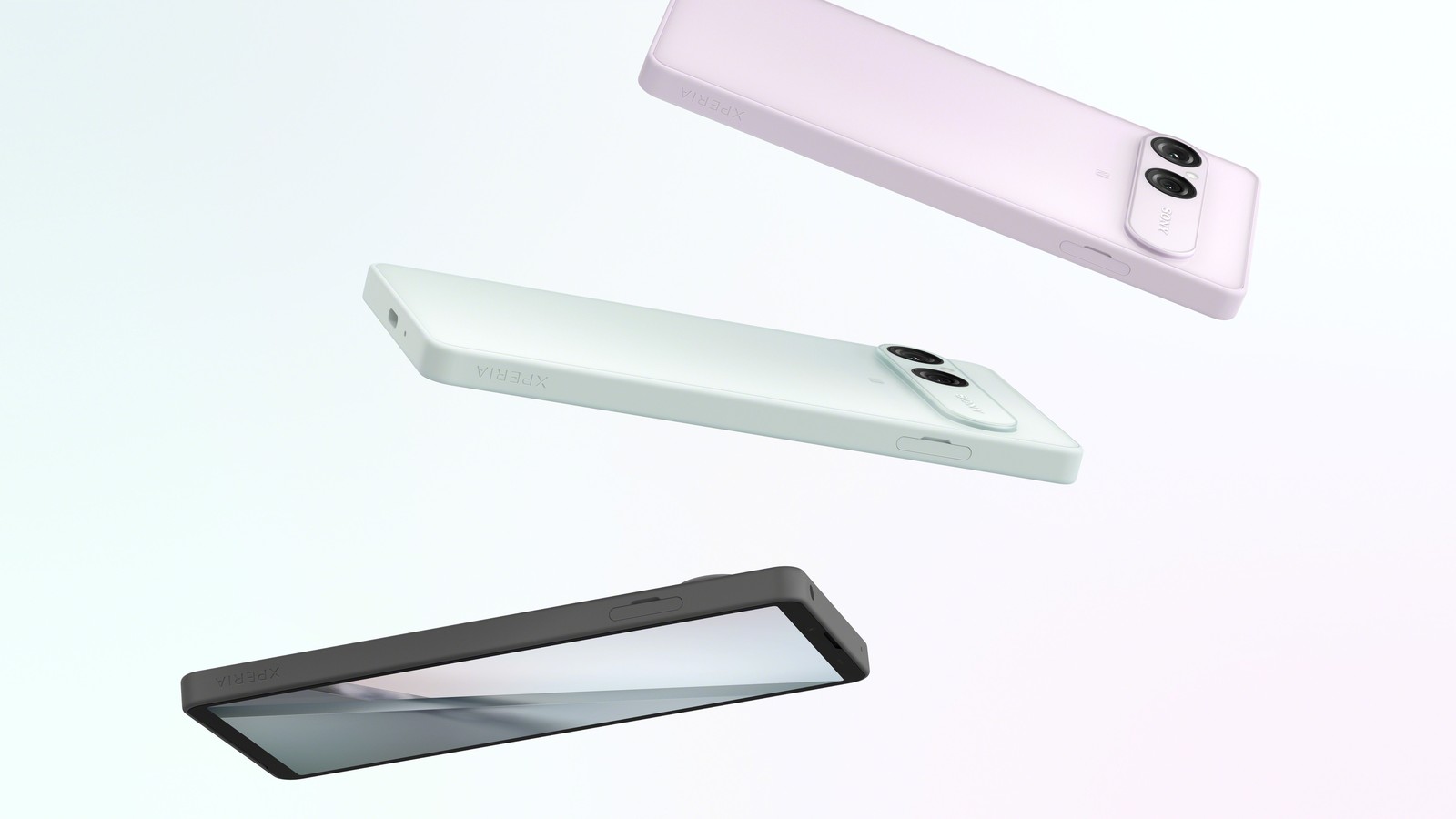
That’s the whole story in one paragraph, but it deserves a closer look, because the 10 VIII still does a handful of things almost no other phone does in 2026. It’s compact, it’s properly waterproof, it has a headphone jack, it takes a memory card, and it runs a refreshingly clean version of Android. Whether that package is worth the price is exactly what this review is about.
Design & Build Quality
The Xperia 10 VIII is 153 x 72 x 8.3mm and weighs just 168g, which makes it feel genuinely small and light next to the 6.8-inch slabs that dominate the local market. Sony is leaning into that “lightweight everyday” angle hard, with a translucent matte finishing on the plastic back that looks cleaner in person than “plastic” usually suggests. The front is Gorilla Glass Victus 2, and the frame and back are plastic.
It keeps its proper IP65/IP68 rating, so it shrugs off both water jets and a dunk up to 1.5m for 30 minutes. The fingerprint reader is a side-mounted button, which I’ve always found more natural than an in-display one on a phone this size. It comes in Frozen White, Frosted Grey and Misty Lilac, and there’s still a 3.5mm headphone jack up top, which Sony continues to treat as a feature rather than a relic. Good on them.
Display
Sony finally did something concrete with the screen this year: it’s roughly 50% brighter outdoors. In GSMArena’s standardized 75% auto-brightness test the 10 VIII hit about 1,509 nits, a big step up from the 10 VII and easily enough for a bright Manila afternoon. The panel itself is a 6.1-inch OLED at 1080×2340 (422ppi) with HDR and 10-bit colour, and it’s still natively sharp.
The catch is refresh-rate handling. It’s a fixed 120Hz panel with no smooth dynamic switching, and the behavior is honestly a little backwards: in some games the phone actually drops to 60Hz unless you dig into Developer options and flip a toggle. Videos and Chrome do scale down to 60Hz to save juice, but most third-party apps just sit at 120Hz. Minimum brightness is decent, with an extra-dim mode that goes very low for nighttime reading.
Performance
Under the hood is the same Snapdragon 6 Gen 3 that powered the 10 VII, paired with 8GB of RAM (expandable by up to 6GB of virtual RAM) and 128GB of UFS storage with microSD expansion. That is a competent mid-range chip, not a gaming monster. For everyday scrolling, messaging, maps and light photo editing it feels smooth enough. As with the iQOO Z11 that this blog reviewed recently, heavy gaming is where it runs out of steam, and there’s no fancy cooling to lean on.
On the plus side, Sony commits to four major OS updates, and the software stays close to stock, so the modest hardware never has a heavy skin dragging it down. Storage is capped at 128GB with no larger option, which is stingy for 2026 even with the memory card slot.
Camera
The camera is the same hardware as last year: a 50MP Sony IMX766 main sensor with OIS, a 13MP ultrawide, and an 8MP front camera. Both the ultrawide and the selfie shooter have fixed focus, so don’t expect close-up magic from either. GSMArena’s testing sums it up bluntly: the main camera is decent for daytime stills and keeps some composure at night, but the ultrawide is only usable in bright daylight and low-light selfies are poor.
I’d add that the 10 VIII struggles where the PH budget class — think the vivo V70 Lite 4G we reviewed recently — now excels: fast charging, huge batteries and capable cameras at far lower prices.
Battery & Charging
This is where the 10 VIII interests me least and frustrates me most. The 5,000mAh cell returns from last year, and Sony’s marketing talks up “up to two days” of life. Reality, per lab testing, is about 13 and a half hours of active use, which is a solid single day but not the two Sony promises. Charging is even more dated: USB Power Delivery tops out around 26W in practice, delivering about 42% in half an hour and needing roughly 1 hour 40 minutes for a full charge.
The whole memory/charging picture gets worse when you remember this launch is happening alongside the global memory shortage that’s been lifting prices all year. The 150-euro jump on the 10 VIII is the most concrete phone example of that tax yet, and it lands on the part of the market that can least afford it.
Software
Software is probably the 10 VIII’s strongest hand. It ships Android 16 with Sony’s near-stock skin on top, which means no aggressive bloatware, sensible settings, and a clean look. The headline software trick is a “Rewards & Pay” shortcut that launches payment and loyalty apps with a quick double-press of the power button, which honestly makes a lot of sense for a phone Sony is positioning around ease of use. Battery Care tools for protecting long-term health and the four-year update promise round out a genuinely thoughtful software story.
Pros and Cons
| Pros | Cons |
|---|---|
| Compact, light 168g build that stands out in 2026 | €600 launch price is roughly 150 euros over the 10 VII |
| Genuinely bright outdoor display (~1,509 nits measured) | Hardware barely changes over last year’s model |
| IP65/IP68 dust and water resistance | Very slow ~30W charging, hour-and-a-half full charge |
| 3.5mm jack, microSD slot and clean near-stock Android | Battery is a sturdy single day, not the “two days” claimed |
| Four major OS updates promised | Reused camera lags the mid-range competition, especially low-light |
| Front-facing stereo speakers sounded cleaner this year | Only 128GB storage, no higher-capacity option |
Should You Buy This?
Buy it if
- You specifically want a small, light phone that still feels like a proper 2026 device.
- The 3.5mm jack, microSD slot and IP68 rating are non-negotiables for you.
- You value a clean, bloat-free Android experience with a real update commitment.
- You’re a Sony loyalist who’s been holding out for the next 10-series.
Skip it if
- You want raw value — at this price the PH mid-range class offers far more phone for the money.
- Fast charging matters to you; there are far quicker options in this bracket.
- Low-light camera quality is a priority; this camera trails the field.
- You need long battery endurance or reliable gaming performance.
Final Verdict
The Sony Xperia 10 VIII is not a bad phone. It’s well built, unusually compact, properly waterproof, and runs one of the cleanest versions of Android you can buy. If you’ve been hunting for a small phone with a headphone jack and a memory card slot, there is genuinely very little else like it on the market right now.
The problem is the price. At €600 (roughly PHP 38,000 against current rates, before any grey-market markup), Sony is asking a premium for a phone that barely improves on last year while the rest of the segment keeps moving. GSMArena put it more bluntly than I would: this doesn’t make sense above the 350-euro mark, and it’s hard to recommend at all at launch price, especially since Sony has already discontinued the 10 VII that would have been the smarter buy.
For a Filipino buyer, the calculation is even starker. Sony doesn’t officially retail the Xperia line here anymore, so you’re importing a phone whose euro price converts into territory where a locally-sold Redmi Note 17 Pro or iQOO gives you a bigger battery, far faster charging and a better camera for less. That’s why this review reads the way it does.
The 10 VIII is a genuinely charming niche device that’s priced like a mainstream contender. If you know you want exactly what it offers, you’ll enjoy it. If you’re deciding with your head rather than your heart, the memory-shortage tax here is one you don’t need to pay. Sony loyalists, this one’s for you. Everyone else, look around first — our roundup of the best phones for every budget is a good place to start.