
Tecno Spark Go 3 Pro Review: IP69 Durability, a 120Hz Display, and the Trade-Offs
I spent some time wrapping my head around what Tecno is doing with the Spark Go 3 Pro when it landed this week. On paper it reads like a budget device with one headline trick — IP68/IP69 dust and water resistance — and everything else tuned to keep the price low. Launched in India on August 28 with open sales starting September 4, it’s the newest member of the Spark family, arriving about seven months after the base Spark Go 3. The big question for anyone in the Philippines is whether a durability-first phone like this earns its premium over the Spark Go 3 that’s already on local shelves at ₱4,499.
Design & Build Quality
This is where the Spark Go 3 Pro earns its name. The phone carries a dual IP68 and IP69 rating — the IP69 part resists high-pressure water jets and immersion up to 1.5 meters for 30 minutes, which is genuinely rare in this price bracket. Tecno also claims drop resistance to about 1.5 meters, a figure that mirrors what rivals like the Realme C100x push for their own rugged budget phones.
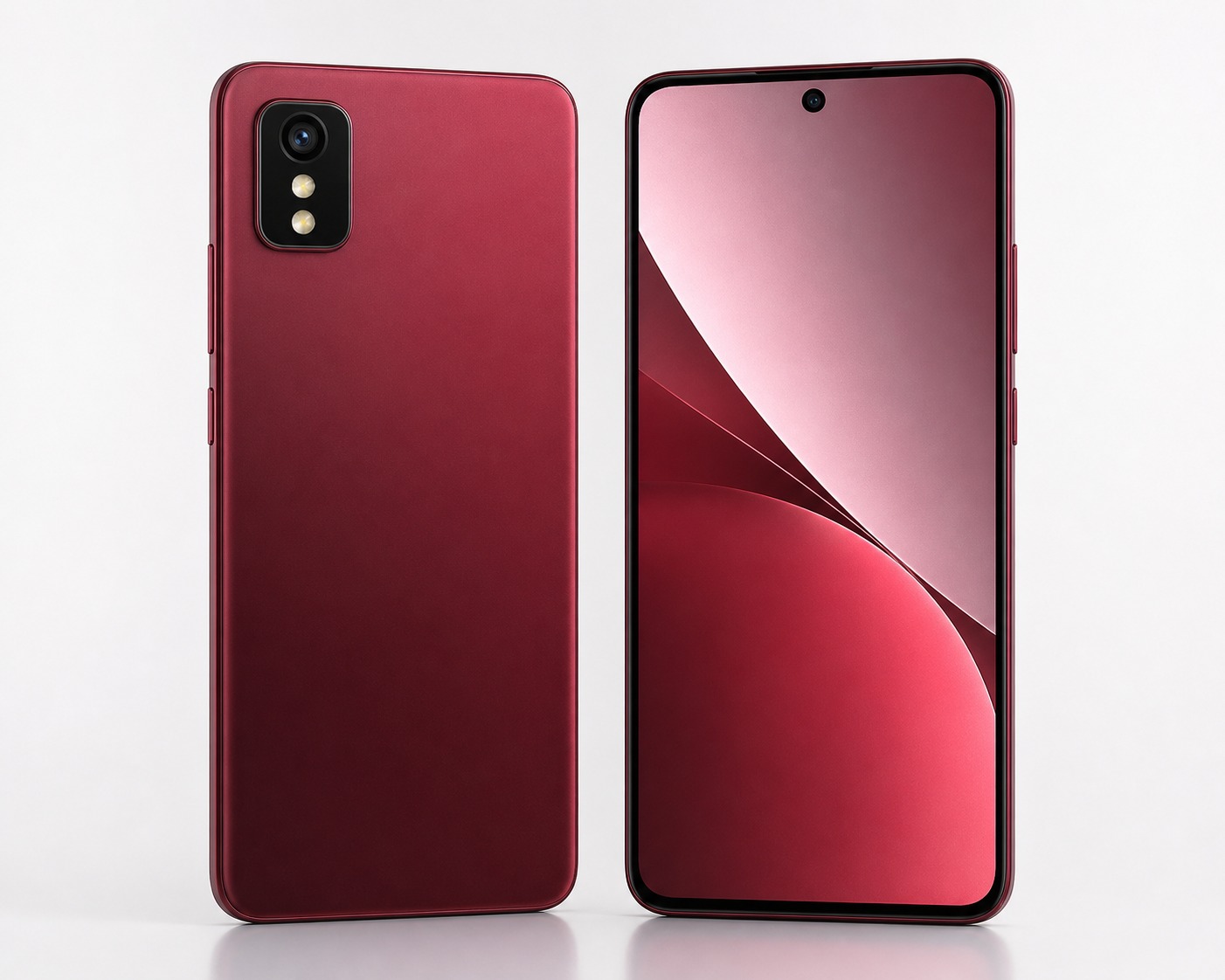
On the hand it’s a plain, workmanlike slab — 168.3 by 79.2 by 8.0mm and 194 grams. That’s bigger and heavier than the base Spark Go 3, which makes sense once you account for the larger screen and the beefier sealing needed for those ingress ratings. It ships in Burgundy Red, Eclipse Black, Mist Silver, and Sunrise Orange. You get a glass front, plastic back, and plastic frame in its least glamorous form, plus a side-mounted fingerprint sensor and an IR blaster tucked into the frame.
Display
Tecno fitted a 6.78-inch HD+ IPS LCD running at a 120Hz refresh rate, with a 240Hz touch sampling rate and up to 580 nits peak brightness. Sources split on the exact resolution — Gadgets360 lists it at 720 by 1526 pixels, while the GSMArena spec sheet says 720 by 1600, both in a roughly 20:9 aspect. Either way you’re looking at an HD+ panel, so don’t expect razor-sharp text.
The 120Hz refresh is the real draw here. For a phone aimed at casual users it makes scrolling feel smooth and livelier than the standard 60Hz panels you usually find at this level. The 580 nits peak is fine for indoor use and shaded spots, but on a bright tropical afternoon I’d expect some fighting for visibility. It’s sharp enough for everyday apps, not for close-up reading of dense content.
Performance
Here’s where the research gets a little messy, and I want to be upfront about it. Two of the corrected launch reports — Gadgets360 and 91mobiles — say the Spark Go 3 Pro runs the MediaTek Helio G81 4G chipset. The GSMArena spec page, which still reads as preliminary, lists the Unisoc T7250 that powers the plain Spark Go 3. That’s exactly the kind of discrepancy worth double-checking before you buy, and it tells you both chips are firmly entry-level.
Around that processor you get 4GB of LPDDR4X RAM and either 64GB or 128GB of UFS 2.2 storage, with a dedicated microSD card slot. Tecno lets you expand RAM virtually up to 12GB, which helps keep more apps cached but won’t transform the experience. Day-to-day tasks like messaging, browsing, and social apps run fine. Gaming is not this phone’s strength — expect light games only, and note the whole package is 4G-only, with no 5G support at all.
Camera
The Spark Go 3 Pro keeps photography deliberately simple: a single 13MP rear camera with an f/1.8 aperture and autofocus, plus an 8MP fixed-focus front camera. A dual-LED flash sits beside the lens, and there’s an AI voiceprint noise-cancellation feature aimed at cleaning up calls in loud surroundings.
In good light the 13MP sensor can produce serviceable daylight shots — fine for quick snaps and document photos. Low light is the weak spot, as you’d expect from a single budget sensor with no dedicated night sensor. There’s no ultrawide, no telephoto, and no second rear lens to fall back on, so framing flexibility is limited. Video capture exists but stays basic. If cameras are your priority, this phone is not the reason to open your wallet.
Battery & Charging
You get a 5,200mAh battery, up 200mAh from the base model’s 5,000mAh. It’s a solid capacity for a 4G device running a modest chipset — real-world endurance should be comfortably a full day and then some on light use. That’s the core of the value: a durable phone that doesn’t need a mid-day charge.
Charging is the modest part. GSMArena and 91mobiles say 15W wired charging, but Gadgets360 lists 10W with the bundled charger — another spec-sheet mismatch worth flagging. Either way it’s slow by 2026 standards. Filling a 5,200mAh cell at 15W takes a while, so plan to plug in overnight. There’s no wireless charging here, which is normal for the price point.
Software
The Spark Go 3 Pro runs Android 16 with Tecno’s HIOS 16 skin on top. It’s a reasonably clean budget interface, though HIOS has historically carried some pre-installed apps you may want to prune. Tecno markets a “4 Years Lasting Fluency” claim, but treat that as a marketing figure rather than a hard guarantee — I haven’t seen a firm OS-upgrade or security-update commitment in the launch material, and that’s something to weigh if you keep phones for years.
You get dual speakers with DTS support and a 3.5mm headphone jack, which is still welcome on an entry device. Wi-Fi is dual-band 802.11ac, Bluetooth is present, GPS positioning works, there’s FM radio, and the USB-C port supports OTG. Notably there’s no NFC — worth knowing if you rely on contactless payments. The IR blaster is a nice-to-have that lets the phone double as a remote for TVs and AC units.
Pros and Cons
| Pros | Cons |
|---|---|
| IP68/IP69 dust and water resistance at budget pricing | Single 13MP camera with weak low-light performance |
| 120Hz display with a 240Hz touch sampling rate | 4G-only — no 5G support |
| 5,200mAh battery with strong real-world endurance | Slow 15W (or 10W) charging |
| Dedicated microSD slot for expandable storage | Entry-level chipset that won’t handle heavy gaming |
| Dual speakers with DTS and a 3.5mm headphone jack | HD+ resolution, not especially sharp |
| IR blaster that works as a remote | No NFC for contactless payments |
Should You Buy This?
Buy it if
- You work or live around water, dust, and moisture — delivery riders, field workers, or anyone at a construction site
- You want a durable phone that easily lasts a full day on the 5,200mAh battery
- You’re a light user who values scratch- and splash-resistance over raw specs and don’t mind the 4G-only reality
- You like having an IR blaster and a headphone jack on hand
Skip it if
- You need 5G connectivity — in late 2026 that alone is a hard reason to look elsewhere, like the Redmi 17C 5G
- Cameras matter to you and you want more than a single basic sensor
- You play even moderately demanding mobile games
- Speed of charging is a daily concern — 15W (or 10W) is genuinely slow
Final Verdict
The Tecno Spark Go 3 Pro is a specialist in a sea of generalists. It trades away 5G, a capable camera, and fast charging to be, above all else, a phone that shrugs off water and dust. For a specific kind of buyer — someone who’s killed too many phones to rain, dust, or a knock off a table — that trade-off is exactly right, and there isn’t much else with this IP69 rating at the price.
At an India launch price of ₹15,999 (about ₱10,400) for the 4/64GB model and ₹16,999 for the 4/128GB, it sits at a curious spot. It costs noticeably more than the base Spark Go 3 Tecno already sells in the Philippines for ₱4,499, yet it’s a similar-grade phone underneath — the premium is the durability and the bigger screen. Compared to similarly priced budget options, most rivals will hand you 5G and a more flexible camera for the money, but none of them carry IP69.
If Tecno brings the Spark Go 3 Pro to the Philippines, the math gets interesting: for roughly the price of an entry 5G phone, you’d get an unusually tough daily driver. But until then, Indian buyers who trust its ruggedness over its specs are the clear target. It’s an honest, workmanlike phone that knows exactly who it’s for — and more importantly, it knows who it isn’t for. For the rest of us, the durability alone isn’t enough to beat phones like the Realme C100i or the Tecno Pova 8 Pro unless that IP69 rating is the deciding factor.