
The Tiny SUV That’s Winning the Philippine EV Race
When VinFast launched the VF 3 in the Philippines in September 2024, it entered a market already buzzing with cheap micro-EVs and a growing charging network. What nobody expected was that this 3.19-meter mini SUV would become the country’s best-selling battery electric vehicle by the end of its second year.
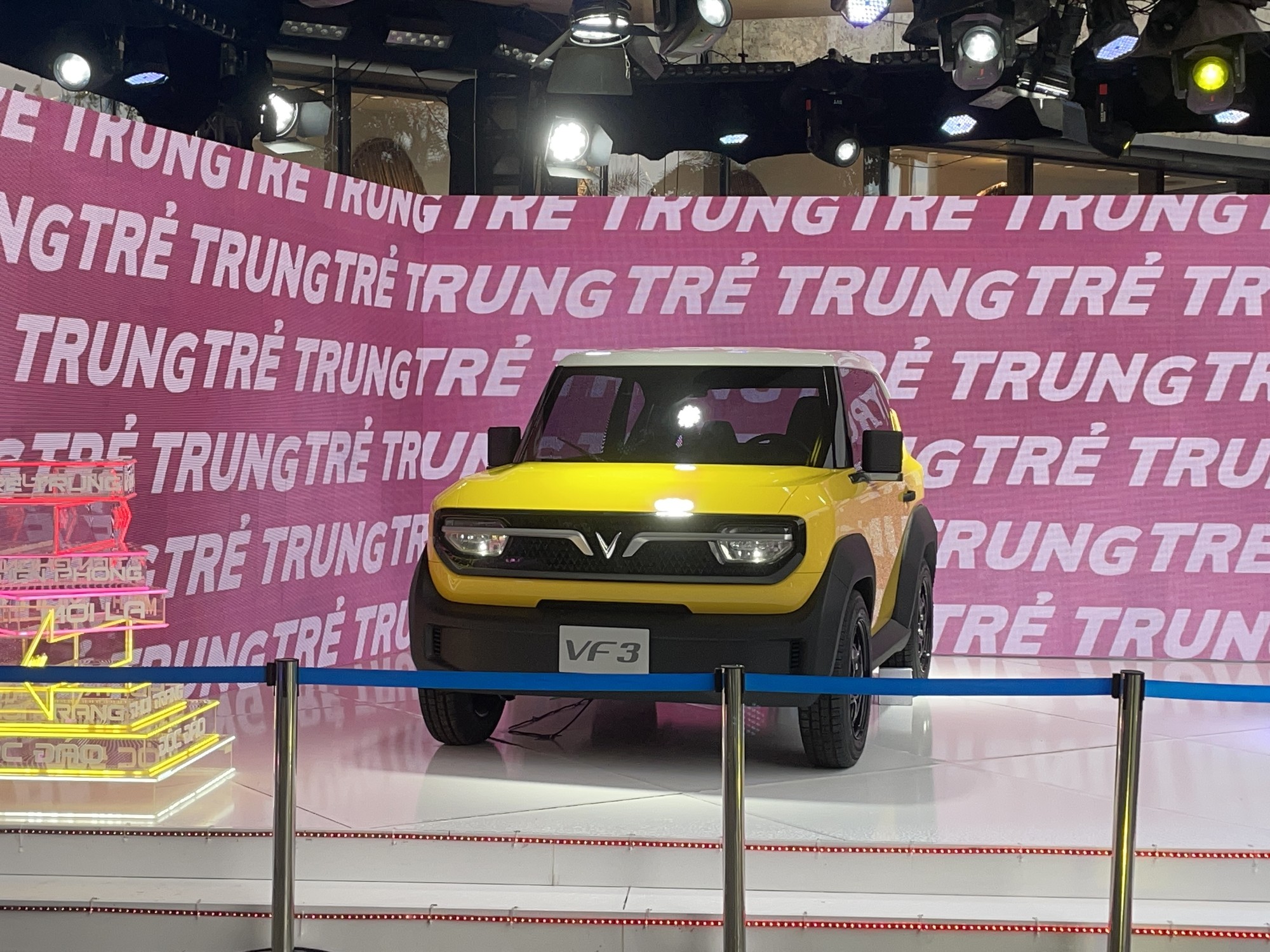

According to CAMPI data cited by Speed, the VF 3 recorded 2,906 units sold from January to August 2026, topping every other BEV model in the local segment. VinFast Philippines also reported 865 units sold in September 2026 alone, keeping the brand at number one in the BEV category. The company now projects full-year sales to exceed 8,000 units for 2026, a massive jump from just 115 units in 2025.
That’s not just a win for VinFast. It’s a signal that Filipino buyers are ready to embrace small, affordable electric cars — if the pricing and ownership model make sense.
Specs at a Glance
The VF 3 is deliberately compact. At 3,190 mm long, 1,679 mm wide, and 1,622 mm tall, it slots below most city hatchbacks. The 2,075 mm wheelbase still seats four adults, and the 191 mm ground clearance is actually higher than some subcompact crossovers.
| Motor | Permanent magnet synchronous, 32 kW (43 hp) / 110 Nm |
| Battery | 18.64 kWh lithium-ion |
| Range | 210 km (NEDC) |
| DC Charging | 10–70% in 36 minutes |
| AC Charging | 10–70% in 5 hours (portable charger) |
| Dimensions | 3,190 × 1,679 × 1,622 mm |
| Wheelbase | 2,075 mm |
| Ground Clearance | 191 mm |
| Cargo | 285 liters (rear seats up) |
| Warranty | 7-year / 160,000 km vehicle; 8-year unlimited battery (if purchased) |
Pricing and the Battery Subscription Trick
VinFast Philippines lists the VF 3 at ₱645,000 with battery subscription and ₱745,000 with the battery included. The subscription model is the real story here: you pay a monthly fee based on how much you drive, and VinFast handles battery health, maintenance, and replacement if capacity drops below 70 percent.
Subscription tiers are straightforward:
- Less than 1,500 km/month: ₱2,800
- 1,500–2,500 km/month: ₱3,800
- More than 2,500 km/month: ₱6,300
Using live exchange rates of 63.96 PHP/USD and 95.31 INR/USD, that works out to roughly ~$10,080 for the subscription model and ~$11,638 with the battery, or about ~Rs 9.6 lakh and ~Rs 11.1 lakh respectively. Either way, it undercuts every other new EV on sale in the Philippines by a significant margin.
The subscription removes the biggest fear in EV ownership: battery degradation. You’re not stuck with a faded pack five years down the line. VinFast swaps it out. That’s a practical solution for a market where most buyers are buying their first electric car.
What Others Are Saying
Pilstar Wheels took the VF 3 for a first-drive review and called it a charmer, praising the compact footprint and the surprisingly roomy cabin for four. The 10-inch infotainment screen is basic but functional, and the dual airbags, traction control, and hill-start assist cover the safety basics.
The review also flagged real-world range as closer to 150–160 km if you’re heavy on the air conditioning — a realistic figure for Metro Manila traffic. The DC fast-charge timing of 10–70% in 36 minutes is honest and consistent with the 32 kW peak charge rate.
What stands out in owner discussions isn’t performance — it’s the total cost of ownership. With free charging at VinFast stations until March 31, 2029, and battery subscription covering degradation, the monthly cost can rival a gasoline-powered hatchback. For buyers still weighing whether electric makes financial sense, the battery question is exactly why subscription models like this matter.
Practical Philippine Considerations
City Driving
The VF 3 was born for EDSA. At 3.19 meters, it slots into parking slots that would trap a larger SUV. The 32 kW motor isn’t fast — 0–50 km/h takes 5.3 seconds — but in stop-and-go traffic, instant torque at low speed makes it feel lively. The 191 mm ground clearance soaks up minor floods and speed bumps without scraping.
Long-Distance Travel
This is where the VF 3’s limitations show. A 210 km NEDC rating translates to roughly 150–170 km in real-world highway driving with the air conditioning on. Manila to Baguio at ~250 km is a stretch on a single charge. You’d want to plan at least one DC fast-charging stop, and the 32 kW peak rate means that stop lasts closer to 40 minutes than 20.
For provincial owners, the VF 3 works best as a second car for city runs, or with a home charger for overnight top-ups. Long-distance road trippers should look at the VF 5 or VF 6 instead.
Flooding
The 191 mm ground clearance is a genuine advantage in monsoon season. It’s higher than the Toyota Raize’s 200 mm — close enough for shallow street floods. Like all EVs, the VF 3 has no engine to hydrolock, but VinFast hasn’t published an official wading depth or battery enclosure IP rating for the Philippine unit. Treat deep water the same way you would in any low-slung car: if you can’t see the road bottom, don’t drive through.
High Temperature
The 18.64 kWh pack is small, which means heavy air-conditioning use in 36–38°C heat will cut into range more than it would in a larger-pack EV. VinFast includes an active thermal management system, and the battery chemistry is standard lithium-ion — not the more heat-tolerant LFP chemistry found in some rivals. Park in shade when possible, and expect a 10–15% range drop during the hottest months.
Why the VF 3 Is Winning
The VF 3’s success isn’t just about being cheap. It’s about removing risk. The battery subscription model means buyers don’t have to worry about a ₱100,000-plus battery pack failing out of warranty. Free charging until 2029 eliminates fuel-price anxiety. And the 7-year vehicle warranty with unlimited roadside assistance gives peace of mind in a market where after-sales service has traditionally been a lottery.
VinFast is also expanding fast. The brand opened 21 e-motorcycle showrooms across the Philippines in July 2026 and plans to keep adding charging points through its V-Green network. For a first-time EV buyer, that infrastructure promise matters.
The Competition
At ₱645,000 with subscription, the VF 3 undercuts every other new EV in the Philippines. The closest rivals are micro-EVs like the Wuling Macaron (₱663,000), Changan Lumin (₱699,000), and Jetour Ice Cream EV (₱699,000). Those models offer similar city-car dimensions and 200–300 km ranges, but none match VinFast’s battery-subscription model or its growing dealer network.
The VF 3 also sits well below the Suzuki e-Vitara at ₱2.02M, the MG4 Urban at ₱1.199M, and the MG S5 EV — all proper five-seat hatchbacks with longer range but significantly higher price tags.
What Comes Next
VinFast Philippines expects to sell over 8,000 units in 2026, with the VF 3 making up roughly 70 percent of that volume. The brand has also opened pre-orders for the larger VF 2 city EV and the VF 8 SUV, which could bring buyers who outgrow the VF 3 but want to stay in the VinFast ecosystem.
For the rest of the industry, the message is clear: Filipino buyers will go electric if the upfront cost is low and the ownership risk is managed. The VF 3 proved that with the right bundle — cheap entry, battery subscription, free charging — a micro EV can dominate a market that many thought only wanted big SUVs.
So where does that leave the bigger, longer-range EVs? They still have a place for families and highway drivers. But if you’re looking for a commuter car that costs less than most motorcycles to finance, the VF 3 just made itself the default answer.