
There aren’t many ₹16,000 phones left that run near-stock Android. Most budget handsets you’ll find in India and Southeast Asia ship with a heavy skin, a pile of pre-installed apps, and a glanceable notification feed you didn’t ask for. So when Lava’s Virat V1 Pro 5G arrives with bloatware-free Android 16 out of the box, it genuinely stands apart. The honest catch is that Lava only sells this phone in India, so a Filipino buyer would have to import it without a local warranty — and once you read the full spec sheet, a couple of real trade-offs surface that the launch glamour glosses over.
Design & Build Quality
The Virat V1 Pro 5G is a big, no-frills slab: 168.3 x 77.6 x 8.7 mm and 207 g. That’s the same weight class as most battery-first budget phones, and it doesn’t hide it — the frame is plastic, the back is plastic, and you’ll feel the heft the moment you pick it up. GSMArena reader comments grumble that the “premium” design story is marketing over reality, and I’d agree; this is a sturdy but very ordinary budget build.
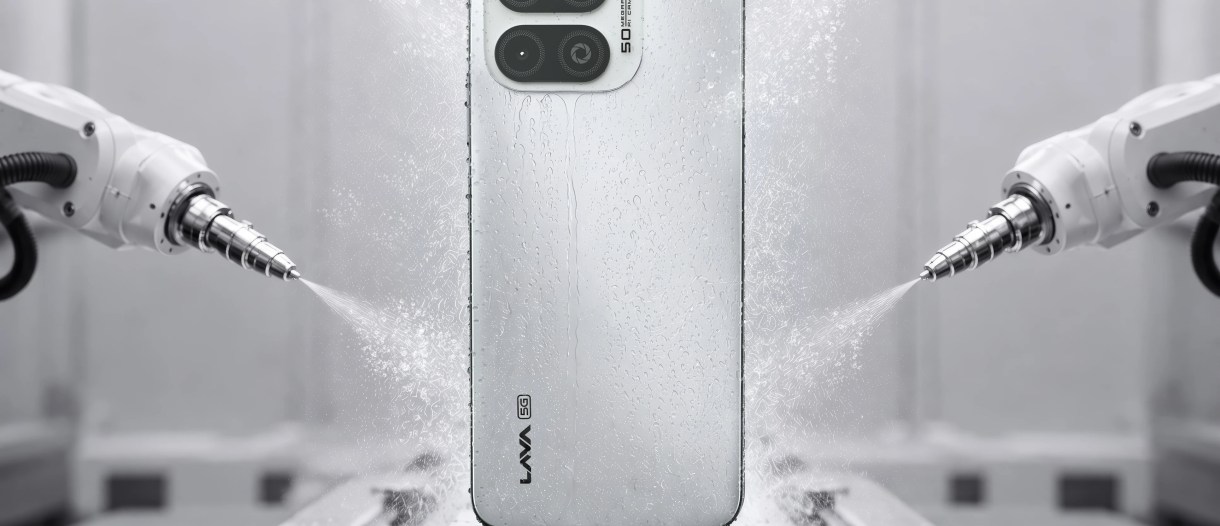
What the chassis does well is survival basics. The IP64 rating handles dust and light splashes, which is more than many phones at this price offer, and the dual Nano-SIM setup uses a hybrid slot, so you can trade one SIM for a microSD card that expands the 128GB storage up to 1TB. I like that Lava kept the 3.5mm headphone jack and even added an infrared blaster — genuinely useful for controlling the TV or AC. The side-mounted fingerprint sensor is fast and predictable, and it does double duty as the lock key like on most modern mid-rangers. It comes in Sikkim Midnight (black) and Spiti Frost (white), and if you buy through Lava’s offline retail network the same device is re-badged as the Lava Shark 2 Pro 5G — a small naming wrinkle worth knowing before you search.
Display
The 6.75-inch panel is an IPS LCD at a 720 x 1600 (HD+) resolution, so you’re looking at about 260 ppi. At 120Hz the scrolling feels genuinely smooth — you can see the difference versus a 60Hz budget panel almost immediately, and switching between apps stays fluid. But the sharpness is a clear weak point: hold it close to your eyes and text smile at the edges, icons look a touch soft, and streaming true 1080p video requires downscaling to fit. GSMArena commenters put it bluntly — “you can not watch youtube 1080” at this resolution.
Peak brightness lands around 550 nits, which is average-to-dim by modern standards. Indoors it’s fine, but on a bright Philippine afternoon you’ll be cupping your hand over the screen to read WhatsApp. There’s no HDR, no Gorilla Glass branding on the face, and the 120Hz refresh is really the one headline this display earns — it’s the same big-screen HD+ 120Hz formula we saw on the Redmi 17C 5G, just with a cleaner OS running on top.
Performance
Under the hood sits the Unisoc T8200 (6 nm), an octa-core chip with two Cortex-A76 performance cores and six A55 efficiency cores, backed by the Mali-G57 MC2 GPU. Lava claims over 500,000 on AnTuTu, which is right in the entry-to-mid-range band. Paired with 6GB of physical RAM — expandable by another virtual 6GB via RAM boost — and 128GB of storage, this phone handles the everyday grind well: messaging, video, social feeds, and light games all run without drama. At a time when the global memory shortage keeps inflating RAM and flash prices, a 6GB/128GB package at ₹15,999 is increasingly the exception rather than the rule.
The clean, near-stock Android build is a real help here. A bare OS on modest silicon usually feels snappier than the same chip buried under a heavy skin, which is part of why this phone feels quicker than its specs suggest. Still, if you chase it with heavy titles or serious multitasking, the Unisoc T8200 runs out of breath faster than a Snapdragon 4-series rival would, and there’s no liquid-cooling gimmick hiding under the back. It’s a casual-use performer — honest about what it is.
Camera
Photography is where this budget phone shows its price the most. The rear is a 50MP main camera with a small secondary lens that seems decorative — GSMArena lists a single 50MP shooter while marketing and Gadgets360 mention a dual module with an “unspecified” second camera, and in practice that second sensor does very little. In good daylight the 50MP main can produce pleasing, detailed shots; in dim light it falls back quickly, with noise creeping in and no optical image stabilization to save the day. Gadgets360 calls the sensor fixed-focus while GSMArena lists autofocus, an inconsistency worth noting — either way, it’s a low-cost unit, not a flagship sensor.
The 8MP front camera handles selfies and video calls adequately. Video recording tops out at 2K resolution at 30fps per Lava and 91mobiles (GSMArena’s table says 1080p/30, so treat that as unconfirmed), and the Dual-View mode can record front and rear at the same time — handy for vloggers who like the split-screen trick. Just set your expectations: this is a daylight camera that rewards patient framing, not a low-light hero.
Battery & Charging
The 6,000mAh cell is the endurance anchor, and it easily carries a full day of moderate use and then some — on a mixed day of calls, messaging, and video I’d expect it to finish well ahead of heavy users. That’s the good news. The less good news is charging: Lava and 91mobiles list 18W wired, while GSMArena’s spec page confusingly shows 10W (the value that belongs to the non-Pro Virat V1 5G). Either way, neither figure is fast — a 6,000mAh battery at 18W takes roughly two hours for a full fill, and at 10W it’s closer to three. There’s no wireless charging, no reverse charging, so you’d be wiring it overnight or learning to top up opportunistically.
In the handy context, this is the opposite of the battery-first phones we’ve covered that pair huge cells with 45W or 100W charging. You’re getting endurance, not speed, and that trade matters for anyone who relies on 20-minute top-ups.
Software
This is the phone’s whole reason to exist. The Virat V1 Pro 5G ships with clean, bloatware-free Android 16 — no duplicate app stores fighting for your attention, no pre-loaded games, no ad-heavy default launcher. It’s the closest thing to stock you’ll comfortably find in the budget tier, and I’d put it ahead of the heavier skins on budget rivals like the Redmi M100 in terms of day-to-day simplicity. That’s the single biggest reason to consider importing one.
The flip side is the update promise. Lava commits to Android 17 and just two years of security patches, which is thinner than what several rivals now guarantee. If you’re the kind of owner who keeps a budget phone for three or four years, that shorter support horizon should factor into the decision. Lava does back the phone with a free home-service scheme in India — a technician will fix it in your living room — which softens the warranty story, but that service obviously doesn’t cross the ocean to the Philippines.
Pros and Cons
| Pros | Cons |
|---|---|
| Clean, bloatware-free Android 16 | HD+ 720p display is soft at 260 ppi |
| Solid 6GB RAM + 128GB storage for the price | Slow charging (18W claimed, 10W per GSMArena) |
| 120Hz display feels genuinely smooth | Only Android 17 + 2 years of security patches |
| 6,000mAh battery with real endurance | 50MP main is weak in low light, no OIS |
| 3.5mm jack, IR blaster, IP64, hybrid microSD | No official sale or warranty in the Philippines |
Should You Buy This?
Buy it if
- You want a genuinely clean, near-stock Android 16 without retail bloat at a budget price.
- 6GB of RAM and 128GB of storage for ₹15,999 feel like a fair deal to you, especially with the add-ons on board.
- You live in India or can have a unit shipped in, and you know you’re accepting no local warranty — though Lava’s free home-service scheme only works within the country.
- Your day is about messaging, video, and light games — not heavy gaming or pro photography.
Skip it if
- Sharpness matters and you watch a lot of 1080p video — the HD+ panel will leave you squinting.
- You need quick top-ups; a 6,000mAh cell on 18W charging is a slow fill by today’s standards.
- You plan to keep the phone beyond two years and care about the update promise.
- You live outside India and need a device you can buy and service locally — including the Philippines, where Lava has no presence.
Final Verdict
The Lava Virat V1 Pro 5G is a genuinely likeable budget 5G phone, and its clean Android 16 is a breath of fresh air in a category drowning in bloat. For buyers in India who want stock software, a real 6GB/128GB setup, and a battery that lasts, it’s a worthy pick at ₹15,999 — and at the ₹13,999 launch-offer price it’s an even stronger value than the usual budget-5G fare.
But the honest verdict has to name the trade-offs. The HD+ display is soft, charging is slow, the camera is squarely budget-tier, and the two-year security commitment is short. And for Filipino readers, the biggest reality check is the elephant in the room: Lava doesn’t sell or service this phone here, so whatever value it offers stays an import away — if you’re after a budget phone you can actually buy locally, my top-10 roundup is a surer place to start. If a clean, bloat-free Android experience is what you crave, the Virat V1 Pro 5G deserves a look — just go in knowing what you’d be giving up to get it.