
Pickup trucks are serious business in the Philippines. They haul construction materials to job sites, carry produce to market, and double as the family ride on Sunday. So when an all-electric pickup started appearing on EDSA and in provincial towns, I paid attention — especially after it quietly changed its name.
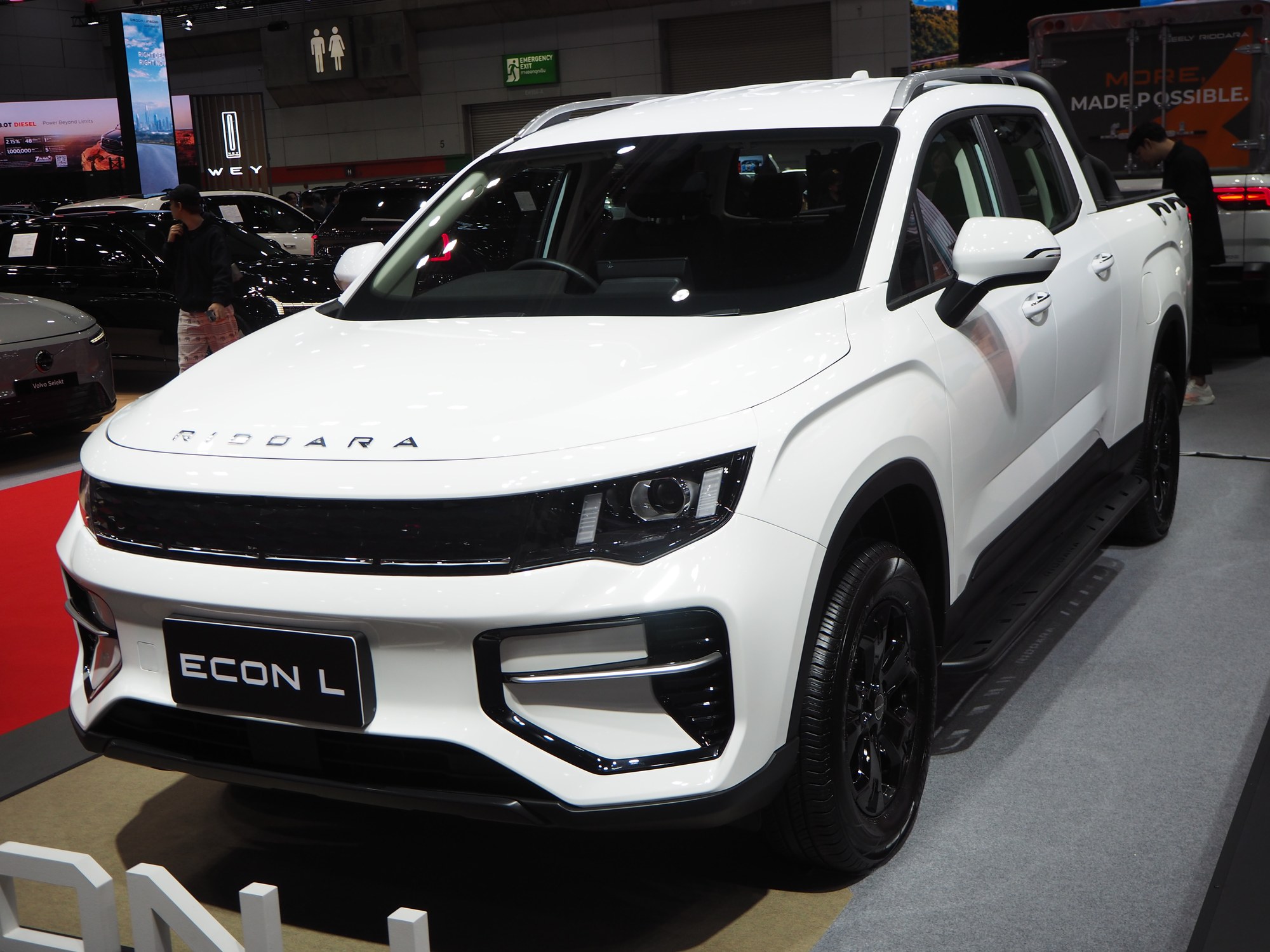

The Radar RD6 is now the Riddara RD6. UAAGI Auto Group rebranded its electric pickup sub-brand in October 2026 to match the name Geely uses in export markets, and the truck underneath is unchanged. What has changed is the momentum: the brand sold 112 units in June 2026, more than double the 44 it moved in May. For a niche electric pickup, that is a signal worth watching.
I have been tracking the RD6 since its local debut at MIAS 2026. Here is what the rebrand means, what the truck offers, and whether it makes sense for Filipino drivers and businesses.
What is the Riddara RD6?
Riddara is Geely’s electric pickup sub-brand, distributed locally by United Asia Automotive Group Inc. (UAAGI) — the same group that handles BAIC, Chery, Foton, and Jetour. The RD6 sits on Geely’s M.A.P. electric platform, which the company calls the first pickup built on a dedicated 100% electric architecture.
The important part is the construction: the RD6 is a unibody pickup, not a body-on-frame truck. That means it rides like an SUV instead of a ladder-frame workhorse. MacPherson struts up front, multi-link suspension at the rear, and a center of gravity Geely says is 20% lower than a conventional pickup.
Two powertrains are on offer. The RD6 Econ is the battery-electric version, in 63 kWh 2WD, 73 kWh 2WD Long Bed, and 73 kWh 4WD forms. The RD6 EM-P is the plug-in hybrid, offered in Comfort, Elite, and Luxury trims, all with four-wheel drive. Both seat five.
Specifications and pricing
Here is the Econ 73 kWh Long Bed 2WD — the variant Zigwheels Philippines spent the most time with:
| Motor | Single permanent magnet synchronous, rear-wheel drive |
| Power | 242 hp |
| Torque | 309 Nm |
| Battery | 73 kWh lithium iron phosphate (LFP) |
| Range | 443 km NEDC |
| DC fast charging | 30-32 minutes |
| AC charging | 7 kW |
| Dimensions | 5,500 x 1,900 x 1,865 mm |
| Ground clearance | 220 mm |
| Wading depth | 815 mm |
| Cargo bed | 1,765 x 1,450 x 540 mm |
| Payload | 955 kg |
| Seating | 5 |
| Warranty | 5 yr/150,000 km vehicle; 8 yr/200,000 km battery |
The 4WD swaps the single motor for a dual-motor setup good for 381 hp and 485 Nm, at the cost of some range. The EM-P pairs a 1.5-liter turbo “Thor” engine with front and rear motors for 463 hp and 659 Nm, a 19.09 kWh LFP battery, about 82 km of electric range, and more than 1,000 km of combined range.
Prices are current SRP from Zigwheels Philippines (November 2026), converted at 63.02 PHP/USD and 93.97 INR/USD:
| Variant | PHP | USD | INR |
| Econ 4×2 63 kWh | ₱1,398,000 | ~$22,200 | ~Rs 20.8 lakh |
| Econ 4×2 Long Bed 73 kWh | ₱1,598,000 | ~$25,400 | ~Rs 23.8 lakh |
| Econ 4×4 73 kWh | ₱1,748,000 | ~$27,700 | ~Rs 26.1 lakh |
| EM-P Comfort 4×4 | ₱1,698,000 | ~$26,900 | ~Rs 25.3 lakh |
| EM-P Elite 4×4 | ₱1,798,000 | ~$28,500 | ~Rs 26.8 lakh |
| EM-P Luxury 4×4 | ₱1,948,000 | ~$30,900 | ~Rs 29.0 lakh |
One note: the Zigwheels review quoted ₱1.638 million for the Long Bed, slightly above the ₱1.598 million on the current price list. Small variances like this are common between launch intro prices and current SRP — worth confirming with a dealer before you commit.
What the reviews say
Zigwheels Philippines’ ELECTRIA review (October 28, 2026) is the most thorough local test. The verdict: the RD6 is a “huge but comfy daily.” The multi-link rear suspension — unusual on a pickup — keeps the ride composed over Commonwealth Avenue’s uneven surfaces and the bumps inside the UP campus. Steering is precise, and the truck is more maneuverable through Diliman’s tight streets than its length suggests.
The range claim held up. The test unit arrived with 430 km of range and showed 415 km after a morning run to East Avenue and back. That is a good sign for a vehicle claiming 443 km.
The criticisms are just as clear. The brakes are sensitive and take getting used to. The 8-inch infotainment has no Apple CarPlay or Android Auto — you use a third-party app called EasyConnect instead. And there is no advanced driver-assistance suite at all, just the basics: dual front airbags, ABS, ESC, hill-start and hill-hold, and a reverse camera.
International reviews are more mixed. Carscoops, testing the truck abroad, praised its refinement and SUV-like manners but called out the unknown brand, modest performance, and limited range on the smaller pack. CleanTechnica, covering the Philippine market, highlighted the 3.5 kW vehicle-to-load capability and the 815 mm wading depth as the truck’s most useful features.
How it handles the Philippines
City driving
Be honest about the size: at 5,500 mm long, the RD6 is a lot of vehicle for Makati or BGC parking. Zigwheels specifically warns about narrow turns in parking lots and backing into a garage. It is the opposite end of the scale from a micro-EV like the VinFast VF 3. The 220 mm ground clearance shrugs off speed bumps and flooded side streets, and the instant torque makes merging onto EDSA feel effortless. The quiet cabin is a genuine upgrade over a diesel pickup — you can actually have a conversation.
Long-distance travel
443 km of NEDC range means Manila to Baguio, about 250 km, is comfortable with room to spare. The catch is charging: public DC fast charging outside Metro Manila is still thin, so plan your stops. If that worries you, the EM-P removes the problem entirely — 82 km of electric range for the city, then the engine takes over for a combined 1,000 km or more. It is the same no-home-charger logic as the Nissan Navara Pro PHEV, and it works.
Flooding
This is where the RD6 is genuinely strong. The 815 mm wading depth is best-in-class for the segment, and because it is electric there is no engine air intake to hydrolock. The battery uses LFP chemistry, which is thermally stable. One honest flag: the battery enclosure’s IP rating has not been published for the Philippine variant, so treat the wading figure as a tested engineering number rather than an all-weather guarantee.
High temperature
LFP batteries handle Philippine heat better than the nickel-based packs in many rivals, which matters in 36-38°C weather. What has not been published is the RD6’s battery thermal-management system for our market, so expect some range loss when the AC is working hard — the same trade-off every EV here faces.
The business case
For fleet and business buyers, the numbers are the story. The Long Bed carries 955 kg, and UAAGI’s own claims for the Econ line go up to one ton. The 3.5 kW V2L outlet turns the bed into a mobile power source — useful for tools on a job site, or for a fridge and lights during a brownout.
UAAGI estimates the Econ costs about ₱2.64 per kilometer to run, with preventive maintenance around ₱8 per day, and claims up to 84% savings over three years compared with a diesel pickup. The EM-P, for buyers who cannot charge at home, costs about ₱3.86 per kilometer. Those are brand figures, not independent tests, but they are in the right ballpark for a vehicle this size.
How it stacks up
| Model | Price (PHP) | Powertrain | Range |
| Riddara RD6 Econ 73 kWh | ₱1,598,000 | BEV | 443 km NEDC |
| Nissan Navara Pro PHEV | ₱2,448,000 (launch) | PHEV | 75 km EV / 1,000+ km combined |
| BYD Shark 6 DMO | ₱2,388,000 | PHEV | – |
| Jetour F700 PHEV | No PH SRP (est. ₱3.5-4.5M) | PHEV | 109-150 km EV |
| Toyota Hilux (diesel) | ₱891,000-2.46M | ICE | – |
| Ford Ranger (diesel) | ₱1,379,000-2.355M | ICE | – |
The RD6 undercuts every electrified pickup on this list by a wide margin. The Nissan Navara Pro PHEV is a proper body-on-frame 4×4 with a low-range transfer case; the RD6 is a unibody that trades hardcore off-roading for ride comfort and a much lower price. The BYD Mako, the upcoming Jetour F700, and the Chery Stockman all sit well above it. If you want an electric pickup for the price of a well-equipped diesel, the Riddara is the only game in town.
The bottom line
The Riddara RD6 is not trying to be a Ranger Raptor. It is an electric unibody pickup that rides like an SUV, carries close to a ton of cargo, and costs less than every plug-in rival in the country. The rebrand to Riddara gives it a global identity, the fresh expert review confirms it drives better than its specs suggest, and the sales growth says Filipino buyers are noticing.
If you run a business that moves goods, or you simply want a pickup that costs almost nothing to fuel, the RD6 deserves a test drive. Just measure your garage first.