
Here’s a name that should be on every Filipino pickup buyer’s radar: the Jetour F700 PHEV. The Department of Energy just added it to its list of recognized plug-in hybrids, and Jetour Auto Philippines has already confirmed the truck is coming to our market.
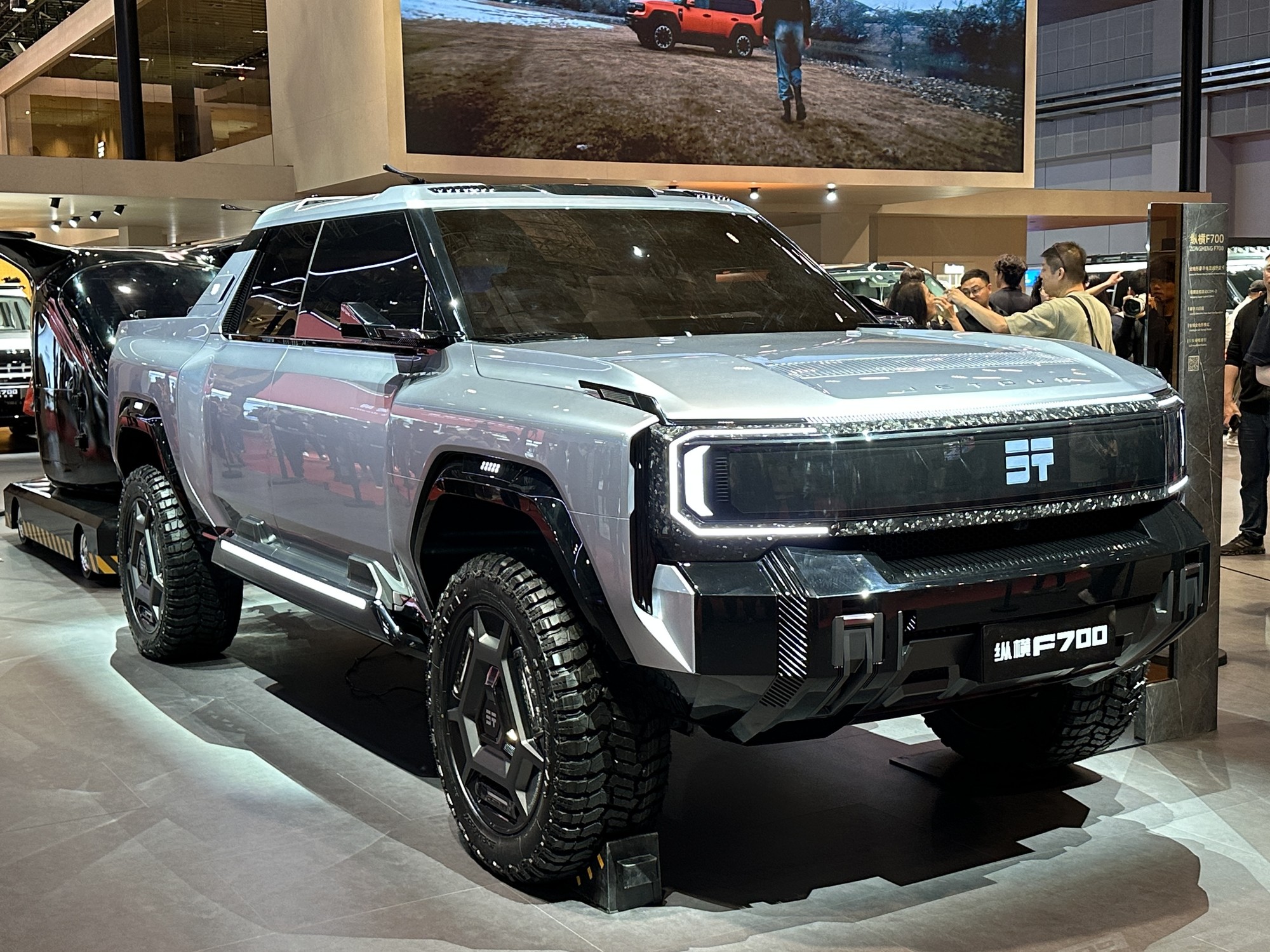

This is the pickup twin of the GAIA G700 SUV that launched here at MIAS 2026 — same premium Zongheng series, same 800V plug-in hybrid architecture, but with a cargo bed and serious off-road hardware instead of a third row. Think of it as the direct answer to the BYD Shark 6 DMO, just bigger and meaner.
Why the DOE Listing Matters
The DOE recognition dropped on August 4, 2026, and it’s the strongest signal yet that a launch is close. That’s the same pattern we saw with the Jaecoo J8 PHEV and the Nissan Primera EV — once a model appears on the DOE’s recognized EV list, the official Philippine debut usually follows within months.
The listing itself is detailed. According to AutoIndustriya, the F700 PHEV is a 2026 model year vehicle measuring 5,495mm long, 2,050mm wide, and 1,985mm tall on a 3,350mm wheelbase, with up to 210mm of ground clearance and a curb weight of 3,029 kg.
In China, Jetour officially launched the F700 on August 6 — two days after the PH listing — so the specs we’re getting now are final production numbers, not concept promises.
Jetour F700 PHEV: Specs at a Glance
| Spec | Jetour F700 PHEV |
|---|---|
| Engine | 2.0L turbocharged inline-4 (SQRH4J20), 210 PS / 340 Nm |
| Electric motors | Dual motors (front + rear), 510 kW / 693 PS per DOE listing |
| Combined output | 690 kW / 924 PS per DOE; China launch materials cite 892 hp (665 kW) with 1,135 Nm total torque |
| Battery | 34.13 kWh CATL Shenxing LFP (4C), 800V architecture |
| EV-only range | Up to 109 km per DOE listing; 150 km (CLTC) per China launch materials |
| Combined range | Up to 1,300 km |
| 0-100 km/h | 5.0 seconds (claimed) |
| Fuel consumption | 7.95 L/100 km (WLTC, claimed) |
| Transmission | 2-speed DHT, all-wheel drive (XWD-S) |
| Dimensions | 5,495 x 2,050 x 1,985 mm, 3,350 mm wheelbase |
| Ground clearance | Up to 210 mm |
| Wading depth | 900 mm, IP68 waterproof rating |
| Off-road | Non-load-bearing frame, front/rear locking diffs, approach 32°, departure 15° |
| Towing | 3.5T certified, trailer power outlet |
| Cargo | 1,300L bed with 220V outlet, 20 kW stationary power |
A note on the power figures: the DOE listing says 924 PS combined, while the China launch materials quote 892 hp (665 kW) with 1,135 Nm. Same truck, different numbers depending on the source. I’m presenting both so you can see the gap instead of me silently picking one.
What Others Are Saying
AutoIndustriya’s Marcus De Guzman has been tracking this truck since the June reveal, calling it “the luxury pickup twin of the G700” and noting the 2.0L engine mostly acts as a generator to stretch battery range — a setup that makes sense for a heavy full-size pickup. He confirmed JAPI’s word that the F700 is coming to the Philippines, though the launch window is still “later this year or early 2027.”
Top Gear Philippines framed the F700 as the G700’s sibling with the same 2.0L turbo powertrain, and pointed out it will go head-to-head with the BYD Shark 6 DMO — which makes sense, since the Shark 6 has owned the electrified pickup segment here since its March 2025 launch.
CarNewsChina covered the official China launch on August 6, highlighting the 900mm wading depth, the 3.5-ton towing capacity, and the 5-second 0-100 time. They also confirmed the F700 offers a 5-seater layout or a 4-seater with captain’s chairs in the back.
The interior is where the premium positioning shows: a 35.4-inch panoramic “Horizon Screen” across the dash, a 15.6-inch floating infotainment touchscreen, massaging front seats with heating and ventilation front and rear, and the Falcon 500 highway driving assist system.
Philippine Pricing and Competition
There’s no official Philippine SRP yet — that’s the honest answer. What we have are anchors. The Shark 6 figures below are AutoIndustriya’s current buyer’s-guide pricing (BYD raised prices after the truck’s ₱2.098M launch in March 2025).
| Model | PH Price | Segment |
|---|---|---|
| BYD Shark 6 DMO Advanced | ₱2,388,000 | Mid-size PHEV pickup |
| BYD Shark 6 DMO Premium | ₱2,618,000 | Mid-size PHEV pickup |
| Jetour F700 PHEV (est.) | ₱3.5M – 4.5M | Full-size luxury PHEV pickup |
| Jetour G700 (sibling SUV) | ₱4,488,000 | Full-size luxury PHEV SUV |
In China, the F700 launched at 299,900 to 339,900 yuan — roughly $44,100 to $49,900 (about ₱2.68M to ₱3.04M, or ₹42.0 to ₹47.6 lakh) at current rates of 60.83 PHP/USD and 95.3 INR/USD. Philippine pricing always lands higher once import duties and dealer margins are added, so my projection of ₱3.5M to ₱4.5M is anchored on the G700’s ₱4.488M tag and the Shark 6’s position below it. Treat that range as an estimate until JAPI speaks.
For context on where this sits in the market: the BYD Seal 5 DM-i proved a plug-in hybrid can go mainstream here, and the Geely EX2 showed the entry point of the EV ladder. The F700 is aimed at a completely different buyer — the one who would otherwise stretch for a premium pickup or a luxury SUV.
How It Fits Filipino Driving
City driving
Honestly? A 5.5-meter full-size truck is not a Makati parking lot machine. But the plug-in hybrid layout means you can run most of a daily EDSA commute in electric mode — 109 to 150 km of EV range covers a full Metro Manila workday without burning fuel. The 340 Nm engine torque plus instant electric torque gives you confident acceleration for lane changes and merging on C5.
Long-distance travel
This is where the F700 shines. A combined 1,300 km range means Manila to Baguio and back without touching a charger or a fuel pump. For provincial drivers — Nueva Ecija, Pampanga, Batangas, up north — the range anxiety that comes with pure EVs simply doesn’t exist here. If you do stop, the 800V system supports fast charging, with Jetour claiming a 20-80% charge in about 10 minutes on a 4C charger.
Flooded and flood-prone areas
Here’s the F700’s most Filipino-friendly feature: a 900mm wading depth with an IP68 waterproof rating. That’s not an invitation to treat floodwaters like a river crossing, but it’s a huge safety margin for the kind of flash floods we get during typhoon season — especially compared to low-riding EVs and sedans. The 210mm ground clearance and locking differentials help when roads turn into rivers.
High-temperature conditions
The LFP battery chemistry is the right call for a tropical market. Lithium iron phosphate cells tolerate heat far better than NMC packs, degrade slower in 36-38°C weather, and are the same chemistry now running through most of BYD’s lineup — the Seal 5 DM-i included. Battery tech is quietly becoming the deciding factor in EV purchases, something I dug into in my piece on why batteries might be the answer to the power problem.
Practical extras
That 220V outlet with up to 20 kW of stationary power generation turns the truck into a mobile generator — useful for camping, tailgating, and honestly, for the occasional brownout. The 3.5-ton towing capacity and 1,300L bed keep the workhorse credentials intact, because at this price point, buyers expect the truck to actually work.
The Bottom Line
The Jetour F700 PHEV is a serious statement of intent from Jetour Philippines. It’s the first full-size luxury electrified pickup confirmed for our market, and the DOE listing means the countdown has started. If the pricing lands near my ₱3.5M to ₱4.5M projection, it goes head-to-head with the Shark 6 at the lower end and the G700 at the top.
For buyers who need a real pickup but want the efficiency and flood resilience of an electrified powertrain, this is worth waiting for. Keep an eye on Jetour’s announcements — if the G700’s MIAS debut was any indication, the F700 launch here is going to be worth watching.