
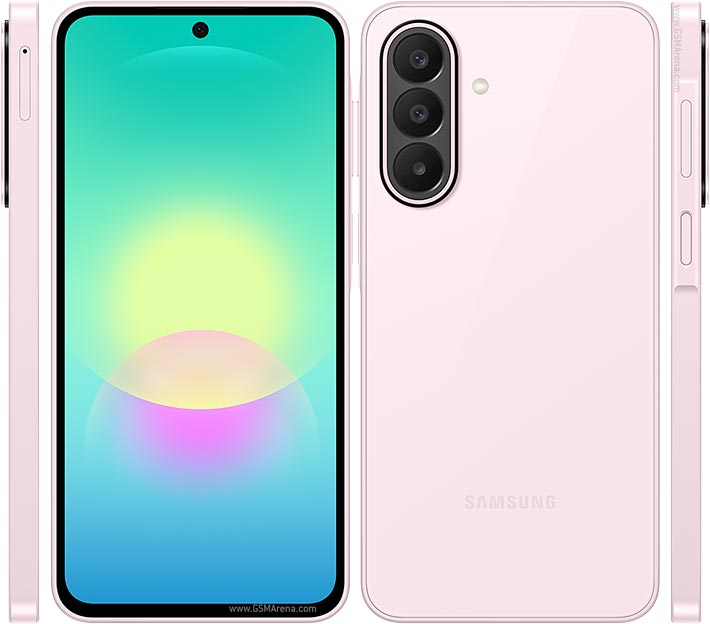
What’s New: The A27 at a Glance
Samsung just dropped the Galaxy A27 5G in the Philippines and it’s a classic Samsung move — small upgrades where they matter, a couple of puzzling downgrades, and that long-term software promise that nobody else in the midrange game matches.
Priced at Php 18,990 for the 6GB/128GB model and Php 21,990 for the 8GB/256GB variant, the A27 arrives on July 10 in Samsung stores, Lazada, and Shopee. Early buyers until September 15 get a Php 1,500 discount, a free travel adapter, and a Jisulife fan — a launch bundle worth up to Php 3,639.
The headline specs: a 6.7-inch 120Hz Super AMOLED display with a proper punch-hole camera (goodbye, teardrop notch), Snapdragon 6 Gen 3 chip, 50MP main camera with OIS, and that signature 5,000mAh battery. You also get Android 16 with One UI 8.5 and Samsung’s promise of six years of OS and security updates — something that absolutely deserves attention at this price point.
But there are trade-offs. The IP rating dropped from IP67 to IP64. The ultrawide camera went from 8MP to 5MP. And the 25W charging hasn’t budged — in a world where Chinese brands are shipping 45W and even 67W chargers with their midrangers. Let me break down what all of this actually means for someone who’ll use this phone every day.
Design and Build: Familiar, Solid, and a Bit Smudgy
Samsung’s “Key Island” design language carries over from the A57 and A37 series — the side buttons sit on a slightly raised island on the frame, which looks distinctive and makes them easier to find by touch. It’s a small detail, but one you appreciate when you’re pulling the phone out of your pocket.
At 162.4 x 78.2 x 7.8mm and 200 grams, the A27 feels substantial without being heavy. The glass front and back with Gorilla Glass Victus+ is genuinely impressive at this price — you’d normally see this on phones costing Php 30K and up. The frame is plastic, which is expected, and Samsung’s finishing does a good job of hiding that fact.
Colors here include Black, Blue, Light Green, and Light Pink. The Black model (the one GSMArena tested) has a color-accented camera island that’s subtle enough to be nearly invisible on the dark finish — a cleaner look if you prefer your phone understated.
The one annoyance: this glossy finish is a fingerprint and dust magnet. If you’re the type who wipes their phone screen obsessively (I see you), you’ll either want a case or the lighter color options, which hide smudges better.
The IP64 rating is a step down from the A26’s IP67. IP64 means it handles water splashes but won’t survive a dunk in the pool. For the Philippine context — where sudden downpours are a fact of life — IP64 is adequate for rain protection, but it’s not the peace of mind that IP67 offers. A slight downgrade worth noting.
Unboxing and first impressions of the Galaxy A27 5G by HardReset.Info
Display: The Star of the Show
This is where Samsung flexes its manufacturing muscle. The 6.7-inch FHD+ Super AMOLED panel at 120Hz is what you’d expect from a company that makes displays for everyone else. Colors pop, blacks are genuinely black (not grayish-black), and the 120Hz refresh rate makes scrolling through social feeds and web pages feel fluid.
Gorilla Glass Victus+ protects both the front and back, and GSMArena’s testing pegs it at Mohs level 5 scratch resistance — par for the course, meaning coins and keys won’t scratch it but sand will. The 1080 x 2340 resolution at roughly 385ppi is sharp enough that you won’t notice individual pixels unless you’re pressing the screen against your nose.
The move from a teardrop notch to a punch-hole cutout makes the front look significantly more modern. It’s a small design upgrade that makes the A27 look closer to Samsung’s S-series than its budget roots.
Sunlight legibility should be solid — Samsung’s AMOLED panels historically punch above their weight in brightness, and paired with the high contrast ratio, outdoor visibility in the Philippine sun shouldn’t be a struggle.
Performance: Snapdragon 6 Gen 3 Gets the Job Done
Under the hood is Qualcomm’s Snapdragon 6 Gen 3, a 4nm chip with four Cortex-A78 cores at 2.4GHz and four Cortex-A55 cores at 1.8GHz, paired with Adreno 710 graphics. This replaces the Exynos 1380 from the A26, and it’s an upgrade across the board — better efficiency, better sustained performance, and less heat generation.
RAM starts at 6GB (up from the A26’s 4GB base) with an 8GB option, and storage goes up to 256GB with microSD expansion up to 2TB. The shared SIM slot means you’ll have to choose between dual SIM and extra storage, but 128GB or 256GB built-in should be plenty for most users.
Day-to-day performance is smooth. App switching, social media scrolling, YouTube streaming — the A27 handles all of it without breaking a sweat. Light gaming (Mobile Legends, Call of Duty Mobile at medium settings) runs well. This isn’t a gaming phone — if you’re eyeing Genshin Impact at max settings, look elsewhere — but for the way most people actually use their phones, the Snapdragon 6 Gen 3 is perfectly adequate and noticeably better than the Exynos it replaces.
Samsung also includes Samsung DeX support, which lets you connect the phone to a monitor for a desktop-like experience. It’s a niche feature at this price point but a genuinely useful one if you occasionally need to work on a bigger screen.
Camera: One Great Sensor, Two Fillers
The camera setup is classic midrange Samsung: one truly capable sensor surrounded by two that exist mainly for spec sheet purposes.
The 50MP main camera with OIS is the real deal. Using Samsung’s ISOCELL JN1 sensor (1/2.76-inch, f/1.8), it captures detailed, well-exposed shots in good light. Optical image stabilization makes a noticeable difference in low-light situations and when recording video — fewer blurry shots, smoother 4K/30fps footage. In daylight, colors are vibrant without crossing into oversaturated territory. Portrait mode delivers clean subject separation, and the 12MP front camera (upgraded from the A26’s 13MP with a larger sensor) produces natural-looking selfies with better dynamic range.
The 5MP ultrawide is the downgrade that stings. The A26 had an 8MP ultrawide, and dropping to 5MP means wide-angle shots lose detail and struggle more in anything less than bright sunlight. You’ll use it for group photos and landscape shots, but don’t expect to crop into those images.
The 2MP macro is the token third lens. Close-up shots are possible but limited — the resolution and lack of autofocus mean it’s more of a checkbox than a feature you’ll reach for regularly.
Video tops out at 4K/30fps from the main camera with gyro-EIS stabilization, plus 720p/480fps slow motion. The 1080p/30fps mode with stabilization is the sweet spot for everyday video. The front camera records at 1080p/30fps.
For the price, the main camera delivers results that punch above its weight class thanks to OIS. Just don’t expect the versatility of a true multi-camera system — think of this as a great single-camera phone with bonus wide-angle capability.
Battery Life: All-Day Endurance, Slow Top-Ups
The 5,000mAh battery is unchanged from the A26, and paired with the efficient 4nm Snapdragon 6 Gen 3, it delivers solid endurance. Expect a full day of heavy use (social media, streaming, navigation, photos) with 15-20% left by bedtime. Moderate users should comfortably get a day and a half, and light users might stretch to two full days.
The EU energy label rates the A27 at 51 hours and 10 minutes endurance with 1,200 charge cycles — translating to roughly three years before the battery degrades to 80% capacity. That aligns with Samsung’s six-year update promise, though you’ll likely want a battery replacement around year three or four.
The charging situation, however, is Samsung being Samsung. 25W wired charging gets you to 45% in 30 minutes, but a full charge takes around 90-100 minutes. In a market where Redmi, realme, and OPPO are shipping 45W, 67W, and even 80W chargers on phones costing less, Samsung’s stubborn refusal to bump up charging speeds in the A-series is frustrating. There’s no wireless charging, which is expected at this price, and there’s no charger in the box — just a USB-C cable.
You’ll want to charge this phone overnight, not in a rush before heading out.
Software and AI: Six Years of Updates and Actually Useful AI
Samsung ships the A27 with Android 16 and One UI 8.5, backed by a promise of six major Android upgrades and six years of security updates. That means this phone could run Android 22. No other brand at this price point comes close — not Xiaomi, not OPPO, not realme. If you’re the type who holds onto a phone for three or four years (or hands it down to family), this commitment is a genuine value multiplier.
One UI 8.5 is feature-rich without feeling bloated. Samsung’s customization options are deep — Good Lock modules let you tweak everything from the lock screen to notification behavior. The side-mounted fingerprint sensor is fast and accurate, and Samsung Knox Vault provides hardware-backed security for sensitive data like passwords and biometrics.
The AI features here aren’t marketing fluff. Circle to Search now supports multi-object recognition — draw a circle around two items in a photo and search for both simultaneously. Virtual try-on for outfits directly from search results is a neat party trick. Object Eraser in the Gallery app removes unwanted photobombers with better precision than before. And Voice Transcription in the Recorder app now translates as it transcribes across 22 languages — genuinely useful for meetings, lectures, or interviews.
Google Gemini, Perplexity, and Bixby all come preloaded as AI assistants. Gemini handles general queries, Perplexity brings research-grade answers, and Bixby now works as a conversational agent for controlling device settings — tell it “make my screen warmer after 9PM” and it’ll figure out what you mean.
Competition: The Midrange Battleground
At Php 18,990 to Php 21,990, the Galaxy A27 faces serious competition.
The Poco X8 Pro (around the same price) offers more RAM and twice the storage for similar money, plus faster charging. If raw specs-per-peso is your primary metric, Poco wins on paper. But Samsung counters with the Super AMOLED display, six years of updates, and a more refined software experience.
The Oppo Reno16 Pro (I reviewed this recently) sits at a slightly higher price bracket but offers a more compact form factor and superior build. If you can stretch your budget, it’s worth a look.
The Redmi 17C undercuts the A27 on price but the experience is noticeably worse — as I covered in my review, it’s actually a step backward from its predecessor. The A27 is the safer bet.
And if you want to stay in Samsung’s ecosystem, the Galaxy M47 (Php 19,990-ish) offers a massive 6,000mAh battery — I reviewed that too — but sacrifices the premium glass build and some AI features. Battery endurance vs. overall refinement: pick your priority.
Samsung Galaxy A27 5G: Full Specifications
| Display | 6.7″ FHD+ Super AMOLED, 120Hz, Infinity-O punch-hole, Gorilla Glass Victus+ |
| Processor | Qualcomm Snapdragon 6 Gen 3 (4nm), Octa-Core 2.4GHz/1.8GHz |
| GPU | Adreno 710 |
| RAM & Storage | 6GB/128GB, 8GB/256GB; microSD up to 2TB (shared SIM slot) |
| Rear Cameras | 50MP OIS (wide, f/1.8) + 5MP (ultrawide, f/2.2) + 2MP (macro) |
| Front Camera | 12MP (wide, f/2.2, AF) |
| Video | 4K@30fps (rear), 1080p@30fps (front), gyro-EIS, 720p@480fps slow-mo |
| Battery | 5,000 mAh, 25W wired (45% in 30 min), no wireless charging |
| OS | Android 16, One UI 8.5, 6 years OS + security updates |
| Build | Glass front/back (Victus+), plastic frame, IP64 splash resistance |
| Dimensions | 162.4 x 78.2 x 7.8mm, 200g |
| Connectivity | 5G, WiFi 5, Bluetooth 5.1, NFC, GPS, USB-C 2.0 |
| Security | Side-mounted fingerprint, Samsung Knox Vault |
| Audio | Stereo speakers, no 3.5mm jack |
| Colors | Black, Blue, Light Green, Light Pink |
| PH Price | Php 18,990 (6/128GB) / Php 21,990 (8/256GB) |
Pros and Cons
Pros
- Stunning 120Hz Super AMOLED display with punch-hole design
- Six years of OS and security updates — unmatched at this price
- 50MP OIS main camera delivers reliably good photos
- Gorilla Glass Victus+ on both front and back — premium durability
- Solid Snapdragon 6 Gen 3 performance, noticeable upgrade over Exynos
- Genuinely useful AI features (Circle to Search, Object Eraser, Voice Transcription)
- 5,000mAh battery delivers all-day endurance
- Samsung DeX support for desktop mode
- microSD expansion up to 2TB
Cons
- IP64 only — downgrade from A26’s IP67, no submersion protection
- 5MP ultrawide is a step backward from the A26’s 8MP
- 25W charging is slow by 2026 standards; competitors offer 45W-67W
- No charger in the box — USB-C cable only
- Glossy finish gets smudged and dusty quickly
- 2MP macro camera is filler — adds little practical value
- No 3.5mm headphone jack
Should You Buy the Samsung Galaxy A27 5G?
Buy it if…
You want a phone that will last. Six years of updates means this phone stays current through 2032. If you’re buying for a parent, a student, or yourself and you don’t upgrade every two years, this is the strongest argument for the A27. No other midrange phone promises this kind of longevity.
Display quality matters to you. The 120Hz Super AMOLED panel is genuinely excellent. If you watch a lot of videos, scroll through social media, or read on your phone, this screen will make you happy every time you pick it up.
You’re already in the Samsung ecosystem. Galaxy Buds, Galaxy Watch, Samsung Tablet — the A27 plays nicely with all of them. One UI’s device integration is smooth and getting better with each update.
You need a reliable daily driver under Php 20K. The camera is consistent, the battery lasts, the performance is smooth, and Samsung’s after-sales support in the Philippines is widely available. It’s the safe, smart choice.
Skip it if…
Charging speed is a dealbreaker. If you’re someone who forgets to charge overnight and needs a quick top-up before heading out, 25W will frustrate you. A Poco or realme at the same price will fill up in half the time.
You need a versatile camera system. The 50MP main shooter is good, but the ultrawide and macro are mediocre. If wide-angle photography is important to you, look at phones with better secondary sensors.
Specs-per-peso is your religion. On paper, Chinese brands beat the A27 on RAM, storage, and charging speed at the same price point. Samsung charges a premium for the display quality, software promise, and brand reliability. Whether that premium is worth it depends on which specs you actually value.
Verdict
The Samsung Galaxy A27 5G isn’t exciting. It doesn’t have a gimmick or a headline-grabbing spec. What it does have is Samsung’s most mature midrange formula yet — a fantastic display, reliable performance, a genuinely good main camera, and a software commitment that makes the Php 18,990 starting price feel like an investment rather than an expense.
The downgrades from the A26 (IP rating, ultrawide camera) are disappointing, and the charging speed is overdue for an upgrade. But those trade-offs don’t undermine what the A27 gets right: it’s a phone built to be used for years, not months. In a market where most midrangers feel disposable after two years, the A27 is refreshingly built to last.
If what you want is a dependable phone with a great screen, decent cameras, and Samsung’s promise that it won’t be abandoned in 18 months, the Galaxy A27 5G is easy to recommend.
Sources: Samsung Newsroom Philippines, GSMArena, Unbox.ph, NoypiGeeks, ManilaShaker, WalasTech, NanoReview. Video: HardReset.Info.