
There is a question I keep hearing from friends who want to go electric but do not have the budget for it: is there an EV for people who just want a cheap, honest city car? Right now, the cheapest new EVs in Philippine showrooms — the Wuling Macaron at P663,000, the Changan Lumin at P699,000, and the VinFast VF 3 at P745,000 — all cost well over half a million pesos. That is still a lot of money for a first-time buyer. So when VinFast unveiled the VF 2 in Vietnam last month at roughly P438,000 — more than P200,000 below the cheapest EV sold here — it deserved more attention than it got.
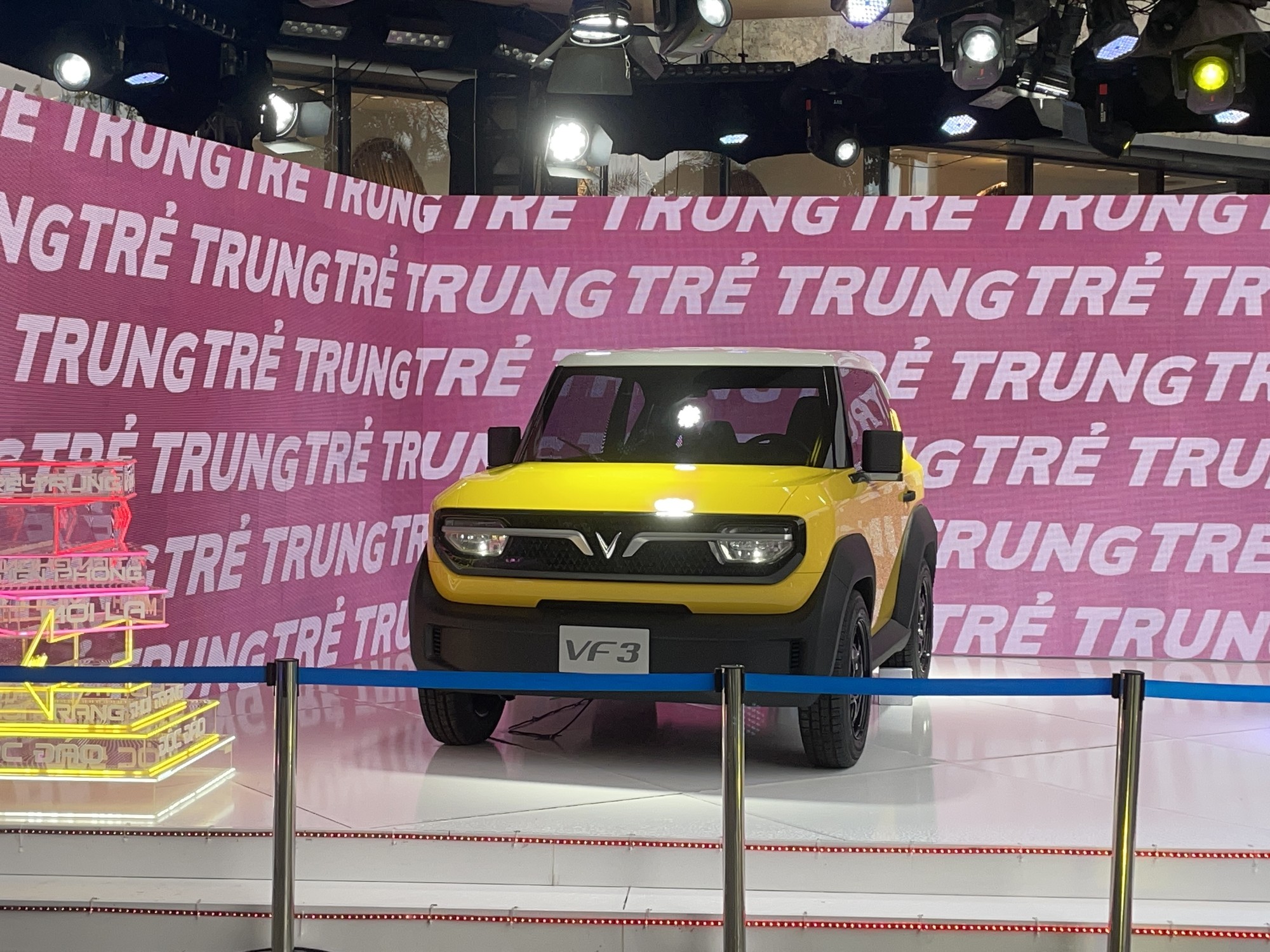

Here is the full picture on the VinFast VF 2: its price, its specifications, what reviewers think, and an honest look at whether it would make sense on Philippine roads.
What is the VinFast VF 2?
The VF 2 is a two-door, four-seat electric hatchback that VinFast describes as a more refined version of the Minio Green, the tiny EV that runs in the GreenSM taxi fleet. It is the smallest car the Vietnamese automaker has built — even smaller than the VF 3 that Filipinos already know.
Compared with the VF 3, the VF 2 is 100 mm shorter, 183 mm narrower, and 33 mm lower, and it shares the same ultra-compact, kei-car-inspired proportions as the Minio Green. This is a car built for narrow streets, tight parking, and short commutes — not grand touring.
Full specifications: VinFast VF 2
| Motor | Single rear-mounted electric motor |
| Power | 30 kW (40 hp / 41 PS) |
| Torque | 65 Nm |
| Battery | 18.3 kWh lithium-ion |
| Range | Up to 210 km (NEDC cycle) |
| Charging | DC fast charge up to 24 kW — 10% to 70% in about 34 minutes; AC charging supported |
| Drive type | Rear-wheel drive (RWD) |
| Top speed | 80 km/h |
| Dimensions | 3,090 mm (L) x 1,496 mm (W) x 1,663 mm (H) |
| Wheelbase | 2,065 mm |
| Suspension | MacPherson struts front and rear |
| Wheels | 13-inch alloy wheels with LED headlamps |
| Features | 7-inch digital instrument cluster, manual air-conditioning, FM radio with two speakers |
| Safety | Driver airbag, ABS, electronic brakeforce distribution (EBD), traction control (TCS) |
VinFast has not published a ground clearance figure or cargo volume for the VF 2, and battery chemistry is unconfirmed. Those matter for Philippine buyers, and I will get to them below.
Price: about P438,000 in Vietnam
The VF 2 is priced at VND 188 million in Vietnam — roughly P438,000, or about $7,200. That figure includes the battery, which is a big deal because VinFast also sells cars under a battery-subscription model.
| Market | Price | USD equivalent | INR equivalent |
| Vietnam (launch price) | VND 188 million (approx. P438,000) | ~$7,200 | ~Rs 6.9 lakh |
| Philippines — VF 3 (current sibling) | P745,000 (P645,000 with battery subscription) | ~$12,200 | ~Rs 11.7 lakh |
| Vietnam — Minio Green (commercial twin) | VND 269 million | ~$10,300 | ~Rs 9.8 lakh |
Conversions use roughly P61.1 to the dollar and about Rs 95.7 per dollar as of early August 2026. The headline is the gap: the VF 2 is about P300,000 cheaper than the VF 3 sold here today.
To put that in perspective, P300,000 is roughly the price of a decent second-hand city car — or years of electricity and insurance. That is the argument the Manila Times made when it asked whether the VF 2 could be “the EV the Philippines has been waiting for.”
What others are saying
Zigwheels Philippines covered the launch and noted the VF 2 rides on the same platform as the Minio Green, with a 30 kW motor, 65 Nm of torque, and a 210 km NEDC range. It also highlighted the practical sweetener: buyers get 10 free charging sessions per month at V-Green stations until February 10, 2029.
AutoIndustriya framed it as the natural question every Filipino reader would ask: at VND 188 million — “just PHP 440,000” — should VinFast bring it here and sell it alongside the VF 3? The site called the VF 2 “the most compact EV yet from the Vietnamese automaker.”
Internationally, electrive.com described the VF 2 as a “premium version of the Minio Green” aimed at private buyers, while VietnamPlus noted industry experts see it as an entry into the mass-market segment, targeting first-time car buyers and city residents. Analyst firm Edison Group put it bluntly: the VF 2 is positioned as “a safer and more practical alternative to premium motorcycles.”
That last framing is the one that sticks with me. Vietnam has a motorcycle-first culture, just like the Philippines. VinFast is not selling the VF 2 as a cheaper car — it is selling it as a better motorcycle.
Should VinFast bring the VF 2 to the Philippines?
The short answer: it should, and it is hard to see why it would not. VinFast has been aggressive here — the VF 5, VF 3, VF 6, VF 7, VF 9, and the VF MPV 7 are already on sale, dealerships have spread from Metro Manila to Davao City, and the brand just opened 21 electric-motorcycle showrooms on July 31 to push its Evo, Feliz II, and Viper scooters.
A sub-P500,000 EV would be the loudest statement the brand could make here. It would also land right on top of the industry’s current conversation: Executive Order 121 signed the Electric Vehicle Incentive Strategy (EVIS) into effect on July 30, with the DOE projecting EV prices could drop 6 to 12 percent. A P438K car arriving while everyone is talking about cheaper EVs would own the news cycle.
The counterpoint is that launching a tiny city EV here is not free. Taxes, shipping, and homologation will push the local price above the Vietnamese figure — the question is by how much. If VinFast can keep it under P600,000, it would undercut even the cheapest EV currently sold here by more than P200,000, and it would likely be one of the cheapest cars, period.
It is also a different kind of story from the plug-in SUVs and sedans dominating the local market this month — the Jaecoo J8 PHEV that showed up on the DOE list this week is a 7-seat luxury-leaning SUV at the opposite end of the price scale. The VF 2 would serve the buyer neither the J8 nor most EVs here are built for: the one who just wants out of the rain, cheaply.
Is the VF 2 right for Philippine driving?
Here is where I stop being excited and start being honest. The VF 2 is brilliant for one specific use case and a poor fit for others.
City driving
This is where the VF 2 shines. A 3.09-meter body with a 2,065 mm wheelbase will slip into parking spots in Makati and BGC that would frustrate a sedan. Instant EV torque makes stop-and-go EDSA traffic effortless, and the 80 km/h top speed is not a limitation when you are crawling between Guadalupe and Ayala. The 210 km NEDC range translates to a realistic 140 to 160 km in mixed city driving — more than enough for a week of commutes. If you charge at home or work, range becomes a weekend thought.
Long-distance travel
This is where the VF 2 stops making sense. The 80 km/h cap is legal on expressways — minimum speeds are around 60 km/h — but everyone else will be doing 90 to 100, and overtaking a truck uphill in a 40 hp car takes planning. The real-world range of roughly 150 km also makes Manila-to-Baguio (about 250 km) a two-stop affair on a good day, and the DC fast charge is a modest 24 kW. This is not the car for your family’s Baler weekend. Keep the VF 2 inside Metro Manila and nearby provinces.
Flooded and flood-prone situations
An EV does not hydrolock, which is a genuine advantage over gasoline cars in the rainy season. But the VF 2 is a low, light city car with an under-floor battery pack, and VinFast has not published a ground clearance figure. The honest advice: treat it like a car that should not attempt deep floodwater. For the same reason I would not take a kei-class EV through the classic Marikina or Pasig flood routes during a typhoon. If flooding is a regular part of your commute, this is the wrong tool — you want something with real ground clearance.
High-temperature conditions
Philippine summers are brutal on small EVs. The 18.3 kWh pack is tiny, and running the air-conditioning at full blast in 36 to 38 degree heat will visibly cut into that 210 km claim — expect closer to 120 to 130 km in worst-case Metro Manila summer traffic with the AC on. Still workable for city use, and VinFast’s 10-year warranty covers the battery in most markets. Just do not treat the NEDC figure as your real-world number. Batteries themselves are becoming a bigger part of the national conversation — I wrote about why battery economics matter beyond cars a while back, and the same forces are pushing pack prices down.
The bigger picture
If the VF 2 does land in the Philippines, it would not be alone in the mini-EV segment — the Wuling Macaron (P663,000), Changan Lumin (P699,000), and Jetour Ice Cream EV (P699,000) are already testing the waters — but at roughly P438,000 it would undercut every one of them. Even the Geely EX2, the hatchback that launched here at a P888,000 promo price (P938,000 SRP), would look expensive next to it. Homegrown options like the Francisco Motors Elektron sit in a different, larger segment. The VF 2 would be competing less against other EVs and more against the idea that an electric car must cost a fortune. The DOE-listing route is worth watching too — when the Kia EV3 appeared on the government’s recognized EV list, that was the signal a launch was close. If the VF 2 ever shows up on that list, get excited for real.
Bottom line
The VinFast VF 2 is not the car for everyone. It is slow, tiny, and its range is honest-city-car territory, not road-trip territory. But at roughly P438,000 in Vietnam — more than P200,000 below the cheapest EV currently sold in the Philippines — it asks a question the local market has not had to answer yet: what if the cheapest car in the country could also be electric?
For the first-time buyer in Manila who wants out of the rain, who never drives faster than 60, and who has a wall outlet at home, that question has a tempting answer. Now we wait to see if VinFast agrees.