
There’s a moment every Filipino commuter knows: you’re stuck in EDSA traffic, staring at the back of a jeepney, and somewhere in the haze you wonder who actually builds these things. The answer, for nearly eight decades, has been Francisco Motors. And now that company — the one that turned surplus US military jeeps into the most iconic vehicle on our streets — has unveiled its first electric passenger car.
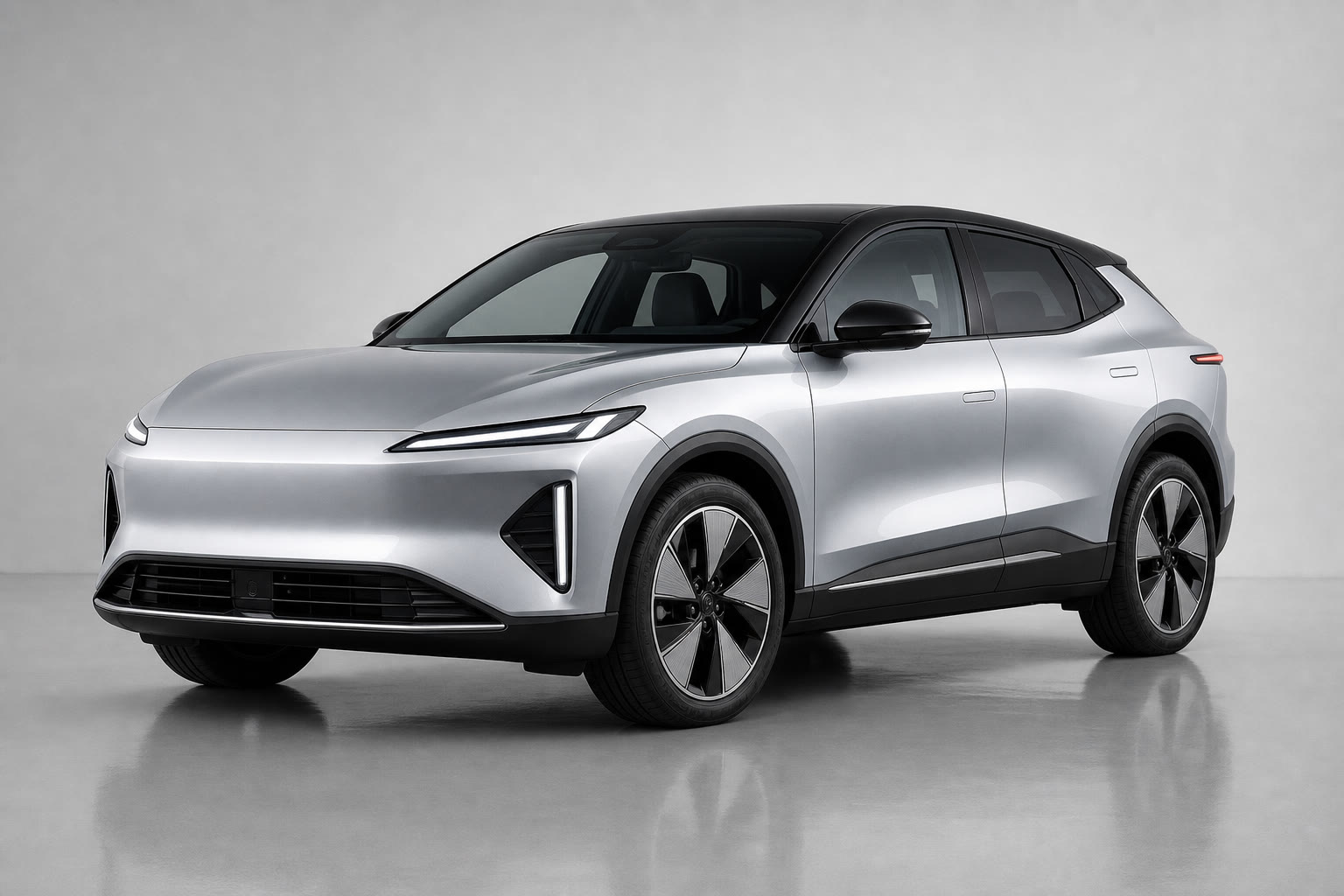
The Francisco Motors Elektron is a five-door compact electric SUV, revealed on July 27, 2026. It’s priced from ₱1,947,000 for the top Deluxe variant, and it arrives with a straight-up cultural claim: the jeepney builder wants to be the first Filipino OEM to seriously compete in the EV segment that BYD, VinFast, MG, and Geely currently dominate. That’s a big swing, and it deserves a careful look.
From Zapote to the EV Era
Let me set the scene, because the history matters here. Anastacio Trinidad Francisco started what would become Francisco Motors in 1947 with a ₱200 painting shop in Zapote, Las Piñas, customizing surplus military jeeps into passenger vehicles. By the late 1970s, the company was producing around 5,000 units a year and employing 2,000 people. It assembled Isuzu models in the 1960s, Mazda trucks and vans in the 1980s, and Hyundai vehicles later on. The nameplate is practically a slice of Philippine industrial history.
So when the company says “Elektron has entered orbit,” it’s not just launching a car. It’s testing whether a homegrown brand can survive the transition from diesel-era public transport to the battery age. The whole launch identity leans into the heritage — 1,947 founder reservations, a ₱1,947 reservation fee, a ₱1,947,000 flagship price. The number runs through everything like a signature.
Elektron specs at a glance
The Elektron comes in three variants sharing one compact crossover body: 4,640 mm long, 1,870 mm wide, and 1,655 mm tall on a 2,760 mm wheelbase, with 450 liters of cargo space. That footprint puts it in the same neighborhood as a Toyota Corolla Cross or the Geely EX2 — small enough for city streets, roomy enough for five people and a weekend’s worth of luggage.
| Spec | Elektron Basic | Elektron Fashion | Elektron Deluxe |
|---|---|---|---|
| Motor | Single motor | Single motor | Dual motor, AWD |
| Battery | 54.9 kWh | 63 kWh | 81.5 kWh |
| Claimed range | ~400 km | ~500 km | 600+ km |
| Top speed | 160 km/h | 160 km/h | 180 km/h |
| 0–100 km/h | 7.7 seconds | Not stated | Not stated |
| System output | Up to 340 kW (~456 hp) and 640 Nm, per company | ||
| Audio | 4 speakers | 9 speakers | 10 speakers |
| Charging | CCS2, ~30 minutes fast charge (20–80%) | ||
| Price | TBA | TBA | ₱1,947,000 |
Inside, the cabin is built around a dual 12.3-inch display setup that handles both the instrument cluster and infotainment, plus a rotary controller on the center console. Apple CarPlay and Android Auto are supported. Depending on the variant you get wireless charging, USB-C ports, dual-zone climate control, multicolor ambient lighting, a fixed panoramic sunroof, and power-adjustable front seats with memory, heating, and ventilation. Five exterior colors are available: Moon White, Lemon Yellow, Natron Red, Stellar Black, and Oasis Green.
Safety gear reads like a modern EV checklist: electronic brake-force distribution, traction control, emergency brake assist, an acoustic pedestrian alert, and passive entry with push-button start. Optional ADAS extras include a 360-degree camera, blind-spot detection, lane-departure warning, and front and rear collision warnings. Every Elektron carries a warranty of up to eight years or 150,000 km on the battery, motors, and electronics.
Price: PHP, USD, and INR
Only the Deluxe variant has a confirmed price: ₱1,947,000. Using the BSP reference rate of about ₱61.40 to the US dollar (as of July 30, 2026), that’s roughly $31,700. Converted through the dollar, it’s around ₹30.3 lakh (₹3,034,000) at the current USD-to-INR rate of about 95.7. Pricing for the Basic and Fashion variants hasn’t been announced, but Francisco Motors says lower-priced, purpose-configured versions are in the works.
How does that stack up against what’s already on sale here?
| Model | Battery | Claimed range | Price (PHP) | Price (USD) | Price (INR) |
|---|---|---|---|---|---|
| BYD Atto 2 EV (intro) | 45.1 kWh | ~380 km (NEDC) | ₱1,288,000 | ~$21,000 | ~₹20.1 lakh |
| VinFast VF 6 | 59.6 kWh | ~460–480 km | ₱1,499,000–1,699,000 | ~$24,400–27,700 | ~₹23.4–26.5 lakh |
| BYD Atto 3 | 49.9–60.5 kWh | 410–480 km | ₱1,598,000–1,798,000 | ~$26,000–29,300 | ~₹24.9–28.0 lakh |
| Francisco Motors Elektron Deluxe | 81.5 kWh | 600+ km (claimed) | ₱1,947,000 | ~$31,700 | ~₹30.3 lakh |
So the Elektron Deluxe is priced above the volume players but brings the biggest battery and the longest range claim in the group. The pricing war has been heating up all week — the BYD Atto 2 opened at ₱998k for its plug-in hybrid variant, and both the Geely EX2 and the MG S5 EV landed within the last two days. Whether the Elektron’s premium is justified depends on what happens between now and actual delivery — more on that in a moment.
What others are saying
The local and international coverage has been a mix of applause and caution. Gulf News called the launch a “symbolic milestone” and noted that while most EVs sold locally are imported, Francisco Motors is positioning the Elektron as a Filipino-developed brand entering a segment dominated by overseas manufacturers. Adobotech framed it as a milestone for the Philippine automotive industry itself — a historic brand embracing electrification while building on nearly 80 years of heritage.
TechTimes, on the other hand, took a more skeptical line and I think it’s worth paying attention to. The outlet pointed out that all the range figures are provisional, that the vehicle platform partner hasn’t been named, and that the Elektron has not yet cleared LTO homologation. Its sharpest point: “VinFast and BYD vehicles on the Philippine market have been through regulatory homologation, are available for delivery, and have documented real-world ownership experience. The Elektron has not yet cleared that gate.” That’s a fair challenge to any buyer thinking of reserving today.
The first reactions from the public have been cautiously warm too. Under unbox.ph’s launch coverage, one reader summed it up neatly: “Definitely a good start. Not cheap but hopefully you’ll get there.”
How the Elektron fits Philippine roads
Now for the part I actually care about as a driver — how would this thing survive a typical week in Metro Manila and the occasional provincial trip?
City driving
The Elektron’s compact crossover proportions are genuinely well-suited to EDSA, C5, and the tight parking decks of Makati and BGC. At 4,640 mm it’s not a big vehicle, and EV torque is instant — which helps when you’re darting through gaps and merging onto the Skyway. The 450-liter cargo bay swallows grocery runs and balikbayan-box-sized errands without drama. The real question in the city isn’t space, it’s charging: if you don’t have a home or condo wallbox, a 54.9–81.5 kWh battery is a big thing to keep topped up on public chargers alone.
Long-distance travel
This is where the range claims get interesting. Manila to Baguio is roughly 250 km, so even the Basic’s 400 km claim covers a one-way trip with margin. The Deluxe’s 600+ km claim would theoretically handle a Manila–Baguio round trip on a single charge. But here’s the honest caveat: if those figures come from a CLTC certification cycle — common on Chinese-built platforms — real-world range could run 15–25 percent lower. Plan your NLEX and SLEX charging stops as if the range were 80 percent of what’s advertised, and you’ll never be stranded.
Flooded and flood-prone situations
This is a soft spot in the launch, and I’m going to be straight about it: Francisco Motors hasn’t published the Elektron’s ground clearance or its battery IP rating. For a country that faces monsoon floods every year, that’s information buyers should be asking for before they commit. EVs do have one advantage — there’s no intake and no exhaust, so there’s no hydrolock risk the way there is with a gasoline engine. But deep water is still deep water: submerged electronics and high-voltage batteries are not something to gamble with. If you live in a flood-prone area, wait for the official clearance figures before making a judgment.
High-temperature conditions
Philippine summers hit 36–38°C with punishing humidity, and that’s exactly the environment that stresses battery thermal management. The Elektron’s cooling system details haven’t been disclosed — no word yet on whether the pack is liquid-cooled or what cell chemistry it uses. LFP chemistry, like the kind BYD uses in its Blade batteries, tends to handle heat more stably than NMC. Until Francisco Motors publishes the details, treat battery longevity in tropical heat as an open question — the battery tech conversation is moving faster than most of us can keep up with anyway. The dual-zone climate control will keep passengers cool, but remember: running the AC at full blast in 37°C traffic eats into that advertised range.
Charging infrastructure
The Elektron uses CCS2, which is good news for interoperability. It’s the standard that’s consolidating across Philippine fast-charging networks, and it matches VinFast and most internationally marketed BYD variants. The one practical clash: some BYD models sold here use the GB/T connector, so if you’re planning a mixed-brand household, check which plug your existing EV uses. The advertised “30-minute fast charge” also needs translation — that’s the 20-to-80 percent window, not a full charge. On a typical 100–150 kW station, expect 35–50 minutes for that window on the Deluxe’s bigger pack.
The honest caveats
I like the ambition here. A Filipino brand stepping into the EV ring against the Chinese giants is exactly the kind of long-game move that fits our market. But let me lay out what’s still unconfirmed, because nearly ₱2 million is a serious purchase that deserves clear eyes:
- All specifications are provisional, pending testing and regulatory validation
- LTO homologation has not been completed — no confirmed Philippine delivery date
- The platform partner, battery supplier, and motor supplier haven’t been named
- ASEAN-market units are slated for initial production in China; local assembly is a 2028 target contingent on 1,000 pre-orders
- The ₱1,947 Founder Orbit reservation fee is credited toward purchase but doesn’t guarantee allocation, final pricing, or delivery timing
None of that makes the Elektron a bad car. It makes it an unproven one — which is a different and very reasonable thing to be in July 2026. The safest way to play this is to watch the homologation announcements, wait for validated range numbers, and treat the first delivery batches as the real test.
Bottom line
The Francisco Motors Elektron is the most interesting EV launch of the year in the Philippines, and not because of the specs. It matters because a company that helped define Philippine mobility for 79 years is betting its future on electric. That’s the kind of resilience I can’t help but respect — it’s a bit like watching an old boxer learn a new style and step back into the ring.
If you’re in the market for a compact EV right now, the choice is still between proven imports like the BYD Atto 2, the Geely EX2, or the MG S5 EV. The Elektron is the one to watch — a homegrown challenger still in the verification phase. The next twelve months will tell us whether the jeepney pioneer’s gamble pays off. I, for one, will be following it closely.